
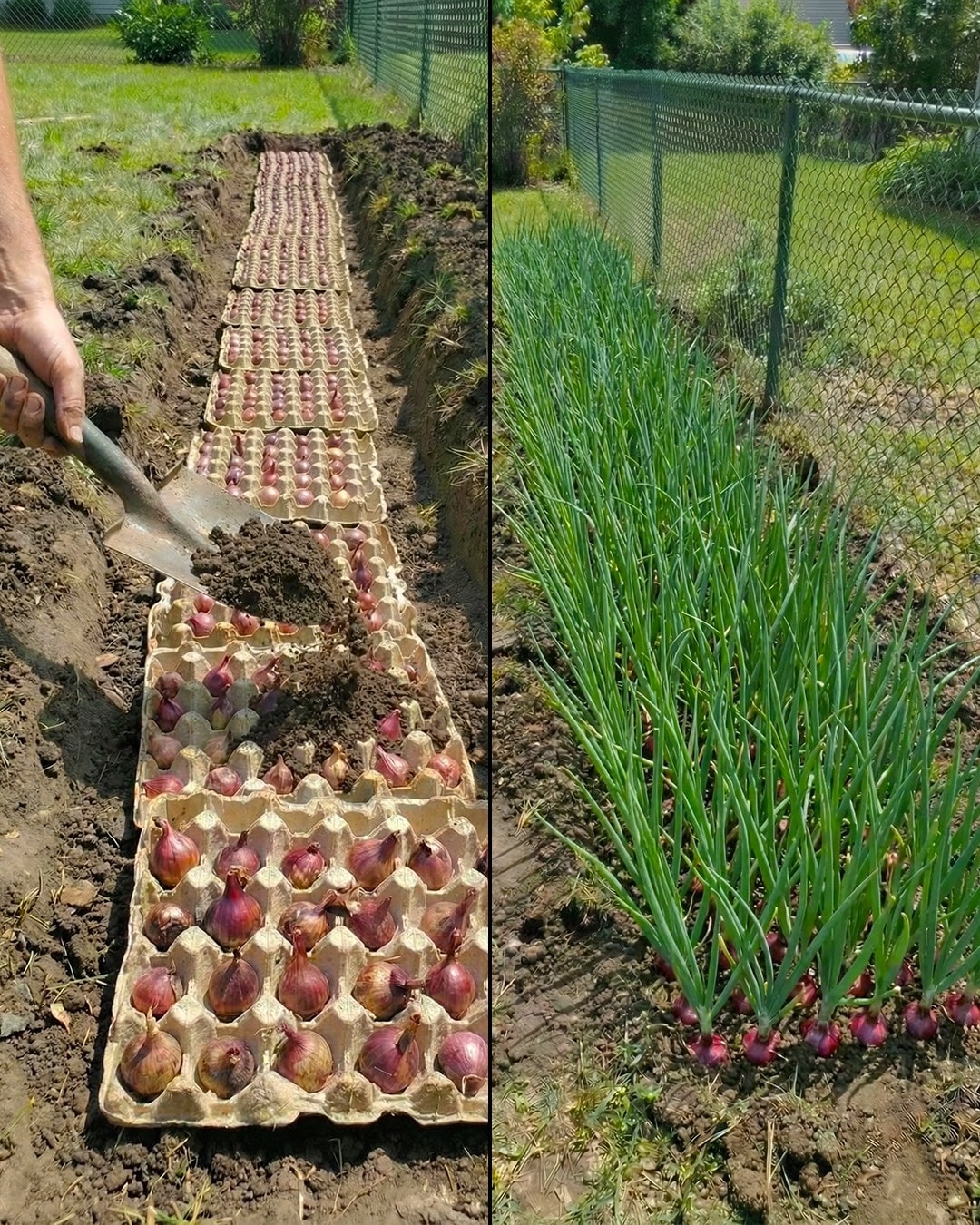
Cover sets with about ½ to 1 inch of soil
You should still be able to feel the set isn’t buried deep
Don’t mound heavy soil over them
Onions like to “sit up” a bit as they bulb. Planting too deep encourages rot and slows bulbing.
How to do it cleanly:
Toss a thin layer of soil over the trays and sets (like in your photos), then gently rake or pat so the soil fills the gaps without packing hard.
Step 7: Watering (steady, not soggy)
Right after planting: water thoroughly to settle soil.
After that:
Aim for about 1 inch of water per week (rain + watering)
Keep moisture consistent, especially during leaf growth
Reduce watering a bit once bulbs are close to harvest and tops start falling
If the bed stays wet for long periods, onions can rot—better to water deeply but less often than to sprinkle daily.
Step 8: Feeding onions (simple schedule)
Onions need nitrogen early to build lots of leaves (each leaf = a ring in the bulb).
At planting: compost is usually enough to start
When shoots are 4–6 inches tall: feed lightly with nitrogen (or a balanced fertilizer)
Repeat every 2–3 weeks until you see bulbs starting to swell
Once bulbing really begins (thicker bases, plants looking “oniony”), stop heavy nitrogen or you’ll delay maturity and reduce storage quality.
Step 9: Weed control and why the cartons help
Onions hate competition because they have shallow roots.
The trays help by:
blocking light to many weed seeds (like a paper mulch)
keeping spacing consistent so you can weed quickly
Still:
Pull weeds early and often
Weed shallowly (don’t chop onion roots)
If you want extra insurance, mulch the paths/edges (not directly burying the onion necks) with straw or dry clippings.
Common problems (and easy fixes)
1) Bolting (flower stalks)
Causes: sets too large, cold stress after planting, variety mismatch
Prevention: use smaller sets, plant at the right time, choose correct day-length type
2) Small bulbs
Causes: too much shade, overcrowding, low nitrogen early, wrong variety
Fix: plant sunnier, give 4–6″ spacing for bulbs, feed early
3) Rot or mushy bulbs
Causes: poor drainage, overwatering, planting too deep
Fix: raise bed, water less often, cover only ½–1″
4) Thrips (silvery streaks on leaves)
Fix: strong water spray on leaves, keep plants unstressed, consider insecticidal soap if severe
Harvesting
For green onions
Harvest anytime once they’re pencil-thick—often 30–60 days depending on variety and weather.
For bulb onions
You’ll know they’re ready when:
50%+ of the tops fall over and yellow, and
bulbs look full at the soil line
Pull them, shake off soil (don’t wash), and move to curing.
Curing and storing (don’t skip this)
Cure in a warm, dry, shaded, ventilated place for 10–14 days (longer if humid).
Tops should be papery and necks tight/dry.
Trim tops to 1–2 inches (or braid if you prefer).
Store in a cool, dry spot with airflow (mesh bags, crates). Don’t seal them in plastic.
paper egg carton onion garden bed
Quick success checklist
✅ Paper/pulp trays only
✅ Loose soil + compost, good drainage
✅ Correct onion type for your region
✅ Sets planted shallow (½–1″)
✅ Space for bulbs (often every other cup)
✅ Steady water, early nitrogen, stop heavy feeding at bulbing
✅ Weed early, cure well, store dry
Inspired by this? Share the article with your friends!
