
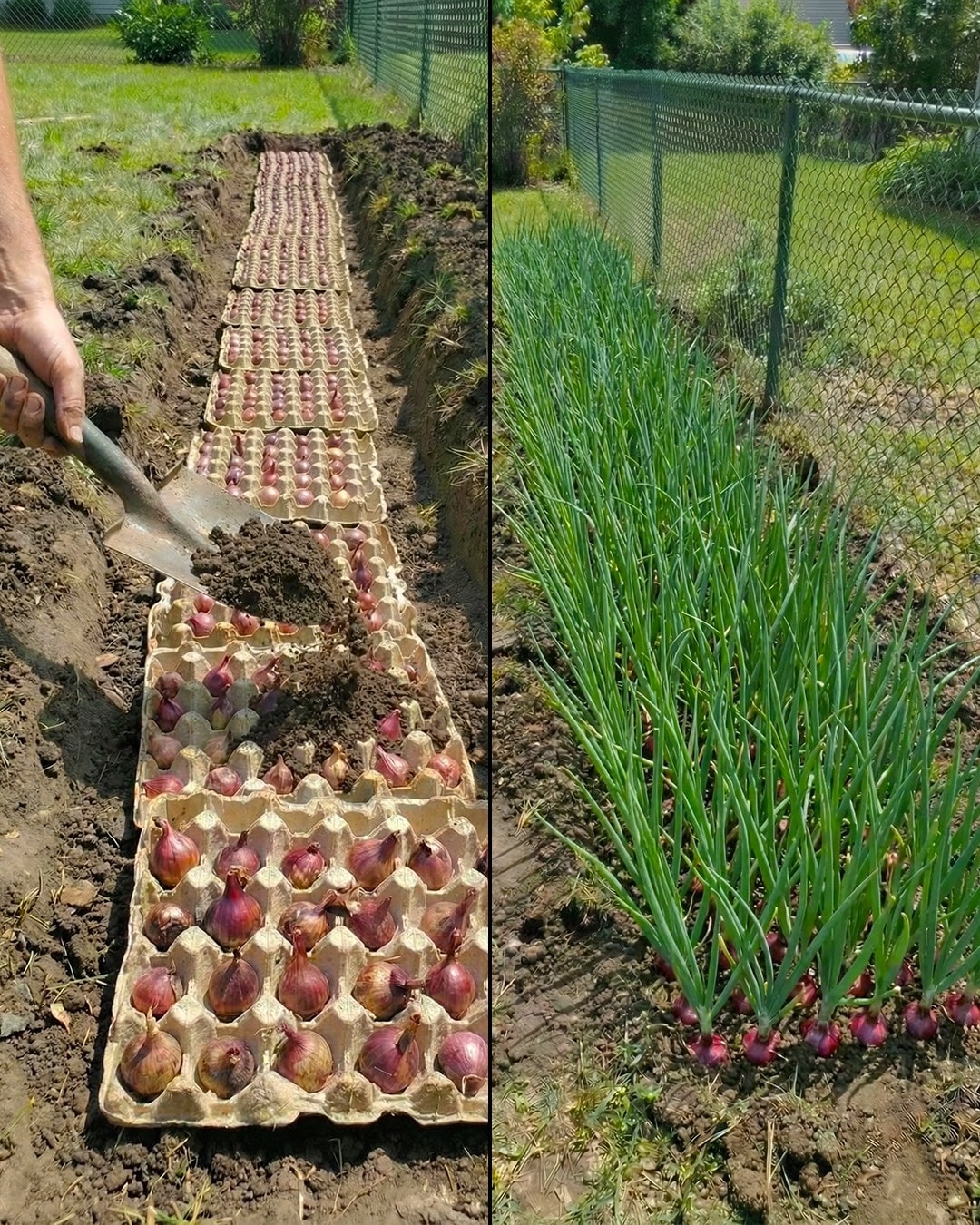
Using paper egg carton flats as a planting “grid” is a slick way to space onion sets evenly, keep weeds down, and get a tidy bed like the one in your photos. The cartons act like a biodegradable mulch and spacer—then break down as the onions grow.
thumbnail-i5iwu6lgobtuescuinzei5tomqyxkmsdWhy There Are Some Gardening Tools You Should Stay Away FromNOW PLAYING
thumbnail-lb5fo5dmgrrue3skmjlvg4siovkgmusbWater-Saving Gardening Tips to Save the Environment and Your Wallet
thumbnail-njqtg2ryn5mueustnrfvaodvgrvvotruThis One Passion Links King Charles to His Grandchildren Across the Globe
thumbnail-ovueuncijfmue2tfnbgdqzspmznfk2jvBecome an Indoor Gardener And Grow These Herbs Inside Your Home
thumbnail-jfvg23thn5eue3bnlbuu23kdkrlvcx2cClever Hacks for Gardening On a Budget
thumbnail-mzehmqszlbzuerllm5swmscemv3tsslgGardening is a Hobby Many Have Decided to Try
thumbnail-kyzdi3stnzvue2krgntdczddijbucs2rGet Your Garden Ready for the Spring and Summer Months
What this method is best for
Onion sets (small dormant bulbs) for full-size onions
Scallions/green onions (you can plant closer or harvest early)
Small garden beds where neat spacing and weed control matter
Skip this method for plastic/foam cartons. Use only plain paper/pulp cartons that tear easily.
Materials
Paper egg carton flats (the 30-egg “trays” are perfect, but regular 12/18 work too)
Onion sets (or small transplants)
Compost (or aged manure) + basic garden soil
Rake/hoe/shovel
Watering can or hose with gentle spray
Optional: balanced fertilizer or a nitrogen-forward fertilizer for early growth
Optional: mulch (straw/leaves/grass clippings) for bed edges
Step 1: Choose the right onion type (quick but important)
Onions form bulbs based on day length. If you buy locally, you’re usually fine—but if ordering online:
Long-day onions: best for northern areas (roughly above 36–38° latitude)
Short-day onions: best for southern areas
Day-neutral: flexible, good “safe choice” for many places
Also: smaller sets are better for bulbing onions. Very large sets tend to bolt (send up flower stalks) and make smaller bulbs.
Step 2: Timing (when to plant)
Cold-winter climates: plant sets early spring, as soon as soil can be worked (often 2–4 weeks before last frost).
Mild-winter climates: short-day onions are often planted fall to winter for spring harvest.
Onions like cool starts and steady growth. Heat later is fine—especially once bulbs begin forming.
Step 3: Prep the bed (this matters more than the cartons)
Onions want loose soil and good drainage.
Clear grass/weeds from the strip (a trench along a fence line is totally fine).
Loosen soil 6–8 inches deep.
Mix in 1–2 inches of compost.
Level the surface so the trays sit flat.
Avoid heavy, soggy soil. If water puddles there after rain, raise the bed a bit or add more compost.
Step 4: Prep the egg carton trays
Use paper/pulp trays only (no shiny coatings if possible).
If they’re stiff, lightly wet them so they mold to the ground.
Lay flats end-to-end where you want the row.
Optional but helpful
Tear or poke a few extra holes in the bottoms to help roots punch through faster.
If wind is an issue, sprinkle a little soil on the trays to hold them down before placing sets.
Step 5: Place onion sets in the cups
Put one onion set per cup, pointy end up.
Spacing rules (use the trays to your advantage)
Full-size onions: aim for 4–6 inches between plants
With egg trays, that often means planting every other cup (or choosing a tray style with wider spacing).
Scallions / smaller bulbs: 2–3 inches is fine (plant more cups).
If you plant every cup in a tight tray, you’ll get lots of greens and smaller bulbs unless you thin/harvest some early.
onion sets egg carton planting method
Step 6: Cover correctly (depth makes or breaks onions)
This is the #1 mistake people make.
