
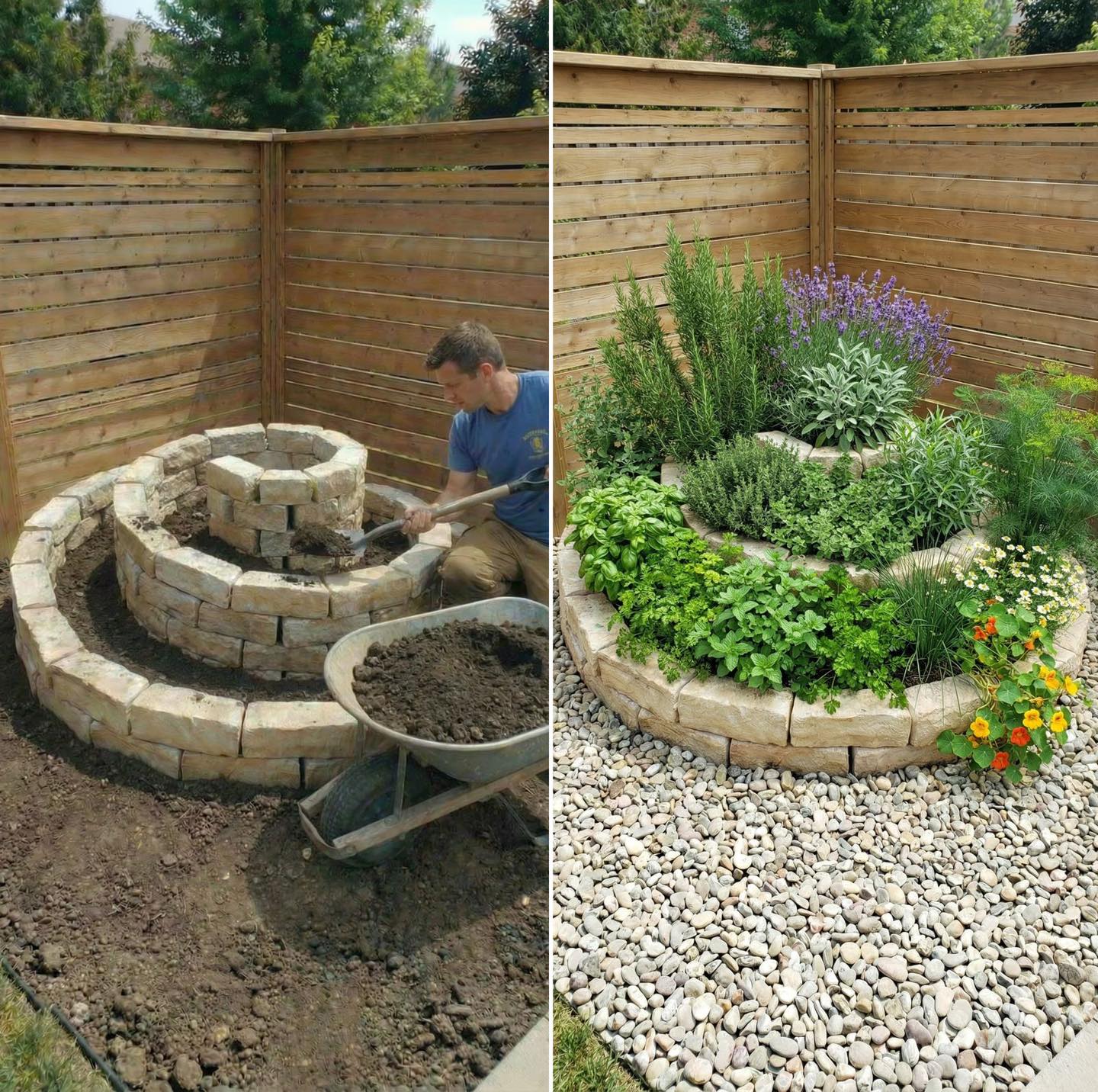
Step 3: Fill with Soil and Compost
Use a mix of garden soil and compost for nutrient-rich planting beds. Pack the soil to prevent sinking.
Step 4: Plant Your Herbs Strategically
- Top of the Spiral (South-facing side): Plant sun-loving and drought-resistant herbs like Rosemary, Thyme, and Oregano. They’ll thrive in the warmth and excellent drainage this position offers.
- Middle of the Spiral: Ideal for herbs that require moderate sun and moisture, such as Parsley, Chives, and Cilantro.
- Bottom of the Spiral (North-facing side): Perfect for herbs that prefer less sun and more moisture. Mint, Lemon Balm, and Tarragon will prosper here.
Step 5: Mulch and Water
Mulch helps retain moisture and suppress weeds. Water thoroughly, especially during the establishment phase and in dry conditions.
Step 6: Regular Maintenance
Harvest herbs regularly to encourage new growth. Monitor soil health and watch for pests or diseases.
Your spiral herb garden is not just a means to grow culinary delights; it’s a living work of art, harmoniously blending functionality with aesthetic appeal. By thoughtfully selecting herbs and considering their placement in relation to sunlight and moisture, you create not just a garden, but a thriving ecosystem.

Enjoy the journey of nurturing your spiral herb garden, a spiral of life that offers beauty, flavor, and the joys of gardening in harmony with nature.
