
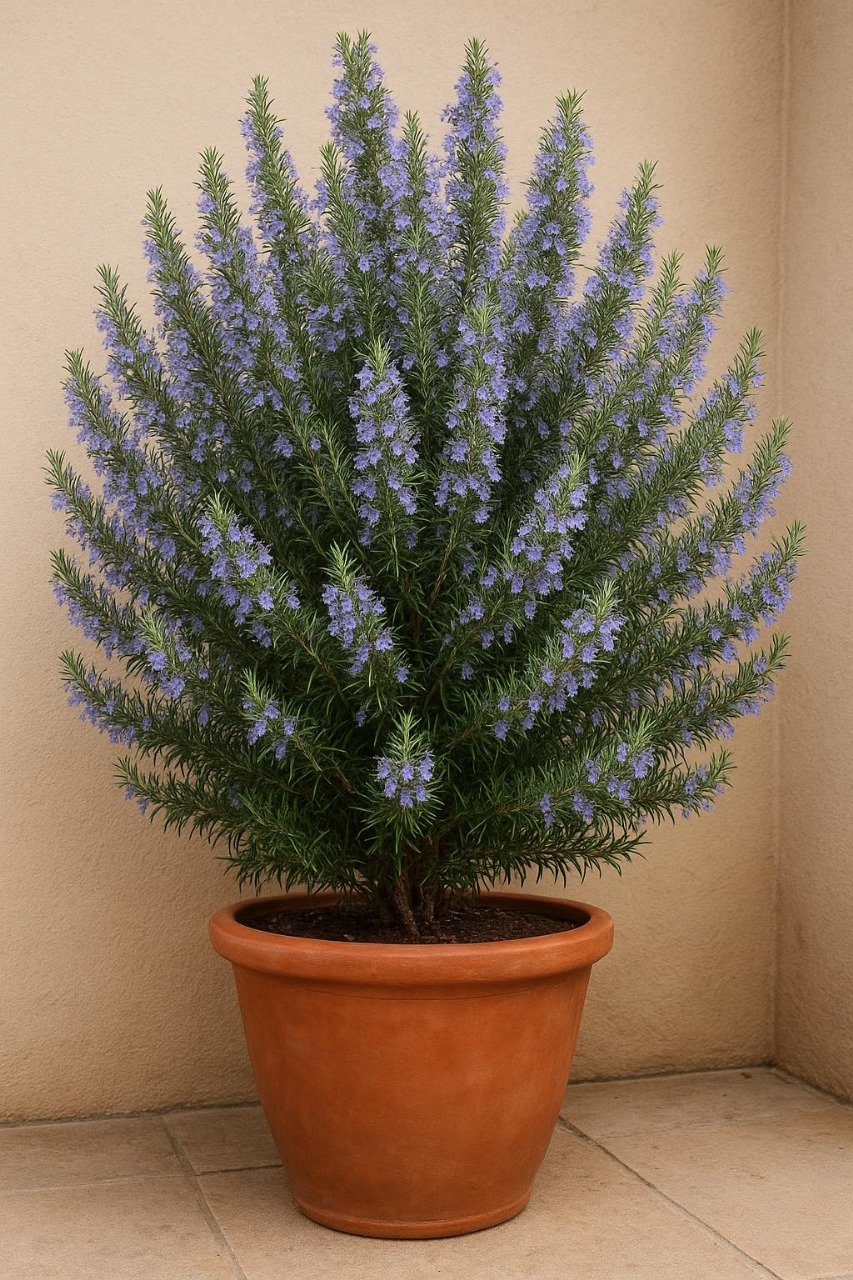
Additionally, light but regular pruning after each flowering helps keep the plant compact, promotes internal air circulation, and encourages new growth, which increases flower production the following season.
💡 The foolproof trick: controlled stress
One of the little-known secrets to inducing rosemary flowering is applying mild, controlled water stress. Slightly reducing watering at the beginning of spring (without letting the plant wilt) can trigger a natural flowering response, as rosemary, like many plants from arid climates, tends to flower to ensure its reproduction in adverse conditions.
🌸 Conclusion
Getting rosemary to bloom doesn’t require magic, but rather attention to detail. With plenty of sunlight, suitable soil, strategic pruning, and a little knowledge of its natural growth patterns, your plant will not only grow healthy and bushy, but will also reward you with beautiful and fragrant blooms year after year.
Leave a reply
