
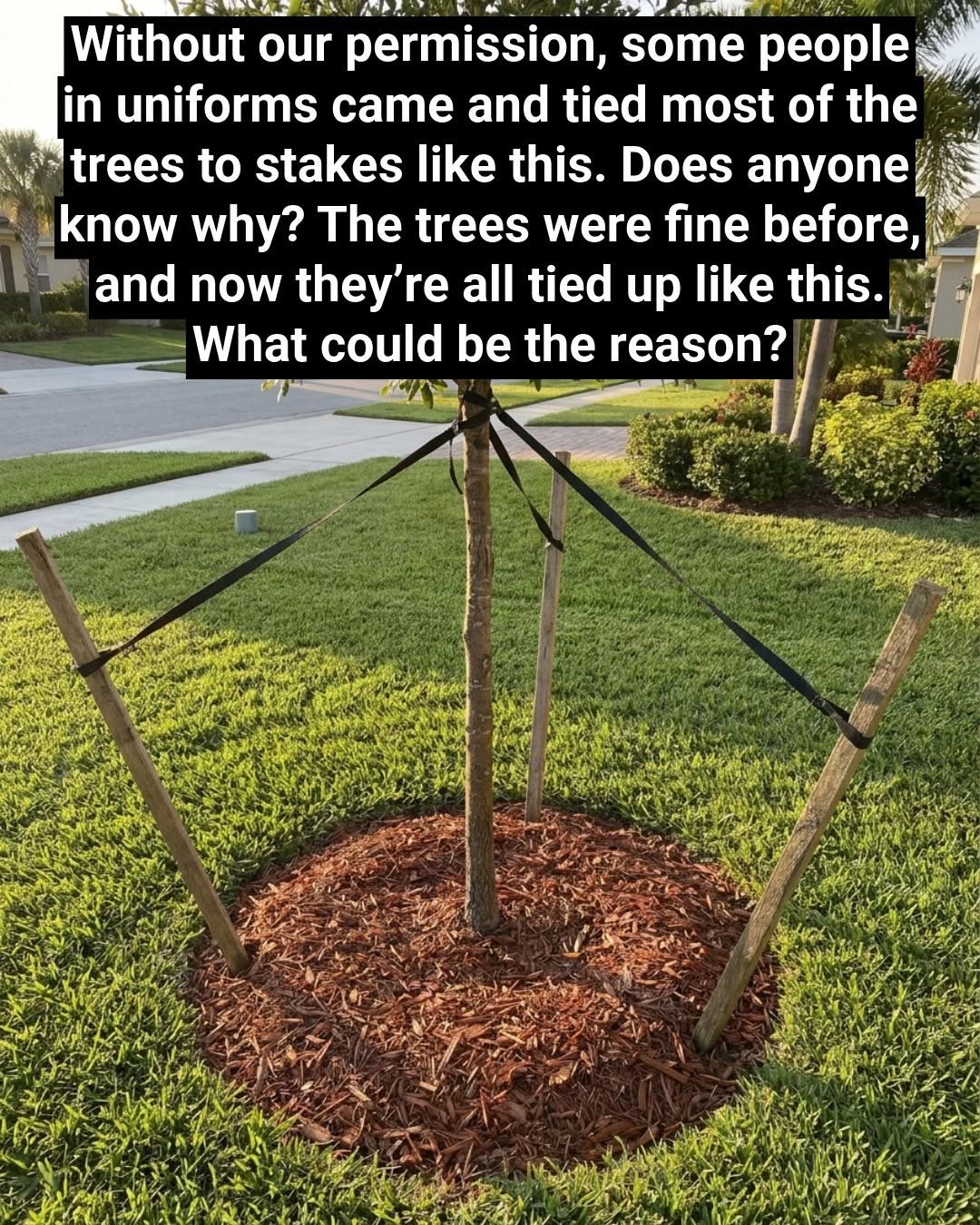
I used to believe that tree stakes were simply a product that came along with planting a tree, sort of like training wheels for trees.
But what I have found out is that is not the purpose of using tree stakes. Understanding when to remove the support from a tree can be very important for some homeowners. Too much support can hinder the natural development of a healthy tree.
Tree staking is generally only temporary. Often, less support is beneficial to the overall strength of the tree over time.
Let’s dig into the real reason we stake young trees, the fascinating science of why they actually need to move, and how to give your new sapling the exact right amount of help to thrive for decades.
🌳 Why Do We Stake Young Trees?
Young trees tend to have either small or unstable root systems in comparison to the size of the plant material (the canopy) above ground.
When you buy a tree from a nursery, it has spent its life in a controlled environment. Transplanting it into your yard disrupts the connection of the roots to the soil. Roots must then spread and stabilize themselves before the tree can begin to establish itself naturally.
The Threats to a Newly Planted Tree:
|
Threat
|
What Happens
|
|---|---|
|
Wind
|
Catching the canopy like a sail, wind can rock the root ball, tearing delicate new root hairs.
|
|
Loose Soils
|
Freshly dug holes have loose dirt; without anchored roots, the whole root ball can shift or heave.
|
|
Top-Heavy Canopies
|
If the branches are large but the roots are small, the tree can easily tip over.
|
Therefore, wind and loose soils can displace the root system, which can severely slow the establishment of a new tree—or kill it entirely.
Supporting young trees through staking provides an opportunity for roots to stabilize themselves. Stakes can limit extreme leaning, help keep young trees rooted, and provide additional protection for young trees in windy locations.
🌬️ The Science of Swaying: Why Trees Need to Move
Here is the most important thing to know about tree stakes: they are not meant to hold the tree perfectly still.
In fact, if you stake a tree too rigidly, you are actually harming it.
The Secret to a Strong Trunk
Trees have an incredible biological response to wind called thigmomorphogenesis (a fancy word for how plants respond to mechanical stress).
When a tree sways in the wind, the movement triggers the tree to produce growth hormones that cause the trunk to grow thicker and stronger at the base. This natural tapering is what allows a massive oak or pine to withstand hurricane-force winds decades later.
Pages: 1 2
