
If relocating your plant is necessary, do so gradually to allow it to acclimate to the new conditions. Sudden changes can shock your fiddle leaf fig, resulting in damage or stunted growth.
9. Scout For Pests And Treat Infestations Before They Explode
Warmer weather can lead to an increase in pest activity. Regularly inspect your fiddle leaf fig for signs of pests such as spider mites, mealybugs, and scale. Look for sticky residue, webbing, or discolored spots on the leaves.
If you find any pests, treat the infestation promptly with insecticidal soap or neem oil, applying according to the product instructions. Early intervention can prevent a minor pest problem from becoming a significant issue that could damage your plant.
10. Plan The Perfect Summer Spot And Avoid Sudden Moves
Before the heat of summer fully sets in, decide on the best location for your fiddle leaf fig. Consider factors such as light, humidity, and temperature to find a spot where your plant will thrive. Once you find the ideal spot, try to keep your plant there throughout the summer to avoid unnecessary stress from frequent relocations.
If you plan to move your plant outdoors for the summer, acclimate it gradually by placing it in a shaded area for a few hours each day, gradually increasing its exposure to outdoor conditions. This transition will help prevent shock and ensure your fiddle leaf fig adapts smoothly to its summer environment.
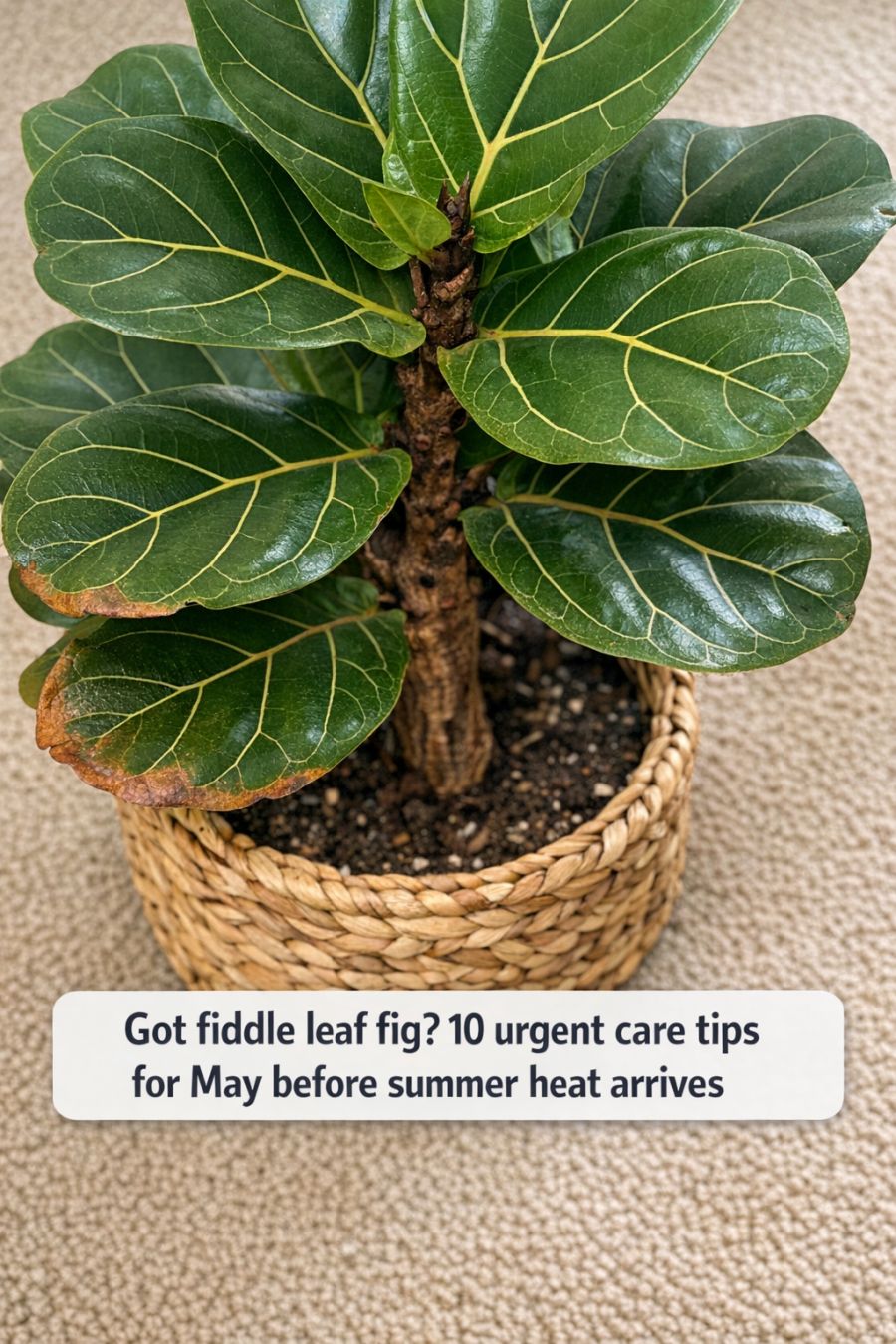
Got fiddle leaf fig? 10 urgent care tips for May before summer heat arrives
Pages: 1 2
