
Ferns are typically shade-loving plants, and too much direct sunlight can scorch their fronds. As the sun becomes more intense in June, make sure your ferns are positioned in a spot that receives dappled sunlight or indirect light. If your ferns are outdoors, consider moving them under the canopy of a tree or providing them with shade cloth for protection.
Indoor ferns should be placed near north or east-facing windows, where they can receive bright, indirect light without the risk of sunburn. Monitor the light levels and adjust as necessary to ensure your ferns receive the right amount of light.
6. Feed Ferns With the Right Fertilizer at the Right Strength
Ferns are not heavy feeders, but they benefit from a balanced, diluted fertilizer during their growing season. Use a water-soluble fertilizer with an N-P-K ratio of around 10-10-10, diluted to half the recommended strength. Apply this every 4-6 weeks from spring through summer.
Be cautious not to over-fertilize, as this can lead to salt buildup in the soil, harming the roots. Always water your ferns before applying fertilizer to prevent root burn.
7. Prune, Groom, and Remove Brown Fronds for a Lusher Look
Regular pruning and grooming will keep your ferns looking their best. Remove any brown, damaged, or dead fronds by cutting them at the base with clean, sharp scissors. This not only improves the plant’s appearance but also encourages new growth.
Inspect the plant regularly and remove any debris or fallen leaves from the soil surface to prevent disease and insect infestations. Keeping your ferns tidy will promote a healthier and more attractive plant.
8. Protect From Pests, Wind, and Indoor AC Before Summer Peaks
Ferns, particularly those grown indoors, can be susceptible to pests such as spider mites and aphids. Regularly inspect your plants for signs of infestation and treat them promptly with insecticidal soap or neem oil if necessary.
Outdoor ferns should be protected from strong winds, which can dry out the fronds and cause damage. Move them to a sheltered location or use windbreaks as needed. Indoor ferns should be kept away from air conditioning vents, as the dry air can lead to browning leaf tips. Consider using a humidifier to maintain adequate humidity levels around your ferns.
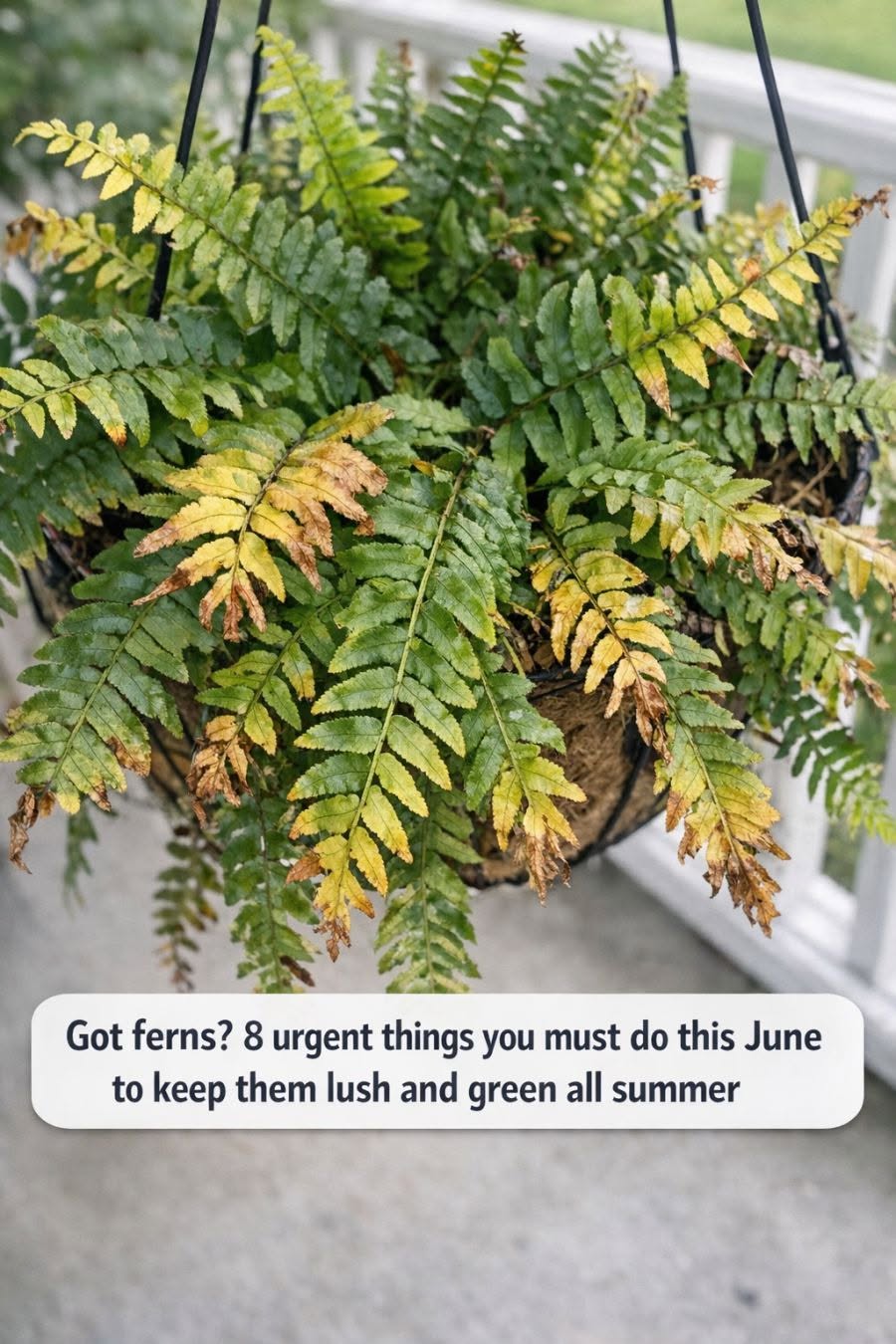
Got ferns? 8 urgent things you must do this June to keep them lush and green all summer
Pages: 1 2
