
In today’s fast-paced world, the slow cooker has become an indispensable kitchen appliance, transforming tough cuts of meat into tender morsels, and simplifying meal preparation for busy individuals and families. Yet, despite its widespread popularity, many people are still not utilizing their slow cookers to their fullest potential. If you’ve ever been disappointed by a watery stew or a dish that lacked flavor, it’s possible you might be making some common mistakes.
Understanding the nuances of slow cooking can elevate your culinary creations from ordinary to extraordinary. Whether you’re new to slow cooking or a seasoned pro, there’s always room for improvement. In this article, we’ll delve into the best practices for using your slow cooker, ensuring every meal is cooked to perfection. Let’s explore how to unlock the full potential of your slow cooker, one delicious dish at a time.
1. Start with Thawed Meat for Optimal Cooking
One of the cardinal rules of slow cooking is to always start with thawed meat. While it might be tempting to toss frozen meat into the slow cooker to save time, this practice can lead to uneven cooking and potential food safety issues. The USDA advises that food should not sit at temperatures between 40°F and 140°F for more than two hours, as this range is known as the ‘danger zone’ where bacteria can rapidly multiply.
When you start with thawed meat, it ensures that the meat cooks evenly and reaches a safe internal temperature more quickly. This not only helps in maintaining the texture and flavor of the meat but also ensures that the rest of your ingredients are not overcooked in the process. If you’re in a hurry, consider using the defrost setting on your microwave or placing the meat in the refrigerator overnight to thaw.
2. Resist the Urge to Lift the Lid Mid-Cook
Every time you lift the lid of your slow cooker, precious heat escapes, which can significantly increase the cooking time. In fact, lifting the lid can add an additional 15 to 30 minutes of cooking time each time it’s done. This is because the slow cooker relies on a consistent temperature to slowly break down the fibers in food, creating that tender, melt-in-your-mouth texture.
To avoid the temptation of lifting the lid, invest in a slow cooker with a transparent lid, allowing you to monitor the cooking process without disrupting the heat. If you must stir or add ingredients, do so quickly and replace the lid immediately to maintain the temperature.
3. Use the Right Amount of Liquid to Cover Ingredients Halfway
When using a slow cooker, it’s crucial to use the right amount of liquid to achieve the desired consistency and flavor in your dish. Unlike traditional cooking methods, slow cookers do not allow for evaporation. This means that the liquid you start with will largely remain in the pot.
For most recipes, adding enough liquid to cover the ingredients halfway is usually sufficient. This ensures that your ingredients are cooked evenly without becoming waterlogged. If you’re making a stew or soup, you may need to adjust the liquid based on the recipe requirements. Remember, you can always add more liquid later, but it’s difficult to remove excess once it’s in the pot.
4. Add Dairy Ingredients in the Last Hour of Cooking
Dairy products such as milk, cheese, and cream can curdle or separate when cooked for long periods. To prevent this from happening, it’s best to add these ingredients in the last hour of cooking. This ensures that they are fully incorporated into the dish without compromising the texture.
If you’re making a creamy soup or sauce, consider using evaporated milk or a cornstarch slurry, as these tend to hold up better under prolonged heat. These substitutes can provide the creamy texture you desire without the risk of curdling.
Next Page
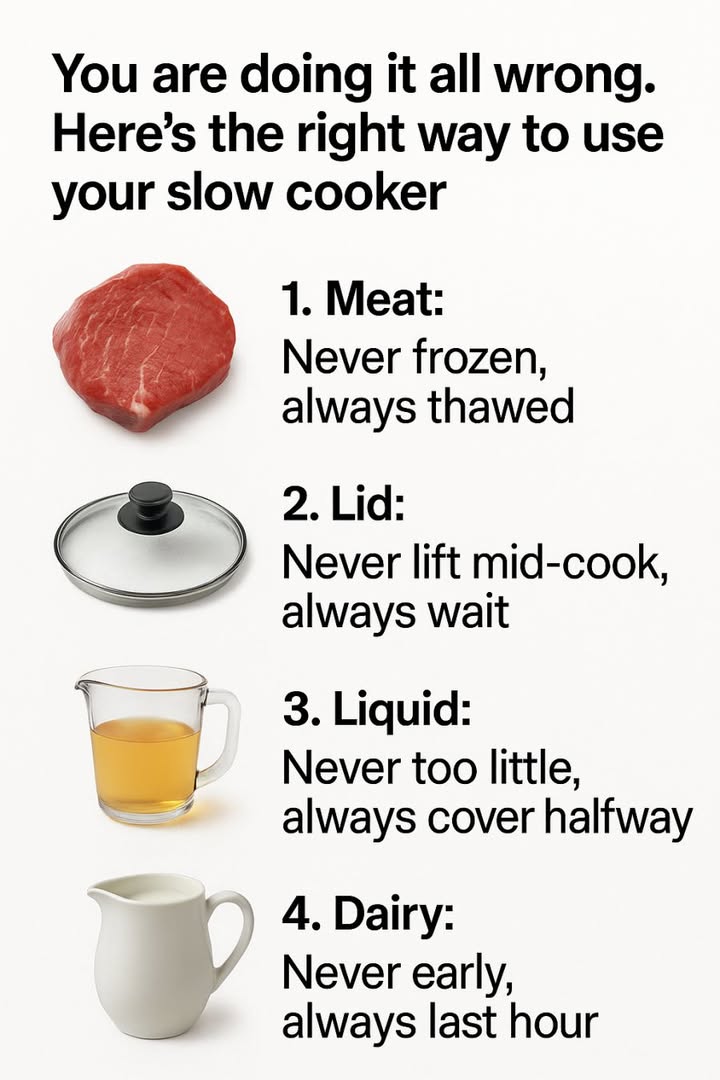
You are doing it all wrong. Here’s the right way to use your slow cooker
Pages: 1 2
