2. Ergonomic Grip and Maneuverability
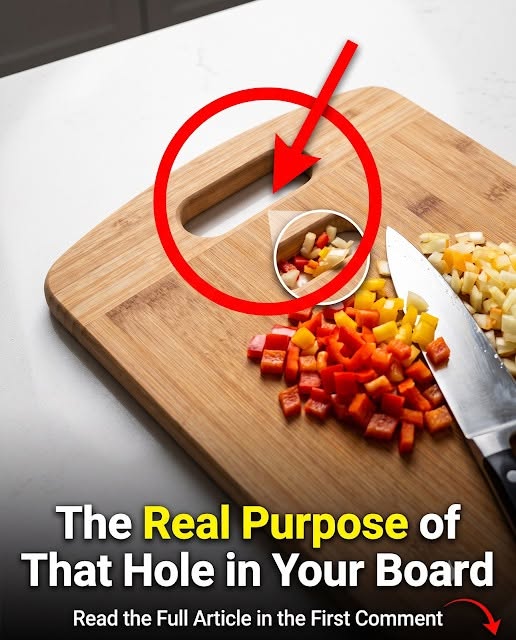
When a cutting board is lying flat on a wet countertop, getting your fingers underneath a solid block of wood or dense plastic can be surprisingly tricky. The hole gives your hand a immediate, sturdy anchor point to lift, tilt, or carry the board across the kitchen securely.
3. Air Circulation for Storage
When boards—especially wooden ones—are stored flat or pressed flush against a wall while wet, moisture gets trapped underneath. Trapped water breeds bacteria and warps organic wood. Hanging a board by its hole allows 360-degree air circulation, ensuring it dries completely and evenly on all sides.
How to Practice the Proper Technique
If you want to start using your cutting board hole as a funnel, keep these practical steps in mind:Cutlery & Cutting Accessories
Prep Normally: Dice your vegetables or aromatics on the main surface of the board as you usually would.
Use the Back of Your Knife: Never scrape food using the sharp side of your chef’s knife blade, as this dulls the edge quickly. Turn the blade upside down or use a dedicated bench scraper.
Work in Portions: Push a portion of your diced food toward the corner containing the cutout.
Position and Tilt: Hold the board over your pot or bowl, angling the board so the hole aligns directly over the center of the vessel.
Guide the Ingredients: Lightly sweep the food through the cutout. Notice how easily everything drops directly into the pan without spreading outwards.Cooking & Recipes
Common Cutting Board Mistakes to Avoid
Now that you know how to use your board properly, avoid these common habits that shorten the lifespan of your cutting surfaces and compromise kitchen hygiene:
