
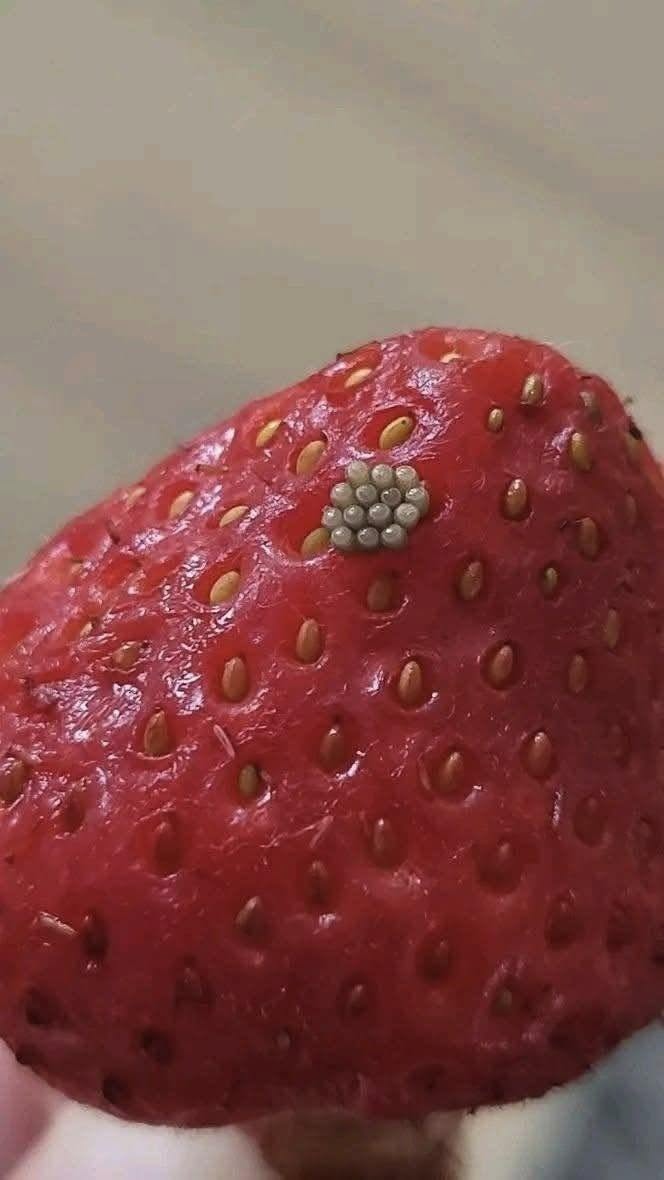
The Science Behind the Salt Water Test:
Process
What Happens
Osmotic pressure
Salt water creates a hypertonic environment outside the berry
Moisture movement
Water moves out of the larvae’s cells to balance salt concentration
Irritation response
Larvae become uncomfortable and exit the fruit to survive
Visibility
Once outside the berry, the tiny white larvae become noticeable in the water
How to Do a Salt Water Soak (If You Want to Check):
Step
Instructions
1. Prepare solution
Mix 4 cups cold water + 1 teaspoon salt (or 1 cup water + ¼ tsp salt)
2. Submerge berries
Place strawberries in the solution; ensure they’re fully covered
3. Wait
Soak for 10–15 minutes (no longer, or berries may become waterlogged)
4. Observe
Look for tiny white specks wriggling in the water or at the bottom of the bowl
5. Rinse thoroughly
Drain and rinse berries under cool running water before eating
🍓 Note: Not all strawberries have larvae. Many containers will show nothing at all. The salt water test simply reveals what’s already there—if anything is present.
✅ Are They Safe to Eat? The Short Answer
Yes.
Food safety experts, including the FDA and USDA, agree that accidentally consuming these tiny larvae poses no health risk to humans.
Why They’re Harmless:
Factor
Explanation
Non-toxic
The larvae contain no harmful substances or poisons
Non-parasitic
They cannot live inside or infect the human body
Easily digested
Your stomach acid breaks them down like any other protein
No disease transmission
Unlike some insects, fruit fly larvae don’t carry human pathogens
Naturally occurring
They’re a normal part of outdoor fruit production, not contamination
What Food Safety Experts Say:
✅ The FDA allows a certain level of “natural defects” (including insect larvae) in fresh produce because complete elimination is impossible without heavy pesticide use
✅ Accidental consumption is considered a “cosmetic issue,” not a food safety hazard
✅ The real risks with berries are mold, bacterial contamination (like E. coli or Salmonella), or spoilage—not larvae
🩺 Perspective: You’ve likely consumed insect larvae before without knowing it. They’re present in many fresh fruits and vegetables, including blueberries, raspberries, cherries, and even some leafy greens.
🌱 What Larvae in Strawberries Actually Tell You
Ironically, finding occasional larvae may indicate that the fruit was grown with fewer synthetic insecticides.
Where You’re More Likely to Find Larvae:
Source
Why Larvae May Be Present
Organic strawberries
Grown without synthetic pesticides that kill insect eggs/larvae
Locally grown berries
Often harvested at peak ripeness when flies are most active
Minimally treated produce
Fewer chemical interventions mean more natural ecosystem presence
Late-season fruit
SWD populations build up throughout the growing season
U-pick farms
Berries may sit on plants longer, increasing exposure time
The Trade-Off:
Benefit
Consideration
Lower pesticide exposure
May have more natural insect presence
Environmentally friendly farming
Supports biodiversity and soil health
Often fresher, better flavor
Local/organic berries may taste better
Natural ecosystem
Some insect presence is normal and expected
🌿 Reality check: Completely eliminating larvae would require heavy pesticide use, which many consumers want to avoid. A few tiny larvae are the trade-off for cleaner, more sustainable farming.
🛒 How to Choose Better Strawberries
While you can’t completely eliminate the possibility of larvae, you can reduce the likelihood and ensure you’re getting the freshest, highest-quality berries.
What to Look For:
Quality Indicator
Why It Matters
Firm texture
Firm berries are less likely to have soft spots where larvae feed
Bright, uniform red color
Indicates ripeness without over-ripeness (which attracts flies)
Fresh green caps (calyx)
Green, perky caps indicate recent harvest and freshness
Dry packaging
Moisture encourages mold and spoilage
No visible mold or mushiness
Mold indicates spoilage; mushy berries are overripe
Intact berries
Avoid crushed or leaking fruit, which attracts insects
What to Avoid:
❌ Mushy, squishy, or leaking berries
❌ Brown or wilted green caps
❌ Visible mold (white, gray, or green fuzz)
❌ Strong fermented or alcoholic odor
❌ Berries sitting in liquid at the bottom of the container
❌ Crushed or damaged fruit mixed with good berries
💡 Pro tip: Buy from reputable sources with high turnover. Farmers markets and local farms often have fresher berries than stores where fruit may sit for days.
🧼 Best Practices for Cleaning Strawberries
Proper cleaning helps remove surface dirt, bacteria, and any potential larvae—without damaging the delicate fruit.
The Right Way to Wash Strawberries:
Step
Instructions
Why It Matters
1. Wait until ready to eat
Don’t wash until just before consumption
Moisture accelerates spoilage and mold growth
2. Remove damaged berries
Discard any moldy, mushy, or bruised berries
Prevents cross-contamination
3. Rinse gently
Hold under cool running water; don’t soak
Removes surface dirt and bacteria without waterlogging
4. Optional salt soak
Use salt water test if concerned about larvae
Reveals hidden larvae (see instructions above)
5. Optional vinegar rinse
Mix 1 part white vinegar + 3 parts water; rinse briefly
May help kill surface bacteria; rinse with water after
6. Pat dry
Gently blot with clean paper towel or kitchen towel
Removes excess moisture that encourages spoilage
7. Remove stems
Hull berries after washing, not before
Prevents water from soaking into the fruit’s interior
What NOT to Do:
❌ Don’t soak strawberries for extended periods (makes them waterlogged)
❌ Don’t use soap, detergent, or produce washes (can leave residues)
❌ Don’t wash before storing (accelerates mold and spoilage)
❌ Don’t scrub aggressively (damages delicate fruit)
❌ Don’t remove stems before washing (creates entry point for water and bacteria)
🍓 Vinegar rinse note: While some people swear by vinegar rinses to kill bacteria and extend shelf life, research is mixed. If you use vinegar, always rinse with plain water afterward to avoid altering flavor.
🧊 Best Storage Tips for Maximum Freshness
Proper storage can extend the life of your strawberries from 2–3 days to 5–7 days.
Do’s for Strawberry Storage:
Practice
Benefit
Store unwashed
Moisture encourages mold; wash only before eating
Refrigerate immediately
Cold temperatures slow ripening and microbial growth
Keep in original container
Ventilated clamshells allow airflow; don’t seal in plastic bags
Line container with paper towel
Absorbs excess moisture that causes mold
Remove damaged berries immediately
One moldy berry can spoil the entire container
Store in high-humidity drawer
Crisper drawer maintains optimal humidity for berries
Use within 3–5 days
Strawberries are highly perishable; eat while fresh
Don’ts for Strawberry Storage:
❌ Don’t wash before storing
❌ Don’t leave at room temperature for extended periods
❌ Don’t store in airtight containers (traps moisture)
❌ Don’t stack heavy items on top (crushes delicate fruit)
❌ Don’t store near ethylene-producing fruits (apples, bananas speed ripening)
Long-Term Storage: Freezing Strawberries
If you can’t eat them fresh, freezing is an excellent option:
Step
Instructions
1. Wash and hull
Rinse gently; remove green stems
2. Dry thoroughly
Pat completely dry with clean towels
3. Flash freeze
Arrange in single layer on baking sheet; freeze 2–3 hours
4. Transfer to freezer bags
Remove as much air as possible; label with date
5. Store up to 12 months
Best quality within 6–8 months
🧊 Freezing tip: Flash freezing prevents berries from clumping together, making it easy to use individual berries for smoothies, baking, or desserts.
❓ Frequently Asked Questions
Q: Can I eat strawberries if I find larvae after soaking them?
A: Yes. After rinsing thoroughly, the berries are safe to eat. The larvae themselves are harmless, and any that remain will be removed during rinsing. If it bothers you psychologically, you can discard the berries, but it’s not a safety requirement.
Q: Do organic strawberries have more larvae than conventional?
A: Often, yes. Organic farming avoids synthetic pesticides that kill insect eggs and larvae. However, this is the trade-off for lower pesticide exposure and more environmentally sustainable farming.
Q: Can larvae survive in my body if I eat them?
A: No. Fruit fly larvae cannot survive in the human digestive system. Stomach acid breaks them down like any other protein. They are not parasitic and cannot infect humans.
Q: How can I tell if strawberries are spoiled vs. just have larvae?
A: Spoiled strawberries show: mold (fuzzy growth), mushy texture, fermented smell, dark discoloration, or leaking juice. Larvae alone don’t indicate spoilage.
Q: Will cooking strawberries kill the larvae?
A: Yes. Heat from cooking, baking, or making jam will kill any larvae. However, they’re already harmless even when raw.
Q: Can I prevent larvae by washing with bleach or hydrogen peroxide?
A: No—and don’t try. These chemicals are unsafe for produce and can leave toxic residues. Stick to water, optional salt soak, or diluted vinegar rinse.
Q: Do all strawberries have larvae?
A: No. Many containers have none at all. Presence varies by farm, season, growing practices, and timing of harvest.
Q: Are larvae more common in certain types of berries?
A: Yes. Soft, thin-skinned berries are most susceptible: raspberries, blackberries, strawberries, and cherries. Blueberries are less commonly affected due to thicker skin.
Q: Should I return strawberries to the store if I find larvae?
A: You can, but most stores won’t consider it a defect since larvae are a natural occurrence in fresh produce. It’s not a sign of poor quality or contamination.
Q: Can I compost strawberries with larvae?
A: Yes. The larvae will continue their life cycle in the compost, eventually becoming adult flies. This is natural and safe for composting systems.
💙 A Compassionate Closing Thought
If you’ve just discovered tiny white larvae in your strawberries and you’re feeling disgusted, disappointed, or worried—please know:
🍓 Your reaction is normal. Finding unexpected “guests” in your food is unsettling. It’s okay to feel grossed out.
🍓 You’re not alone. Millions of people discover larvae in fresh berries every year. It’s a common, natural occurrence.
🍓 This doesn’t mean you did anything wrong. You bought fresh, healthy food. Larvae are a sign of natural growing conditions, not poor choices.
🍓 You have options. You can rinse and eat the berries, freeze them, cook them, or discard them if it bothers you too much. All are valid choices.
🍓 This is temporary. A little discomfort now doesn’t mean your food is unsafe. Knowledge replaces fear with understanding.
Nature is messy. Fresh food comes from living ecosystems, not sterile laboratories. That’s actually a good thing—it means fewer chemicals, more sustainable farming, and food that’s closer to its natural state.
However you choose to handle your berries, may you do so with self-compassion, practical wisdom, and the understanding that a few tiny larvae don’t diminish the nourishment, flavor, or joy that fresh strawberries can bring.
You’ve got this.
🧭 The Bottom Line
Tiny white larvae in strawberries are harmless insect larvae (usually from spotted wing drosophila) that are naturally present in some fresh berries.
Remember:
🍓 Larvae are harmless to humans—non-toxic, non-parasitic, and easily digested
🧪 Salt water soaks reveal larvae through osmosis but don’t create them
✅ Berries with larvae are safe to eat after thorough rinsing
🌱 Larvae are more common in organic, local, or minimally treated berries
🧼 Wash berries just before eating; store unwashed in the refrigerator
💙 Finding larvae is normal and not a sign of spoilage or contamination
Fresh food comes from nature, and nature includes insects. While it’s understandable to feel uneasy, those tiny white specks don’t make your strawberries unsafe—they just remind us that real food comes from real ecosystems.
Rinse well. Eat fresh. Enjoy your berries.
Have you ever found larvae in your strawberries or other berries? How did you handle it? Share your experiences and tips respectfully in the comments below!
