
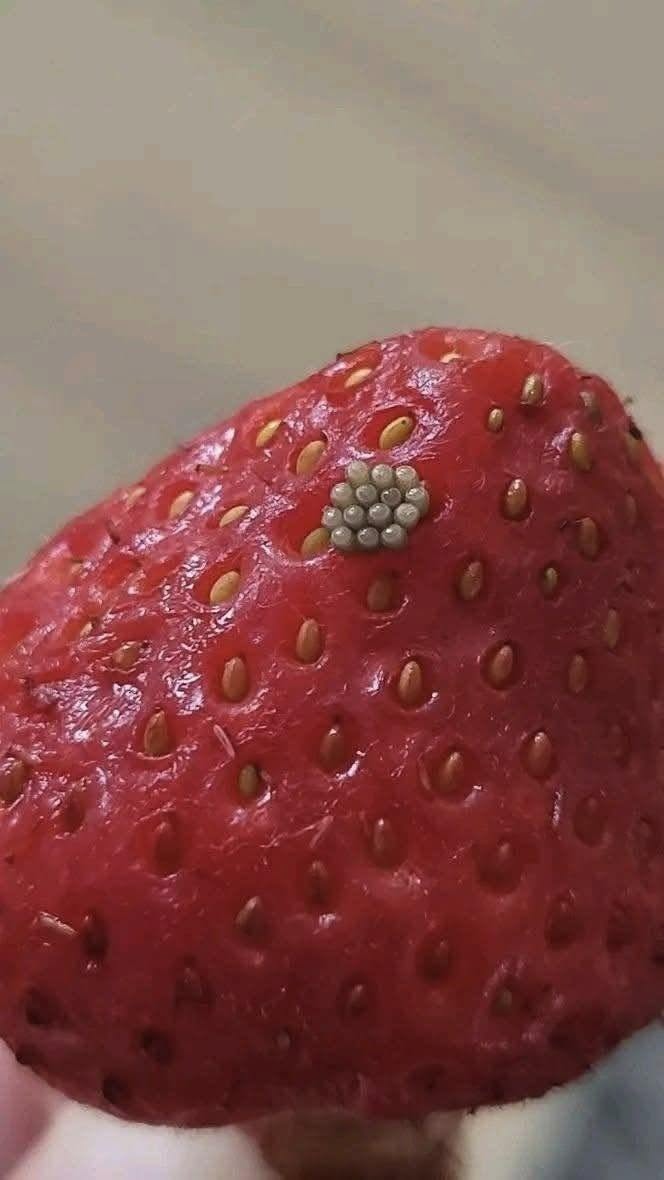
You wash a container of fresh strawberries in salt water, and suddenly tiny white specks begin wriggling out of the fruit.
It’s enough to make anyone lose their appetite.
Many people immediately assume their berries are contaminated or unsafe to eat. Some even throw away the entire container in disgust.
But here’s the surprising truth: those tiny white “worms” are usually harmless insect larvae naturally found in some fresh fruit. While seeing them can be unpleasant, they are not a sign that your strawberries are spoiled, contaminated, or dangerous to eat.
Understanding what’s happening—and why—can help you enjoy fresh berries with confidence instead of fear.
Let’s explore the truth about strawberry larvae, what they mean for your health, and how to properly handle your fresh produce.
🔬 What Are Those Tiny White “Worms” Really?
First, let’s be clear: these aren’t worms in the traditional sense. They’re insect larvae—specifically, the immature stage of small fruit flies.
The Primary Culprit: Spotted Wing Drosophila (SWD)
|
Feature
|
Details
|
|---|---|
|
Scientific name
|
Drosophila suzukii
|
|
Common name
|
Spotted wing drosophila (SWD)
|
|
Size
|
2–3 mm long (about the size of a fruit fly)
|
|
Appearance
|
Tiny, white to translucent, worm-like larvae
|
|
Life cycle
|
Egg → Larva → Pupa → Adult fly
|
|
Habitat
|
Ripening soft fruits: strawberries, raspberries, blueberries, cherries
|
How They Get Into Your Strawberries:
- Female flies lay eggs inside ripening berries using a serrated ovipositor (egg-laying organ)
- Eggs hatch within 12–72 hours into tiny larvae
- Larvae feed on the fruit’s flesh as they grow
- Larvae exit the fruit to pupate in soil (or emerge when soaked in salt water)
💡 Key insight: These larvae are present before you buy the berries. They’re not a sign of poor storage or contamination after purchase—they’re a natural part of outdoor fruit cultivation.
🧪 Why Salt Water Makes Them Come Out
The larvae aren’t created by the salt water. They were already inside the berry, invisible to the naked eye.
Salt water simply makes them visible through a process called osmosis.
