
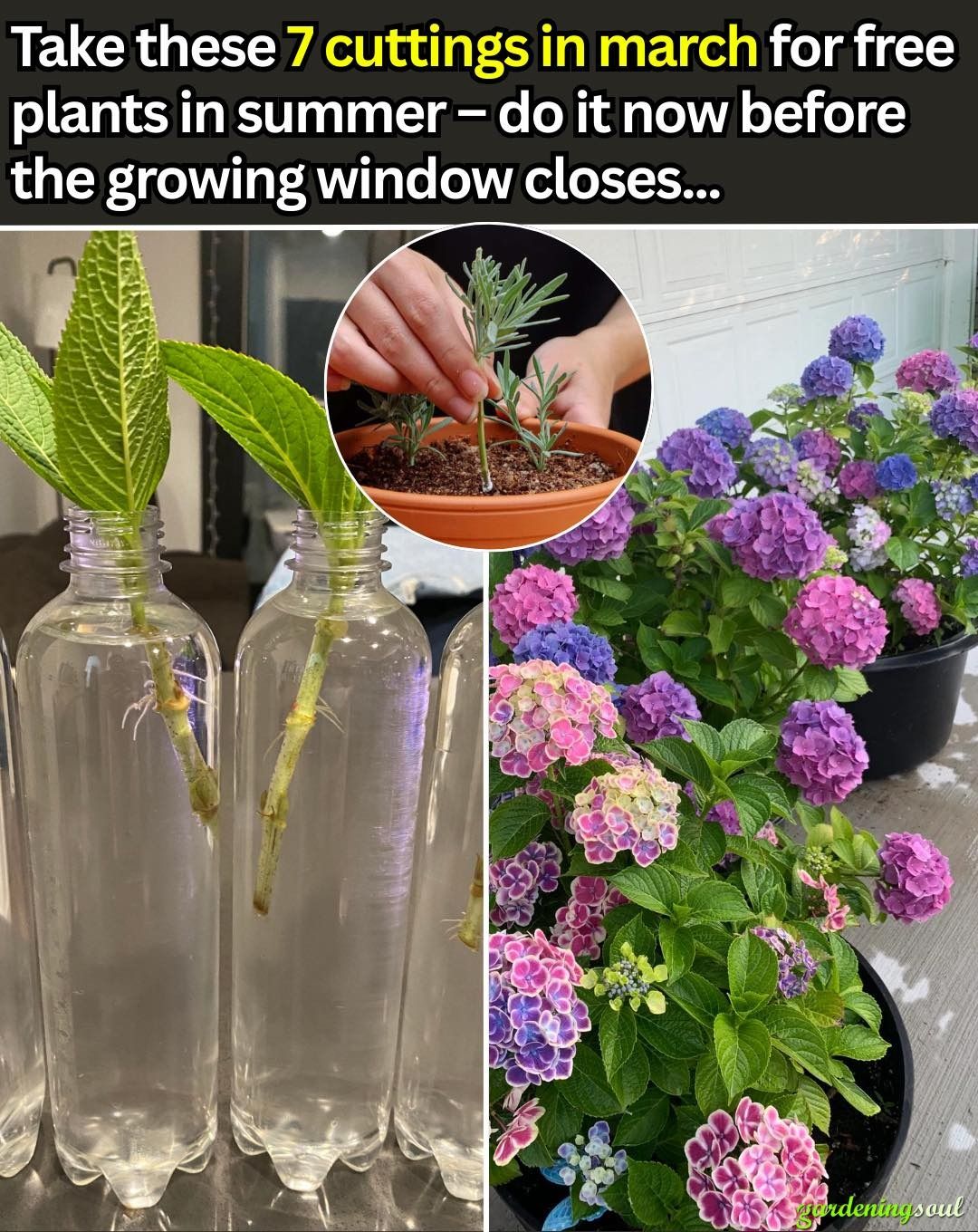
bush
Hydrangeas are excellent candidates for spring propagation. In March, young green shoots begin appearing at the base of the plant.Flora & Fauna
These shoots can be cut and rooted in moist potting mix.
Hydrangea cuttings prefer high humidity while they establish roots. Covering the pot with a clear plastic bag helps maintain moisture.
Roots typically develop within three to four weeks.
Once established, hydrangea cuttings grow quickly and can become full shrubs within a few seasons.
5. Mint
Mint is one of the easiest plants to propagate. It grows vigorously and produces roots rapidly when stems are placed in water.Herbs & Spices
Cut a healthy mint stem about 10–12 centimeters long and remove the lower leaves.
Place the cutting in a jar of water and keep it in a bright location. Within a week or two, small white roots should appear.
Once roots develop, the cutting can be transplanted into soil. Because mint grows aggressively, it is often best grown in containers.
6. Sage
Sage is a woody herb that responds well to early spring cuttings.Horticulture
Select soft new stems rather than older woody branches. Remove the lower leaves and place the cutting in moist soil.
Sage prefers well-drained soil and moderate watering.
Roots usually develop within three to four weeks. Propagating sage in March allows the plants to establish before summer heat arrives.
7. Fuchsia
Fuchsias are popular ornamental plants known for their colorful hanging flowers.Home & Interior Decor
Spring cuttings root quickly and allow gardeners to create many new plants. Choose soft green shoots that have not yet produced flowers.
Cut the stem just below a node and remove lower leaves.
Place the cutting in moist potting soil and keep it in bright indirect light. Fuchsia cuttings often develop roots within two to three weeks.
These plants grow rapidly and can begin flowering later in the season.
Creating the Ideal Environment for Rooting
Successful propagation depends on providing the right conditions.Flora & Fauna
Cuttings require warmth, moisture, and indirect light.
Direct sunlight may cause the cuttings to dry out before roots develop. Humidity is also important.
Covering pots with clear plastic or using propagation trays helps maintain a humid environment. Regularly misting the cuttings can also help prevent them from drying out.
Signs That Your Cuttings Are Rooting Successfully
After several weeks, you may notice signs that roots are forming.Horticulture
New leaves may appear at the top of the cutting.
The stem may feel more stable when gently tugged.
In water propagation, roots become visible along the stem.
Once roots reach several centimeters in length, the cutting is ready to be transplanted into soil.
Common Mistakes to Avoid
Propagation is simple, but a few common mistakes can prevent success.
Using stems that are too old or woody reduces rooting potential.
Allowing cuttings to dry out can stop root development.
Overwatering can lead to rot.
Keeping cuttings in gentle light and evenly moist soil helps prevent these problems.
The Benefits of Propagating Plants
Taking cuttings offers several advantages for gardeners.Flora & Fauna
It allows you to create new plants without purchasing seeds or seedlings.
The new plants are genetically identical to the parent plant, ensuring consistent growth and appearance.
Propagation also allows gardeners to share plants with friends and family.
For many gardeners, the process is both economical and rewarding.
March is one of the best months to take plant cuttings. During this early spring window, many plants produce soft new growth that roots quickly and easily.
