
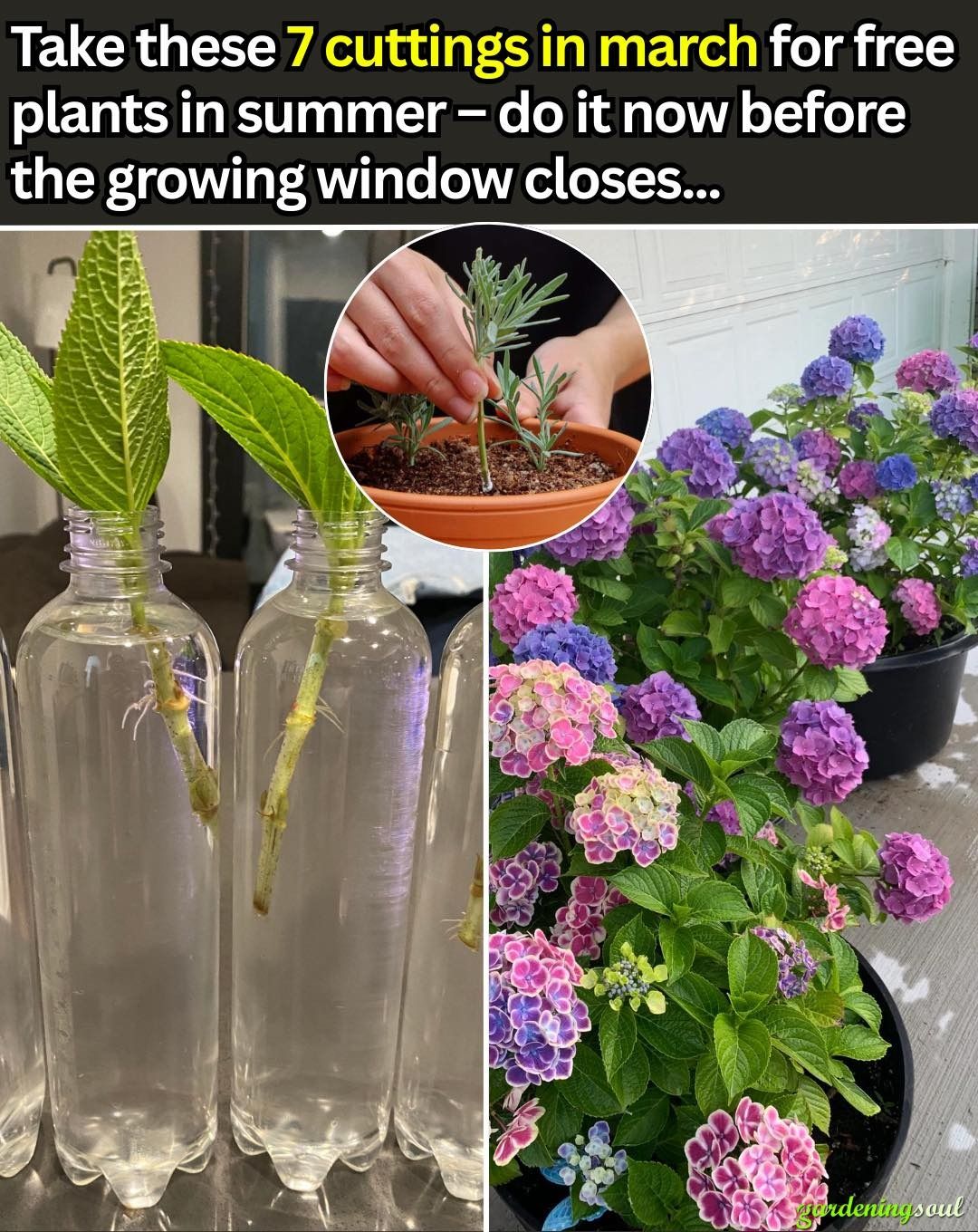
Spring is one of the most exciting seasons for gardeners. As temperatures rise and daylight increases, plants awaken from winter dormancy and begin producing fresh growth.Flora & Fauna
This new growth creates the perfect opportunity for plant propagation.
One of the easiest ways to multiply plants without spending money is by taking cuttings. Many shrubs, herbs, and ornamental plants can grow entirely new roots when a healthy stem is placed in water or soil.
March is an especially important month for this process. New spring growth is soft and flexible, making it easier for stems to develop roots quickly. If gardeners wait too long, stems become woody and rooting becomes more difficult.
Discover more
Pots & Planters
Patio, Lawn & Garden
bush
Plants such as Lavandula, Rosmarinus officinalis, and Pelargonium are among the many species that root well from spring cuttings.
Why March Is the Perfect Time for Cuttings
Timing is one of the most important factors in plant propagation.Herbs & Spices
In early spring, plants begin producing soft new shoots known as softwood growth. These stems contain active cells that divide quickly, allowing roots to develop faster.
Discover more
pot
Pots & Planters
Patio, Lawn & Garden
Softwood cuttings taken in March often root more easily than woody stems taken later in the season.Flora & Fauna
Another advantage of early propagation is that the plants have several months to establish before summer heat arrives.
By the time warm weather peaks, your cuttings may already have strong roots and healthy new leaves.
This early start can give young plants a significant advantage.
How Plant Cuttings Work
Discover more
bush
Bush
Shrubs & Bushes
When a stem cutting is taken from a plant, it contains the genetic material needed to produce a new plant identical to the original.
The cutting must first develop roots before it can grow independently.
This process occurs when cells near the cut area begin forming root tissue in response to moisture and warmth.
Providing the right conditions – light, humidity, and proper temperature – encourages this root development.
Within a few weeks, the cutting begins producing roots that allow it to absorb water and nutrients.
Discover more
Gardening
shrubs
Pots & Planters
How to Take Successful Cuttings
Before exploring the best plants to propagate in March, it helps to understand the basic steps for taking cuttings.Flora & Fauna
Choose healthy stems that show fresh green growth.
Cut a piece about 10–15 centimeters (4–6 inches) long just below a leaf node.
Remove the lower leaves so the stem can be placed in water or soil without foliage touching the surface.
Discover more
pot
Herbs & Spices
Patio, Lawn & Garden
Insert the cutting into moist potting soil or place it in a glass of water.Horticulture
Keep the cutting in bright indirect light and maintain consistent moisture.
Within several weeks, roots should begin to form.
1. Lavender
Lavender is one of the most popular garden plants for propagation.
Soft green stems appear in early spring, making March an ideal time to take cuttings. Choose non-flowering stems that are flexible but not overly soft.
Discover more
Home & Interior Decor
bush
Bush
Cut the stem just below a node and remove the lower leaves. Lavender cuttings root best in well-draining soil rather than water.Flora & Fauna
Place them in a pot filled with sandy potting mix and keep the soil slightly moist. With proper care, roots often form within three to four weeks.
By summer, these cuttings can grow into compact lavender plants ready for the garden.
2. Rosemary
Rosemary is another herb that propagates easily from spring cuttings.
Discover more
Shrubs & Bushes
Gardening
pot
Young stems that are still green and flexible root faster than older woody stems. Select a healthy branch and cut a piece about 10 centimeters long.Home & Interior Decor
Remove leaves from the lower half of the cutting.
Rosemary can root in water or soil, but many gardeners prefer water because it allows them to observe root growth. Roots usually appear within two to three weeks.
Once the roots reach a few centimeters in length, the cutting can be transplanted into soil.
3. Geranium
Discover more
Pots & Planters
shrubs
Home & Interior Decor
Geraniums are famous for their ease of propagation.Horticulture
These plants produce new roots quickly, making them ideal for beginner gardeners.
Choose a healthy stem with several leaves and cut just below a node.
Allow the cut end to dry for a few hours before placing it in soil. This step helps prevent rot.
Geranium cuttings typically root within two weeks and begin producing new leaves shortly afterward. By summer, the new plants will often be large enough to bloom.
4. Hydrangea
Discover more
Patio, Lawn & Garden
Herbs & Spices
