
Discover more
Vehicle Wheels & Tires
Physics
Herbs
Together, these herbs create a garden that is not only productive but also rich in texture, scent, and visual appeal.Herbs & Spices
Watering and Maintenance
One of the advantages of a wagon wheel herb garden is that it simplifies care, but understanding how herbs respond to water is still essential.
Most herbs prefer soil that dries slightly between watering. Overwatering is far more damaging than underwatering, especially for plants like rosemary and thyme.
Water deeply rather than frequently. This encourages roots to grow downward, making plants more resilient during dry periods. Shallow, frequent watering leads to weak root systems and less vigorous growth.
Because the garden is divided into sections, you can adjust watering slightly depending on the needs of each herb. This level of control is one of the key benefits of the wagon wheel design.
Harvesting for Continuous Growth
Regular harvesting is not just about collecting herbs – it is essential for maintaining healthy, productive plants.Herbs & Spices
When you harvest properly, you encourage the plant to produce new growth. Cutting stems just above leaf nodes stimulates branching, leading to fuller, bushier plants.
If herbs are left unharvested, they often begin to flower. While flowering is a natural process, it can reduce the intensity of flavor in many herbs. Regular trimming delays this process and keeps plants in their most productive state.
The circular layout of the wagon wheel makes harvesting especially convenient. Each section is easily accessible, allowing you to gather herbs without disturbing the rest of the garden.
Seasonal Care and Long-Term Maintenance
As the seasons change, your herb garden will require small adjustments.
In spring, focus on planting and establishing strong growth. Summer is the most active period, when harvesting and watering become more frequent. In fall, remove declining plants and prepare perennials for cooler temperatures.Flora & Fauna
Some herbs, like chives, thyme, and sage, will return year after year. Others, such as basil and cilantro, are annuals and will need to be replanted.
Over time, refreshing the soil with compost and occasionally rotating herbs within sections can help maintain fertility and prevent nutrient depletion.
Creating a Living Garden Feature
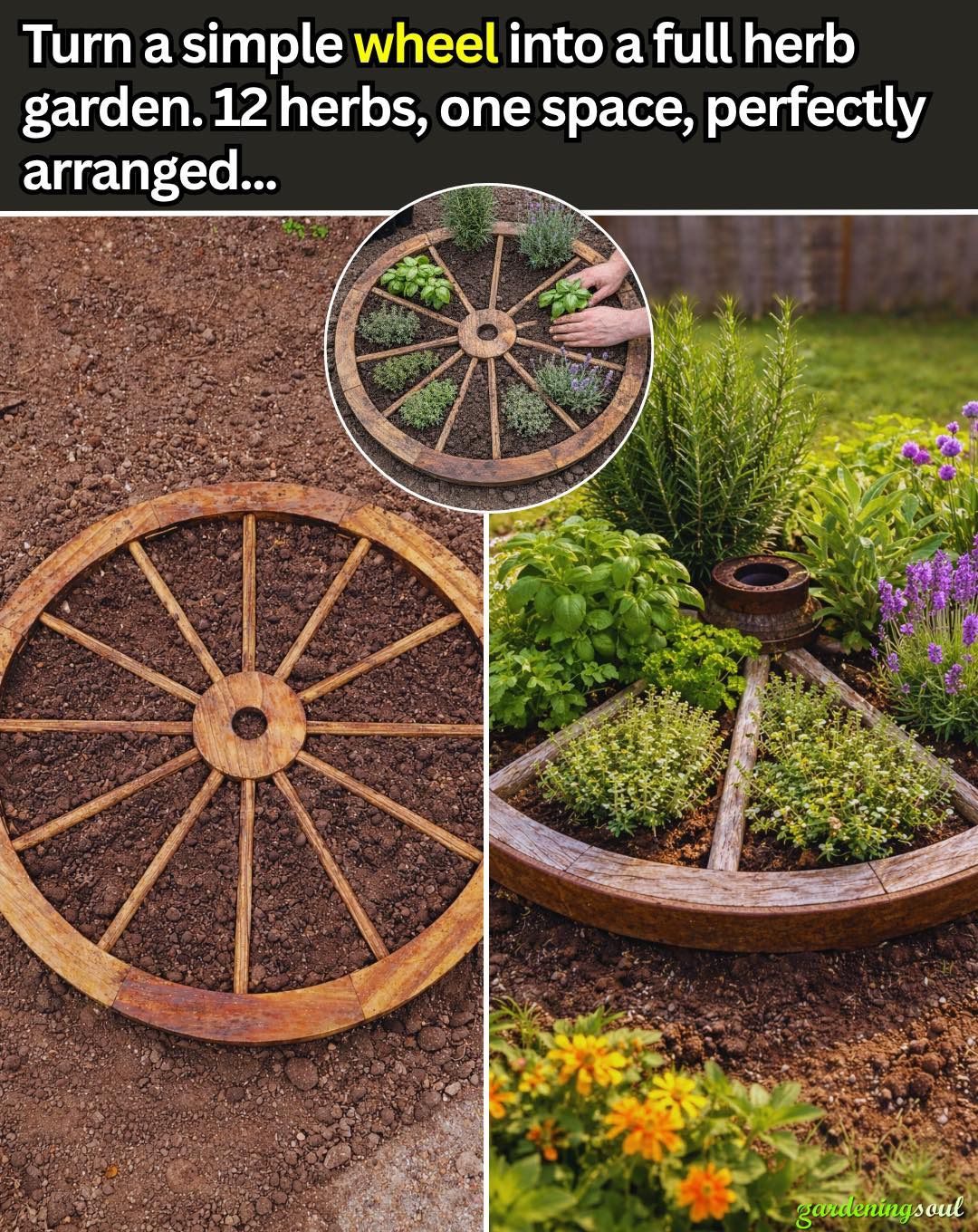
One of the most appealing aspects of a wagon wheel herb garden is its ability to function as both a productive space and a decorative centerpiece.
The circular symmetry naturally draws attention. The variation in leaf shapes, colors, and textures creates visual interest throughout the season. Fragrant herbs release scent as you brush past them, adding another sensory dimension to the garden.
With minimal effort, this design transforms a simple planting area into a feature that enhances the entire landscape.
A wagon wheel herb garden is a perfect example of how thoughtful design can simplify gardening while improving results.
