
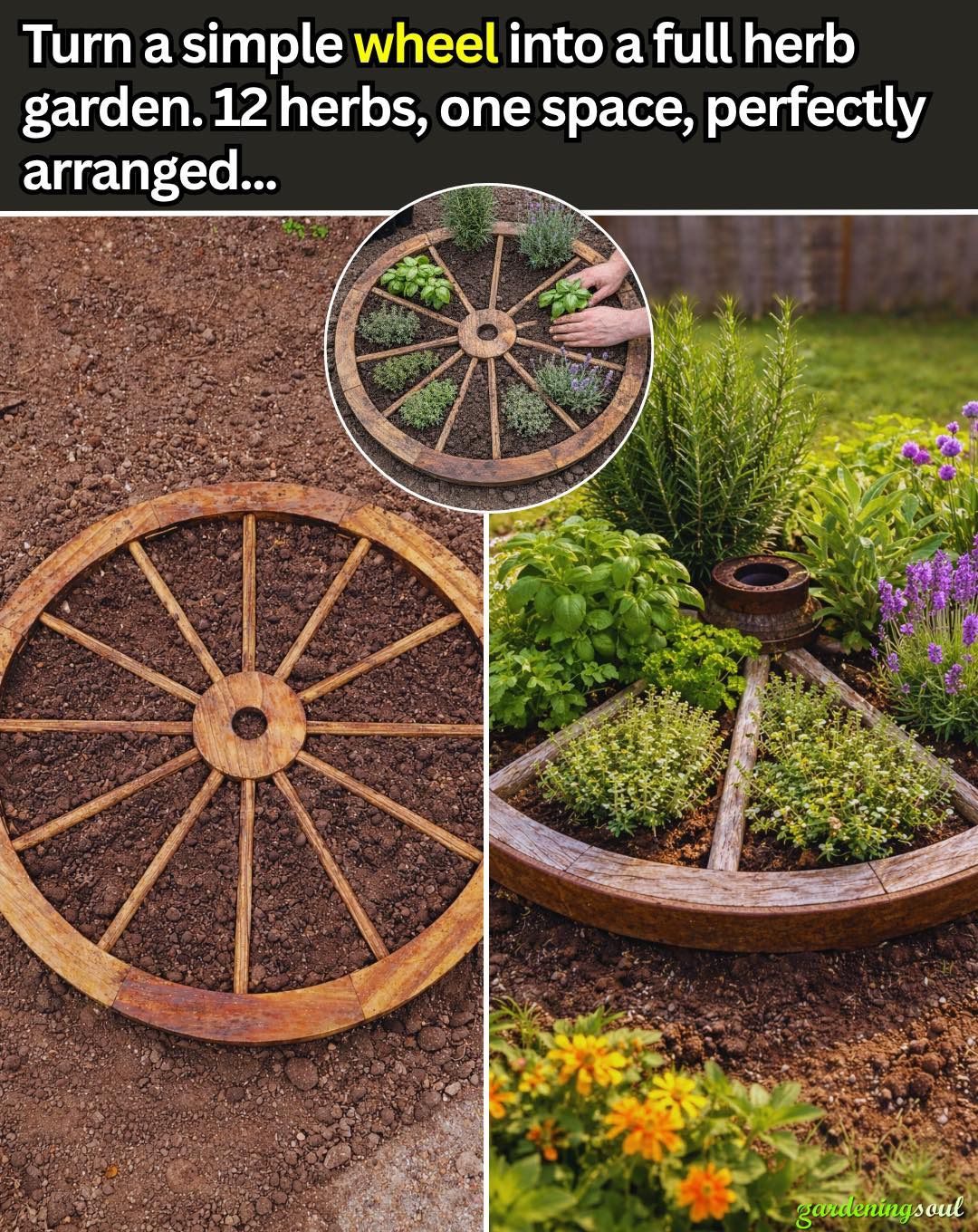
A well-designed herb garden should be more than just productive – it should be organized, easy to maintain, and visually striking.Herbs & Spices
The wagon wheel herb garden achieves all three in one elegant design. With a single antique wheel, you can divide your growing space into 12 natural sections, each dedicated to a different herb, creating a layout that is both beautiful and highly functional.
Why the Wagon Wheel Design Works So Well
At first glance, a wagon wheel garden looks like a decorative feature. But its real strength lies in its natural structure.
The spokes of the wheel create clearly defined planting zones without the need for complex construction. Each section becomes a small, contained growing area where herbs can develop without competing aggressively with their neighbors.
Discover more
Gardening
Horticulture
Flora & Fauna
This structure creates a balanced growing environment. Herbs that tend to spread aggressively, such as mint or lemon balm, can be confined to their own section.Herbs & Spices
More delicate herbs, like cilantro or parsley, can grow without being overshadowed. The result is a garden where every plant has its own space, yet everything works together as a cohesive system.
The circular layout also improves accessibility. Instead of walking through beds and compacting soil, you can reach every section easily from the outside or by stepping carefully between spokes.
This keeps the soil loose and healthy while making maintenance simpler.
Choosing the Right Location
The success of your wagon wheel herb garden depends heavily on placement. Herbs, as a group, prefer sunlight, airflow, and well-drained soil.
Discover more
Autos & Vehicles
Bush
bush
A location that receives at least six to eight hours of direct sunlight daily will allow most herbs to thrive. Morning sun is especially valuable, as it dries moisture from leaves and reduces the risk of disease.Herbs & Spices
Avoid areas where water tends to collect after rain. Herbs, particularly Mediterranean varieties like rosemary and thyme, are highly sensitive to soggy soil. Good drainage is essential, not optional.
Airflow is another important factor. A slightly open, breezy location helps prevent fungal issues and keeps plants healthy. While herbs can tolerate sheltered spots, they perform best where air can move freely around them.
Preparing the Soil for Long-Term Success
Before placing the wagon wheel, the ground beneath it should be properly prepared. This is one of the most important steps, yet it is often rushed.
Discover more
Shrubs & Bushes
Gardening
Flora & Fauna
Start by removing grass, weeds, and roots from the area. Then loosen the soil deeply—at least 20 to 30 centimeters. This allows roots to establish easily and improves drainage.
Mixing in compost helps create a balanced growing medium. However, it’s important not to over-enrich the soil. Many herbs actually produce stronger flavors when grown in slightly lean conditions.Herbs & Spices
The goal is to create soil that is fertile enough to support growth, but not so rich that it encourages excessive leafy growth at the expense of aroma and essential oils.
If your soil is heavy or clay-based, adding sand or fine gravel will improve drainage significantly. This step alone can make the difference between thriving herbs and struggling plants.
Positioning the Wagon Wheel
Once the soil is prepared, the wheel becomes the defining structure of the garden.
Discover more
Horticulture
Herbs & Spices
Autos & Vehicles
Lay it flat on the ground and position it carefully so it sits level. Press it slightly into the soil so it remains stable over time. The spokes will naturally divide the space into sections, creating a ready-made planting grid.
Some gardeners choose to reinforce the sections with stones, bricks, or wooden edging. This is optional, but it can help maintain clear divisions and prevent soil from shifting between sections.
The center of the wheel can be left open, filled with soil, or used as a focal point. Some gardeners place a decorative pot, a small herb cluster, or even a vertical feature in the center to enhance the visual appeal.Autos & Vehicles
Designing the Layout: How to Use the 12 Sections
A wagon wheel with 12 sections gives you the opportunity to grow a diverse range of herbs—but thoughtful placement is essential.
Discover more
Vehicle Wheels & Tires
Physics
bush
Not all herbs grow the same way. Some stay low and compact, while others become tall and bushy. Some prefer dry conditions, while others need more consistent moisture.Herbs & Spices
Placing taller herbs like dill or rosemary closer to the center prevents them from shading smaller plants. Lower-growing herbs like thyme or chives work well along the outer edges, where they can spill slightly over the border without interfering with neighboring sections.
Grouping herbs with similar water needs also improves success. Mediterranean herbs such as thyme, sage, and rosemary prefer drier conditions, while basil, parsley, and cilantro benefit from slightly more moisture.
Keeping these groups separated allows you to water appropriately without compromising plant health.
Discover more
Bush
Shrubs & Bushes
Gardening
Aggressive growers like mint and lemon balm should always be contained within their own section. Without boundaries, they can quickly take over the entire garden.
The Best Herbs for a Wagon Wheel Garden
A well-balanced herb wheel typically includes a mix of culinary favorites, aromatic plants, and beneficial companions.Herbs & Spices
Basil thrives in warm conditions and produces abundant leaves when harvested regularly. Thyme forms a low, spreading carpet that helps cover soil and reduce moisture loss.
Discover more
Flora & Fauna
Horticulture
Autos & Vehicles
Rosemary adds structure and height, along with a strong, woody fragrance.
Oregano grows vigorously and benefits from having its own space. Mint, while highly useful, must be controlled carefully to prevent it from spreading beyond its section. Parsley provides a steady harvest and fits well into smaller spaces.
Chives add both visual interest and practical benefits, as they can help deter certain pests. Sage offers soft, textured foliage and a strong aroma that contributes to the diversity of the garden.
Cilantro grows quickly but has a shorter life cycle, making it ideal for rotation. Dill attracts beneficial insects and adds vertical contrast. Tarragon brings a unique flavor and compact growth habit, while lemon balm contributes fragrance and versatility.
