
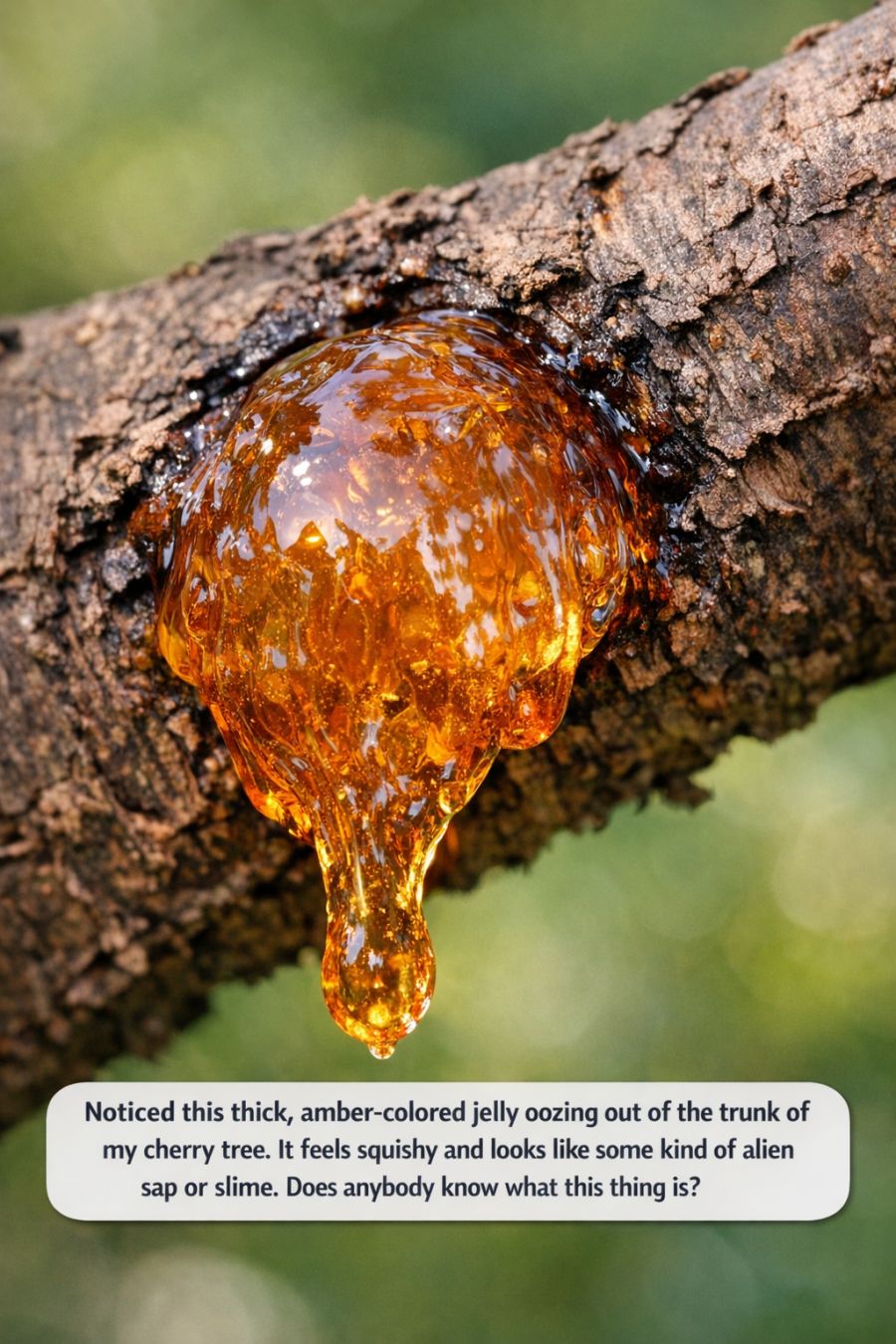
When you first notice a thick, amber-colored jelly oozing from the trunk of your cherry tree, it can be quite alarming. This mysterious substance, reminiscent of alien slime, can make any gardener or tree enthusiast wonder about the health of their tree. Understanding what this substance is and why it’s appearing on your tree is crucial for ensuring the longevity and health of your garden.
Cherry trees, like all plants, have their unique challenges and responses to environmental stimuli. The appearance of this jelly-like substance, commonly known as gummosis, can be a natural part of the tree’s life cycle or an indication of underlying stress or disease. In this article, we’ll explore the causes of gummosis, how to differentiate between normal and concerning signs, and what steps you can take to care for your tree.
1. What That Amber Jelly on Your Cherry Tree Actually Is
The amber-colored jelly you’re seeing is known as gummosis, which is a condition where sap leaks from the tree bark and hardens into a gum-like substance. This is not exclusive to cherry trees but can be found on many stone fruit trees. The sap can appear clear, amber, or even dark brown, depending on the tree species and the cause of the gummosis.
Gummosis is essentially a tree’s response to stress or injury. While it can be unsightly, it’s not always indicative of a serious problem. However, understanding the underlying cause is crucial because it can also signify more serious issues like fungal infections or environmental stress.
2. How Gummosis Forms: The Tree’s Stress Response Explained
Gummosis forms as a result of the tree’s natural defense mechanisms. When a tree experiences stress—be it from physical damage, disease, or environmental factors—it produces excess sap as a way to seal wounds and prevent further damage.
This process begins with the tree cells producing more sap in response to an injury or infection. The sap then travels to the site of the damage, where it oozes out and eventually hardens upon exposure to air, forming the characteristic gummy appearance. It’s a bit like a scab forming on a wound in humans, providing a protective barrier against further harm.
3. Common Causes: From Mechanical Damage to Environmental Stress
Several factors can lead to gummosis in cherry trees. Mechanical damage, such as from improper pruning or physical injury from garden tools, can trigger the tree’s defense response.
Environmental stresses like drought, overwatering, or extreme temperatures can also cause gummosis. Trees under stress from poor soil conditions or incorrect watering schedules often show signs of gummosis as they attempt to cope with these adverse conditions. It’s important to assess your garden conditions, including checking for soil compaction, nutrient deficiencies, or improper watering patterns.
4. Fungal and Bacterial Culprits Behind Cherry Tree Gummosis
Pathogens are another common cause of gummosis. Fungal infections such as Cytospora canker can invade the tree through wounds or natural openings in the bark, leading to gumming. These fungi thrive in wet conditions and can be exacerbated by poor air circulation around the tree.
Bacterial canker, caused by the bacterium Pseudomonas syringae, is another culprit. It typically infects trees during cool, wet conditions and can cause significant gumming. These pathogens weaken the tree and can lead to more serious health issues if not addressed promptly.
5. How to Tell Normal Sap From a Serious Disease Problem
Distinguishing between normal sap flow and a serious disease problem involves examining the context and accompanying symptoms. Normal sap flow can occur during warm weather as part of the tree’s natural processes, particularly in spring and summer.
However, if you notice excessive amounts of sap, discoloration, foul odor, or if the gumming is accompanied by dieback in branches or leaves, it may indicate a disease. It’s also important to check for other signs of distress, such as wilting leaves or unusual growth patterns, which can help in diagnosing the problem accurately.
6. Other Signs to Check for on the Bark, Leaves, and Fruit
Aside from the gumming, inspect the tree’s bark for cracks, cankers, or discoloration, which might suggest disease presence. Leaves that are yellowing, wilting, or have spots could indicate nutritional deficiencies or fungal infections.
Examine the fruit for signs of rot or blemishes, as these can also point to underlying health issues. Consistent monitoring can help you catch problems early before they become severe, allowing for timely intervention and treatment.
Pages: 1 2
