
Waking up to find your meticulously maintained lawn transformed into a chaotic scene of torn sod and ripped grass can be both perplexing and frustrating. It’s as if someone wielded a rototiller overnight, leaving your once-pristine yard in disarray. This kind of destruction not only affects the aesthetic appeal of your property but can also lead to long-term damage if not addressed promptly.
Understanding the root cause of this issue is crucial for effective resolution. While your initial instinct might be to blame large animals or mischievous neighborhood pets, the real culprit is often much smaller and more elusive. In many cases, the damage is linked to nocturnal wildlife, particularly skunks, who are on the hunt for a midnight snack beneath your turf.
1. Why Your Lawn Looks Like It’s Been Rototilled Overnight
The appearance of a lawn that looks like it has been rototilled overnight is often the result of animals digging in search of food. This digging is typically characterized by large patches of grass that are flipped over or pulled up, exposing the soil beneath. These patches can vary in size but often measure between 6 to 12 inches in diameter. The chaotic pattern and seemingly random placement of these patches are indicative of wildlife activity rather than organized landscaping efforts.
Such extensive damage typically occurs because animals are searching for grubs or other insects in the soil. The presence of grubs is a common issue in many lawns, particularly in the late summer and early fall when beetle larvae are present and close to the surface. The grubs are an attractive food source for various animals, leading them to dig up the grass as they forage.
2. Skunks on Night Patrol: The Most Likely Culprit
Skunks are among the most common nocturnal visitors that dig up lawns in search of food. These creatures are easily identifiable by their black and white fur and their distinctive waddling gait. Skunks have a keen sense of smell that they use to detect grubs and insects beneath the ground’s surface. When they find an area rich with potential food, they use their strong forearms and claws to dig small holes, usually no more than a few inches deep, flipping over patches of sod as they do so.
Skunks are particularly active at night, which explains why homeowners often wake up to find the damage. Their nocturnal habits make them less visible, and their relatively small size allows them to enter and exit yards without being noticed. The telltale signs of skunk activity include small, conical holes and the distinctive musky odor they leave behind.
3. How Grubs Turn Your Yard Into a Skunk Buffet
Grubs, the larvae of beetles such as Japanese beetles, June bugs, and chafers, are a primary food source for skunks and other wildlife. These larvae reside in the soil and feed on grass roots, causing brown patches and weakening the turf. A lawn infested with grubs is an open invitation for skunks, who are adept at detecting these larvae. The average grub is about an inch long and is creamy white, often curled into a C-shape when unearthed.
The presence of grubs not only attracts skunks but can also lead to significant lawn damage on its own. As grubs consume the grass roots, the grass becomes loose and easy to pull up, making it easier for animals to tear apart the lawn in search of these pests.
4. Telltale Signs It’s Skunk Damage (Not Dogs, Raccoons, or Voles)
Differentiating skunk damage from that caused by other animals is essential for addressing the problem effectively. Skunk damage is typically characterized by small, shallow holes that are cone-shaped, with the removed sod often left nearby. In contrast, dog damage might be more sporadic with larger holes, and raccoons tend to roll back large sections of sod to access grubs. Voles, on the other hand, create narrow runways and do not typically leave large, open patches of disturbed turf.
Additionally, skunks often leave behind a musky odor, which is a dead giveaway of their presence. If you notice this smell along with the characteristic holes, it’s a strong indication that skunks are responsible.
5. When Skunk Digging Season Peaks—and Why It Matters
Skunk digging activity tends to peak during the late summer and early fall months, coinciding with the time when grubs are most abundant and closer to the soil surface. This period is critical as skunks are preparing for the colder months and are more actively foraging to build up their fat reserves.
Understanding this seasonal peak can help homeowners anticipate potential damage and take preventive measures. By addressing grub infestations before this peak period, you can reduce the likelihood of skunks targeting your lawn.
6. Simple Nighttime Checks to Catch the Lawn Raider in the Act
To confirm skunk activity, you can conduct simple nighttime checks. Skunks are most active after dusk, so taking a flashlight and quietly surveying your yard during these hours can reveal their presence. Look for fresh digging activity and listen for the rustling sounds that skunks make as they forage.
Installing motion-activated lights or cameras can also help capture evidence of skunks visiting your property. These devices can startle skunks, deterring them from staying long, and provide visual confirmation of the culprits responsible for the damage.
7. Fixing the Mess: How to Repair Torn Sod and Patchy Grass
Once the skunks have been deterred or moved on, it’s time to repair the damage. Start by gently repositioning any flipped sod back into place. Press down firmly to re-establish contact with the soil. For areas where the grass is completely destroyed, reseeding may be necessary. Choose a high-quality grass seed that matches your existing lawn.
Water the repaired areas thoroughly and maintain a consistent watering schedule to encourage regrowth. Applying a light layer of mulch can help retain moisture and protect the seeds from birds and other potential disturbances.
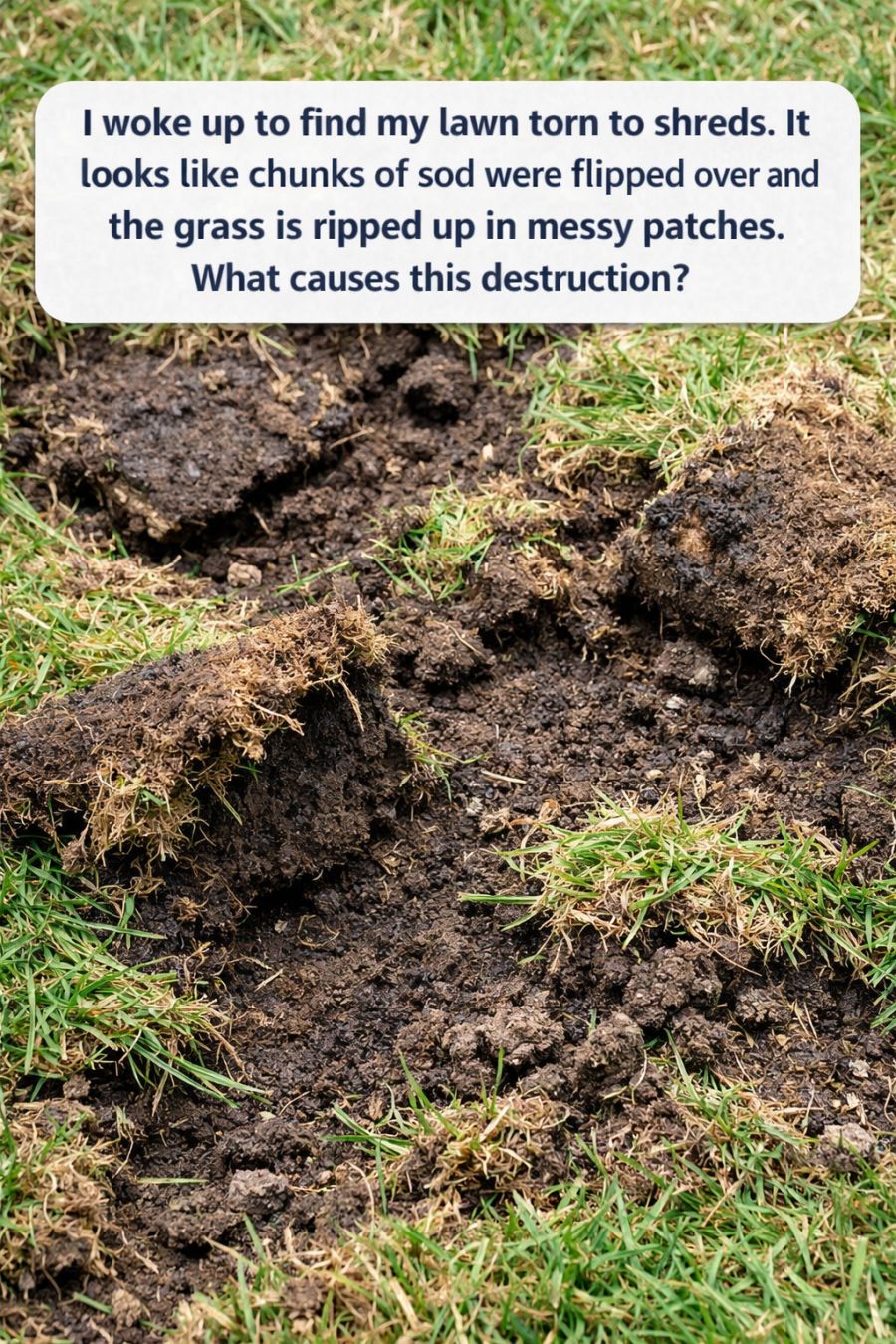
I woke up to find my lawn torn to shreds. It looks like chunks of sod were flipped over and the grass is ripped up in messy patches. What causes this destruction?
Pages: 1 2
