
A well-maintained lawn is a source of pride for many homeowners, offering an inviting green space for relaxation and play. However, when unsightly brown patches begin to appear, it can be both frustrating and perplexing. These patches not only mar the aesthetic appeal of your lawn but can also indicate underlying issues that need to be addressed.
Upon investigating these barren spots, you might stumble upon a peculiar, unattractive creature: grey, tubular, and legless, with tough, wrinkly skin. This odd discovery can be unsettling, leading many to wonder what exactly this ugly, grey, sausage-like organism is and how it contributes to the deterioration of their lawn.
1. The Ugly Grey Sausage in Your Lawn: What You’re Really Looking At
The peculiar creature you have unearthed is likely the larval stage of a crane fly, commonly known as a leatherjacket. These larvae are notorious for their appearance, resembling a small, grey sausage or a root with a life of its own. Typically measuring between 1 to 2 inches in length, leatherjackets are legless and have a tough, leathery skin, which is how they earned their name.
When disturbed, leatherjackets may curl up defensively, further enhancing their resemblance to a piece of garden debris rather than a living organism. While they might not win any beauty contests, understanding what they are and their role in the ecosystem is crucial for effective lawn management.
2. Meet the Leatherjacket: The Larval Stage of Crane Flies
Leatherjackets are the larval form of crane flies, which are often mistaken for large mosquitoes due to their size and long legs. Crane flies lay their eggs in the soil during late summer, and these eggs hatch into leatherjackets within a few weeks. The larvae then spend the autumn and winter months underground, feeding on grassroots and organic matter.
Their feeding habits can cause significant damage to lawns, as they consume the tender roots of grass, leading to the formation of brown patches. By spring, these larvae pupate and emerge as adult crane flies, ready to continue the cycle.
3. How Leatherjackets Turn Green Lawns Into Dead Brown Patches
Leatherjackets are voracious feeders, primarily targeting the roots and lower stems of grass plants. As they feed, they sever the roots from the grass blades, preventing the plant from absorbing water and nutrients. This results in the grass turning brown and dying, creating unsightly patches in the lawn.
Heavy infestations can devastate a lawn, especially if left unchecked. As the larvae mature and their feeding intensifies, the damage becomes more pronounced. Homeowners often first notice the problem in early spring when grass growth should be at its peak, yet the lawn remains patchy and weak.
4. Key Features: How to Positively Identify a Leatherjacket
Identifying leatherjackets is relatively straightforward due to their distinctive appearance. They are grey to brown in color, legless, and have a tubular, segmented body. Their skin is tough and wrinkly, resembling leather, hence their name. Measuring 1 to 2 inches in length, they are often found just beneath the soil surface.
Despite their unappealing look, leatherjackets lack the distinct head capsule that many other larvae possess. Instead, they have a blunt, rounded front end, which they use to burrow through the soil. When handling them, you may notice a sticky secretion they produce, which helps them move through the soil.
5. Where They Hide: Typical Spots You’ll Find Leatherjackets in the Yard
Leatherjackets prefer moist, well-drained soils where grass is lush and dense. They are often found in lawns that are shaded or have poor drainage, as these conditions provide the ideal environment for their development.
During the day, leatherjackets remain hidden just beneath the soil surface, coming out to feed during the cooler, damp conditions of the night. Areas of the lawn that show signs of wilting or browning are prime spots to check for leatherjackets. If you suspect their presence, gently peel back the turf to inspect the top few inches of soil for these larvae.
6. Why You’re Seeing Them Now: Weather, Seasons, and Lawn Conditions
Leatherjackets are most noticeable in the spring and early fall. In spring, their feeding peaks as they prepare to pupate and emerge as adult crane flies. During this time, the damage to the lawn becomes more evident, as the grass struggles to recover from the root loss.
Weather conditions play a significant role in leatherjacket activity. Wet summers and mild winters can lead to higher populations, as these conditions support the survival and development of eggs and larvae. Conversely, cold, dry winters can reduce their numbers, as eggs and young larvae are less likely to survive.
7. Are Leatherjackets Dangerous to People or Pets?
Leatherjackets pose no direct threat to humans or pets. They do not bite, sting, or transmit disease. Their primary impact is on the lawn, where they can cause significant damage if present in large numbers.
While they are not harmful themselves, a heavily infested lawn can attract birds and other wildlife that prey on these larvae, potentially leading to further lawn disturbance as these animals dig for food.
8. Natural Predators and Eco-Friendly Control Options
Several natural predators help control leatherjacket populations, including birds such as starlings and crows, which feed on the larvae. Encouraging these birds to visit your garden can help manage infestations naturally.
Eco-friendly control options include nematodes, microscopic worms that parasitize leatherjackets. These biological control agents can be applied to the soil where they seek out and destroy the larvae. Using nematodes is a safe and effective way to reduce leatherjacket numbers without resorting to chemical pesticides.
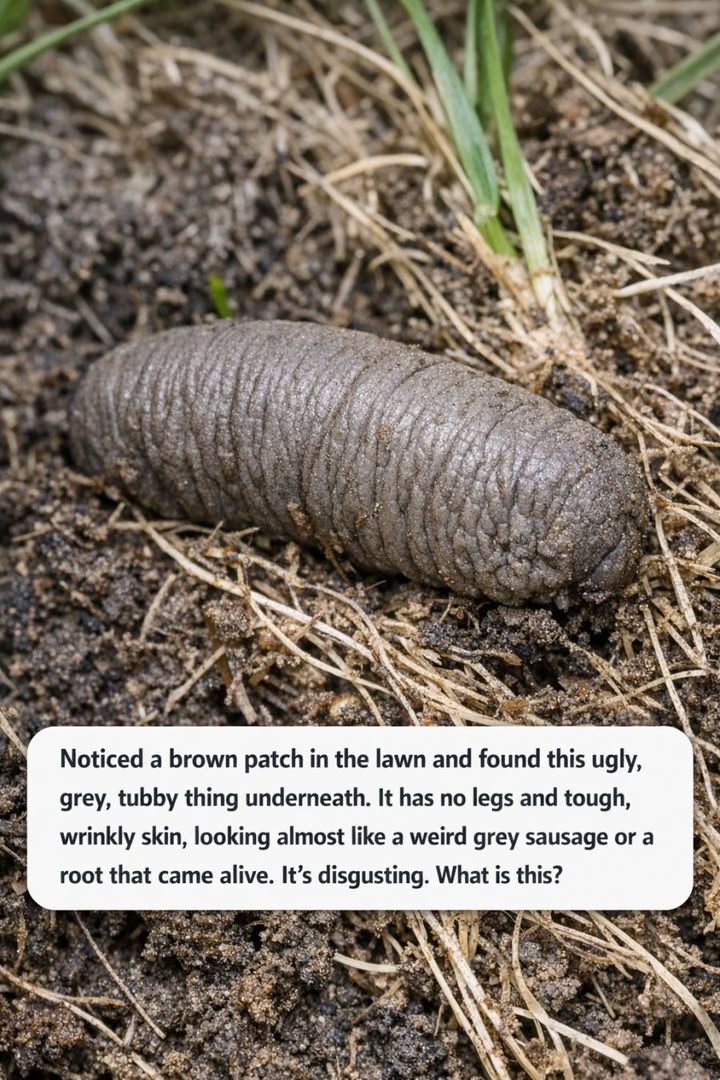
Noticed a brown patch in the lawn and found this ugly, grey, tubby thing underneath. It has no legs and tough, wrinkly skin, looking almost like a weird grey sausage or a root that came alive. It’s di
Pages: 1 2
