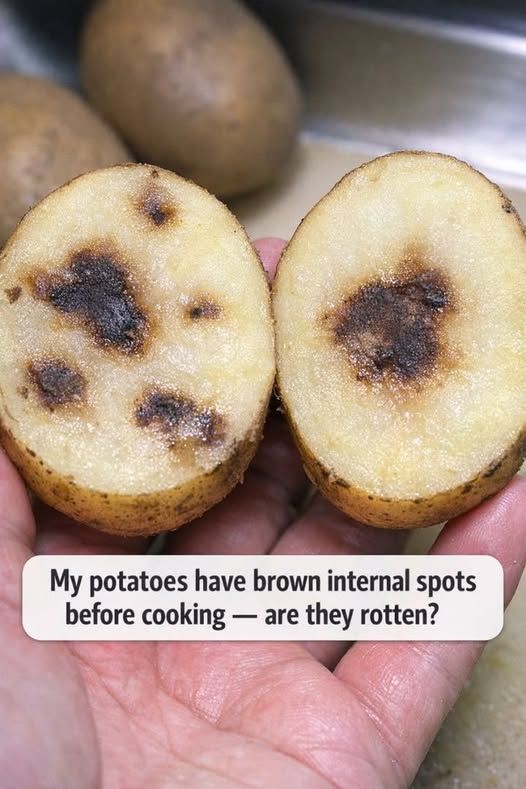
3. When Brown Spots Are Just Harmless Internal Bruising
Internal bruising in potatoes usually occurs during harvesting or handling when the potato experiences impact or pressure. This type of bruising is superficial and does not penetrate deeply into the potato’s flesh.
Harmless bruising can be identified by its dry texture and lack of odor. These spots can often be trimmed away without affecting the rest of the potato. As long as the potato remains firm and there are no signs of rot, it is safe to consume after removing the bruised areas.
4. Signs the Potato Really Is Rotten and Should Be Tossed
A potato that is truly rotten will exhibit several telltale signs. The most obvious is a soft, mushy texture that may be accompanied by a strong, unpleasant odor. The color may change from brown to black, and the skin may appear wrinkled or shriveled.
If you notice any green discoloration, it might indicate the presence of solanine, a toxic compound that develops when potatoes are exposed to light. If these symptoms are present, it is best to discard the potato to avoid any health risks.
5. Why Internal Bruising Happens Before You Even Buy the Potato
Internal bruising can occur at several stages before a potato reaches the consumer. During harvesting, potatoes are often subjected to mechanical handling, which can lead to bruising if they are dropped or handled roughly.
In addition, environmental factors such as temperature fluctuations and moisture levels during storage can contribute to the development of internal spots. Potatoes are sensitive to temperature and should be stored in a cool, dark place to minimize bruising and other quality issues.
6. How Storage Conditions Can Turn Small Spots Into Big Problems
Improper storage conditions can exacerbate minor bruising and lead to more significant quality issues. Potatoes stored in warm, humid environments are more likely to develop rot. High humidity can encourage the growth of bacteria and fungi, turning small bruises into large, rotten areas.
To prevent this, it is important to store potatoes in a cool, dry place with good ventilation. Avoid storing potatoes near onions, as they release gases that can accelerate spoilage.
7. Safe Trimming: How Much to Cut Away and Still Eat the Potato
When dealing with potatoes that have brown spots, it is often possible to salvage the rest of the potato by trimming away the affected areas. Use a sharp knife to cut about 1/2 inch around and below the spot to ensure that any bruised flesh is removed.