
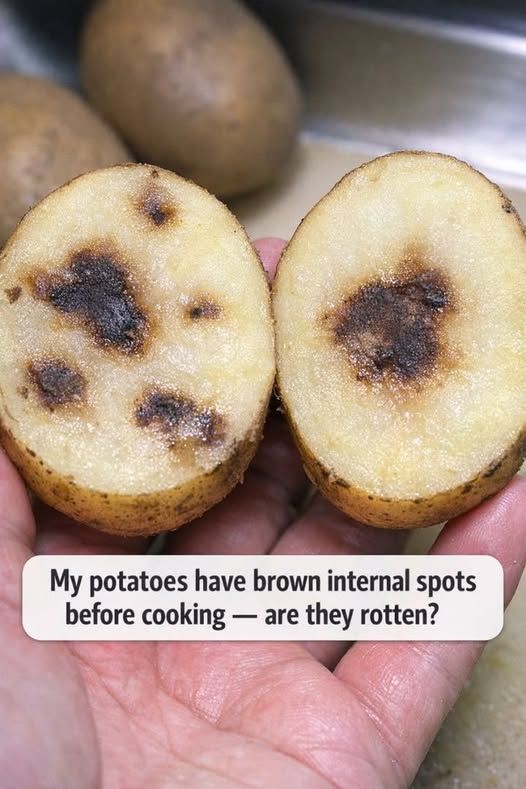
Brown internal spots in potatoes are often referred to as internal rust spots or vascular discoloration. These occur due to a variety of reasons, including physical impact during harvesting or handling, as well as certain environmental conditions during growth such as drought.
These spots are usually small, scattered, and can vary in color from light brown to dark brown. They are typically less than an inch in diameter but can be larger in some cases. In most cases, these spots are not a sign of rot but rather a result of minor bruising or stress on the potato during its growth or handling.
2. How to Tell the Difference Between Bruising and Rot
Differentiating between bruising and rot is crucial for determining the edibility of a potato. Bruising is caused by mechanical damage and typically appears as dark spots or streaks beneath the skin. These spots are usually dry, firm, and don’t have an unpleasant odor.
Rot, on the other hand, is caused by bacterial or fungal activity. It often results in soft, mushy areas on the potato, accompanied by a foul smell. If the potato feels soft, has a slimy texture, or emits a bad odor, it is likely rotten and should be discarded.
