
9. Viral Hacks: What Works and What Doesn’t
With the rise of social media, many viral hacks claim to offer quick fixes for pruning hydrangeas. While some of these tips can be helpful, others may do more harm than good. For example, using household items like vinegar or baking soda to clean pruning tools can corrode the metal and reduce their lifespan.
Instead, focus on tried-and-true methods such as using clean, sharp tools and following the specific pruning guidelines for your hydrangea variety. These practices will yield the best results and ensure the long-term health of your plants.
10. Seasonal Considerations for Pruning
The season in which you prune your hydrangeas can significantly impact their growth and flowering. As a general rule, prune hydrangeas that bloom on old wood in late summer after flowering, and those that bloom on new wood in late winter or early spring.
Consider the climate in your area as well. In regions with harsh winters, it’s best to wait until the threat of frost has passed before pruning, as frost damage can harm newly pruned stems.
11. Long-Term Benefits of Proper Pruning
Proper pruning offers numerous long-term benefits for hydrangeas, including improved health, increased flower production, and a more attractive shape. By regularly removing dead and unproductive wood, you reduce the risk of disease and encourage the plant to focus its energy on producing new growth.
Over time, consistent pruning helps maintain the size and shape of your hydrangea, preventing it from becoming overgrown and unruly. This not only enhances the plant’s appearance but also ensures that it remains a focal point in your garden for years to come.
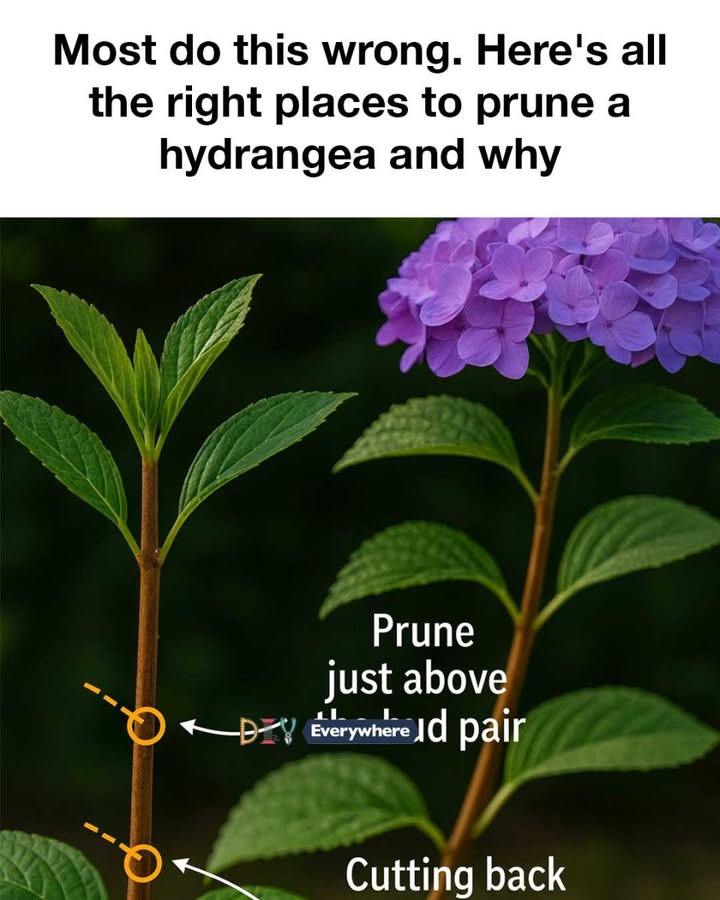
Most do this wrong. Here’s all the right places to prune a hydrangea and why
Pages: 1 2
