
7. Divide, Transplant, or Pot Up Stragglers Before They Leaf Out
If you have hydrangeas that have outgrown their space or you want to propagate new plants, early spring is the ideal time to divide and transplant. Dig up the plant carefully, preserving as much root as possible. Divide the root ball using a sharp spade or knife, ensuring each division has several healthy stems and roots.
Replant divisions immediately, spacing them based on mature size recommendations—typically 3-5 feet apart for most varieties. Water thoroughly after replanting. For potted hydrangeas, repot into a slightly larger container with fresh potting mix to encourage new growth.
8. Protect Tender Buds From Late Frost Surprises
Late frosts can damage emerging buds, impacting summer blooms. Keep an eye on weather forecasts in April and be prepared to cover your plants with frost cloths or old sheets if frost is predicted.
Ensure covers extend to the ground and are secure to prevent wind from displacing them. Remove covers in the morning once temperatures rise. For extra protection, consider using a layer of mulch to insulate the soil and maintain warmth around the roots.
9. Set Up Simple Supports So Heavy Summer Blooms Don’t Flop
As hydrangeas grow, their large flower heads can become heavy, especially after rain. Provide support to keep stems upright and prevent breakage. Install stakes or wire cages around each plant in early spring before new growth obscures the stems.
Use soft, flexible ties to secure stems to supports, ensuring they have room to grow. Consider using a natural-looking support system that blends with the garden aesthetic. Proper support not only enhances the appearance of your hydrangeas but also promotes better air circulation, reducing the risk of disease.
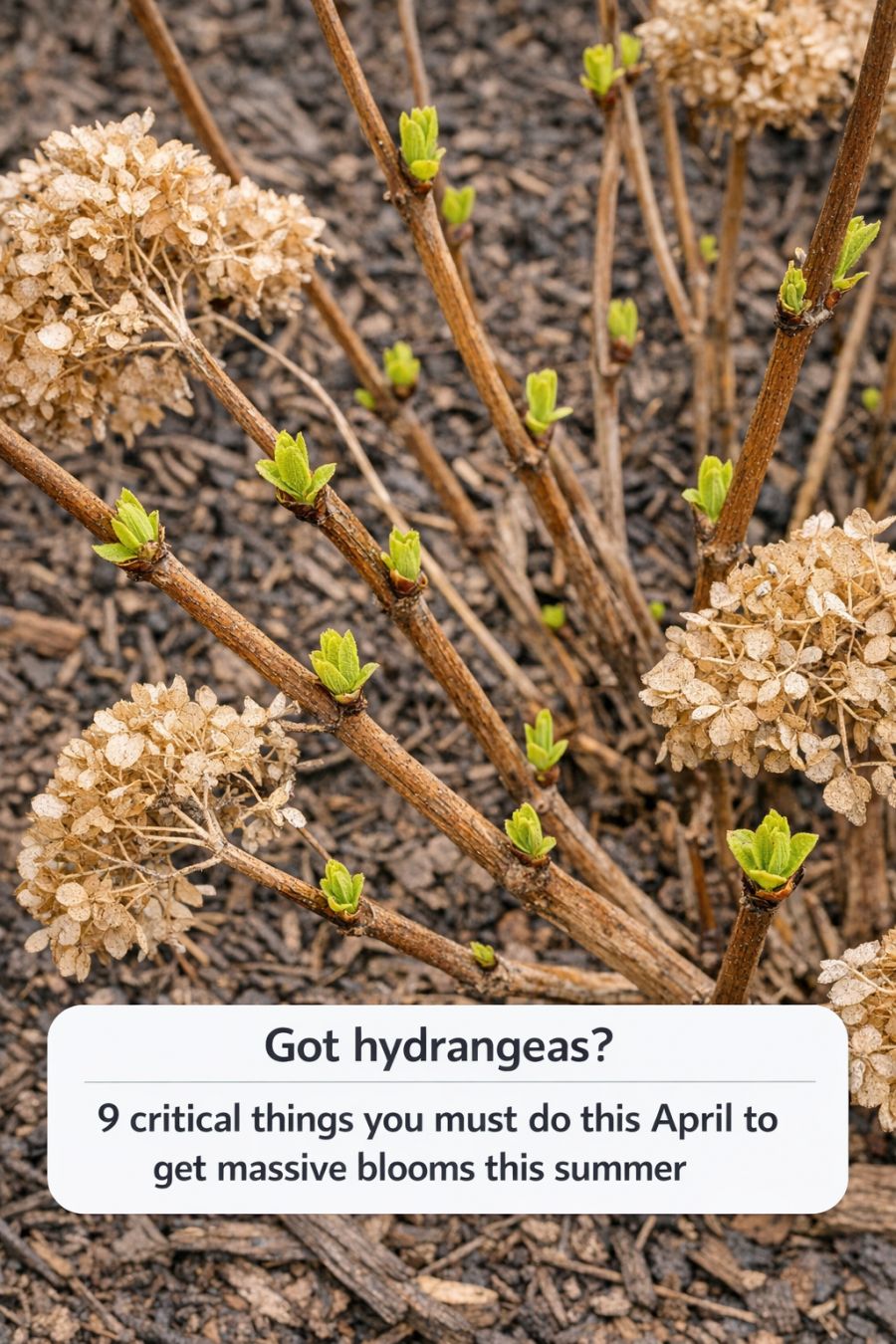
Got hydrangeas? 9 critical things you must do this April to get massive blooms this summer
Pages: 1 2
