
Hostas, with their lush foliage and striking presence, are a staple in many gardens. These perennial favorites thrive in shade and bring a touch of elegance to any landscape. However, as the summer heat looms, proper watering becomes crucial to maintaining their health and vibrancy.
Many gardeners, both novice and experienced, often make watering mistakes that can jeopardize the well-being of their hostas. With the hot months approaching, it’s essential to understand and rectify these common errors to ensure that your hostas remain robust and beautiful throughout the season.
1. Watering Hostas on a Set Schedule Instead of Checking the Soil
One of the most common mistakes gardeners make is watering their hostas on a rigid timetable rather than assessing the actual moisture needs of the plants. Hostas, like many other plants, require a tailored approach to watering that considers soil moisture levels.
Before reaching for the watering can, take a moment to check the soil. Insert your finger about an inch into the soil to see if it is dry or still moist. If the soil feels dry at this depth, it’s time to water. This method helps prevent over-watering, which can lead to root rot, and ensures that your hostas receive adequate hydration as needed.
2. Relying on Sprinklers and Overhead Watering That Soak the Leaves
While sprinklers and overhead watering may seem convenient, they often result in wet foliage, which can encourage fungal diseases. Hostas benefit more from direct soil watering that targets the roots rather than the leaves.
To avoid this mistake, use soaker hoses or drip irrigation systems that deliver water directly to the base of the plant. By keeping the leaves dry, you not only minimize the risk of disease but also ensure that the water reaches the roots where it’s most needed.
3. Giving Hostas a Daily Sip Instead of Deep, Infrequent Soaks
Many gardeners mistakenly believe that frequent, shallow watering is beneficial for hostas. However, this practice can result in shallow root systems that are more susceptible to drought stress.
Instead, aim for deep, infrequent watering sessions. Provide enough water so that the moisture penetrates at least 6 to 8 inches into the soil. This encourages deeper root growth and helps the plants become more resilient to dry spells.
4. Watering in the Heat of the Day When Most Moisture Evaporates
Watering during the hottest part of the day, typically between 10 a.m. and 4 p.m., leads to significant water loss due to evaporation. This not only wastes water but also leaves plants thirsty.
To maximize efficiency, water your hostas early in the morning or in the late afternoon. This schedule allows the water to soak into the soil before the sun’s heat intensifies, ensuring that your hostas have ample moisture to draw from throughout the day.
5. Ignoring Mulch and Leaving Soil Bare to Bake and Dry Out
Mulch is a gardener’s best friend when it comes to conserving soil moisture. Leaving the soil bare allows it to heat up and dry out quickly, putting stress on your hostas.
Apply a 2- to 3-inch layer of organic mulch, such as shredded bark or compost, around your hostas. This not only helps retain moisture but also suppresses weeds and moderates soil temperature, creating an ideal environment for your plants to thrive.
6. Letting Containers and Raised Beds Dry Out Between Waterings
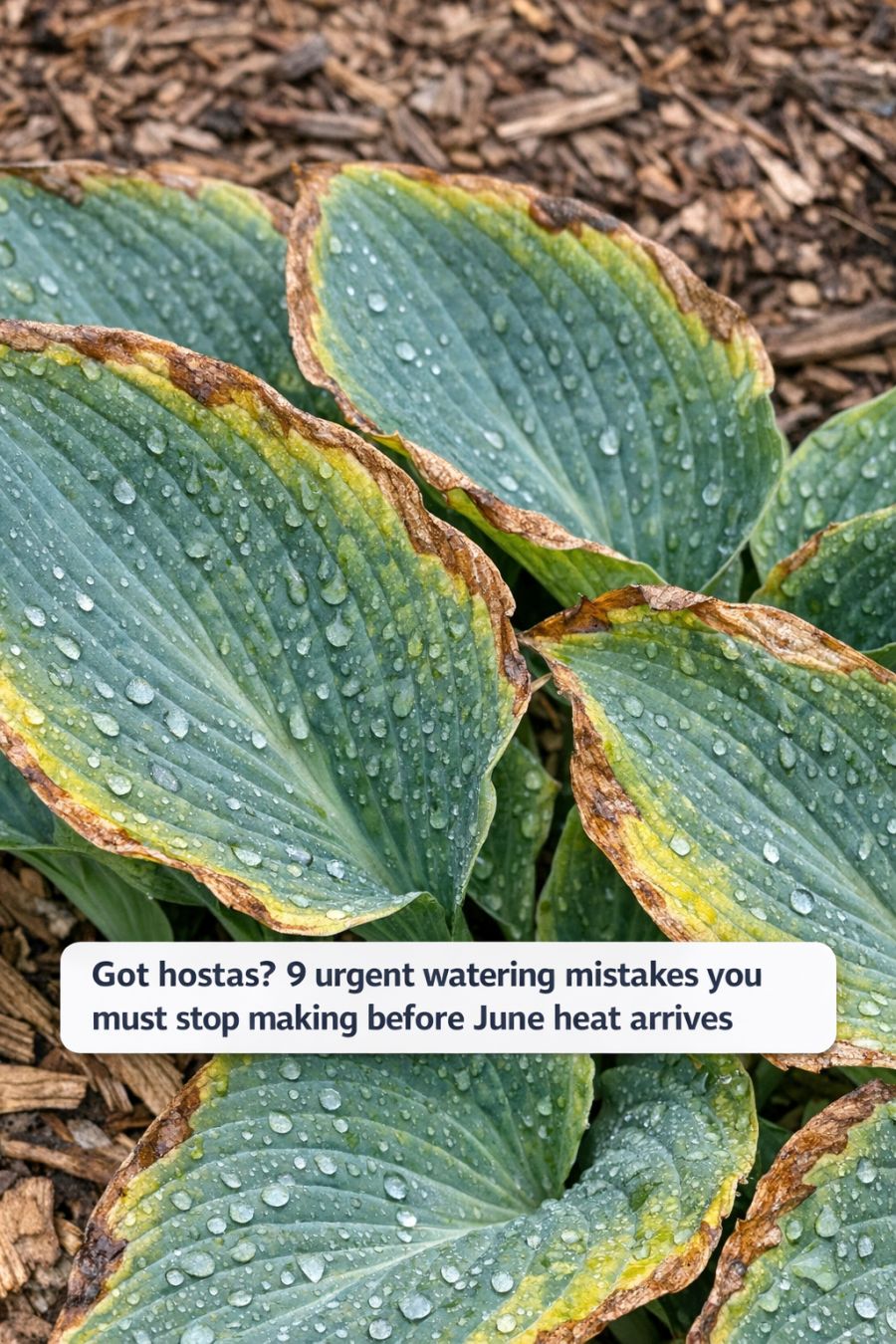
Got hostas? 9 urgent watering mistakes you must stop making before June heat arrives
Pages: 1 2
