
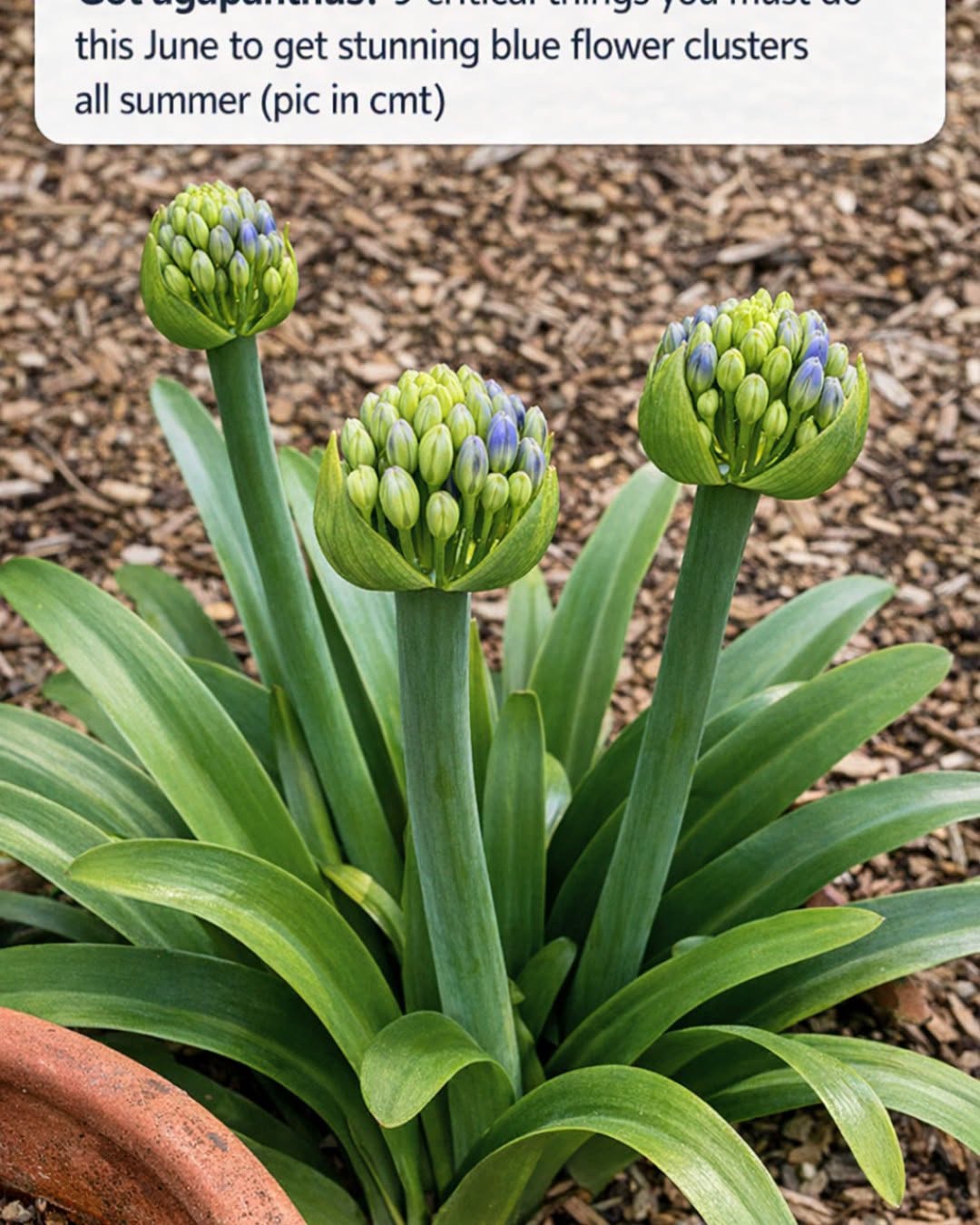
If your agapanthus starts blooming early, don’t let spent flower heads linger. Deadheading keeps the plant looking tidy and can help redirect energy away from seed production and back toward maintaining the overall display. Cut the flower stem down at the base once most florets have faded.
On reblooming or especially vigorous varieties, prompt deadheading can extend the ornamental season noticeably. I usually check every few days once flowering begins. If you like dried arrangements, cut stems just as the top florets begin to open; that gives you a vase harvest and keeps the plant in better shape.
11. Resist dividing in June unless the plant is truly failing
People often get tempted to divide agapanthus when they see a crowded clump, but June is not the time unless there is a serious problem such as root rot, a broken pot, or extreme congestion causing clear decline. Dividing now can interrupt flowering and set the plant back just when it should be building its summer show.
If a clump is blooming well, leave it alone and make a note to divide later in the appropriate season for your climate, often after flowering or in spring in milder regions. Agapanthus can actually bloom more enthusiastically when slightly crowded, so don’t confuse “full” with “needs splitting immediately.”
12. Watch the weather and adjust for heat spikes
June weather can turn abruptly from mild to punishing, especially in urban settings where patios and balconies reflect heat. A black nursery pot in full sun can run much hotter than the air temperature, and once potting mix overheats, roots struggle. If a 90°F stretch is forecast, check moisture morning and evening and consider slipping a plastic pot inside a larger decorative container for insulation.
During intense heat, watering early—between 6 and 9 a.m.—is far better than a quick splash at 3 p.m. when much of it evaporates. If leaves look folded or stressed in late afternoon but recover by evening, that’s temporary heat response. If they remain limp by morning, the root zone is too dry or too wet, and you need to investigate immediately.
13. Make sure drainage is excellent
If I could choose only one cultural rule besides sun, it would be drainage. Agapanthus tolerates many things, but heavy, waterlogged soil is not one of them. In clay-heavy beds, improve the planting area with coarse compost and, if needed, plant slightly raised—2 to 3 inches above grade—to keep the crown from sitting in standing water after storms.
For containers, always use a pot with at least one substantial drainage hole, and preferably several. A potting mix for flowering containers should feel open and quick-draining, not dense like bagged topsoil. I like a blend that includes bark fines or perlite so roots get both moisture and air.
14. Label the variety and note bloom performance now
This may sound fussy, but it is one of the smartest June habits you can develop. Different agapanthus varieties bloom at different heights, shades of blue, and levels of repeat performance. When a plant is in active growth, label it and jot down details: bloom start date, stem height, number of flower stalks, and whether it’s in a pot or in the ground.
I keep these notes on my phone because by August it is easy to forget which plant gave me 14 stems and which one sulked with 3. Over a couple of seasons, that record tells you whether a plant needs more sun, less nitrogen, a tighter pot, or simply more maturity. Good gardening gets much easier once you stop relying on memory alone.
15. Don’t baby them so much that you reduce bloom
Agapanthus responds well to attentive care, but not to constant interference. Overwatering, overfeeding, overpotting, and unnecessary dividing are the big bloom-killers I see most often. If your plant has strong sun, moderate water, lean-but-regular feeding, and sharp drainage, you are already doing the most important work.
I’ve learned this the same way I’ve learned plenty of cooking lessons over the years: sometimes the best result comes from understanding the ingredient—or in this case, the plant—and then resisting the urge to meddle. Do the key June jobs well, stay observant, and your agapanthus has every chance of rewarding you with those dramatic blue flower clusters right through summer.
