
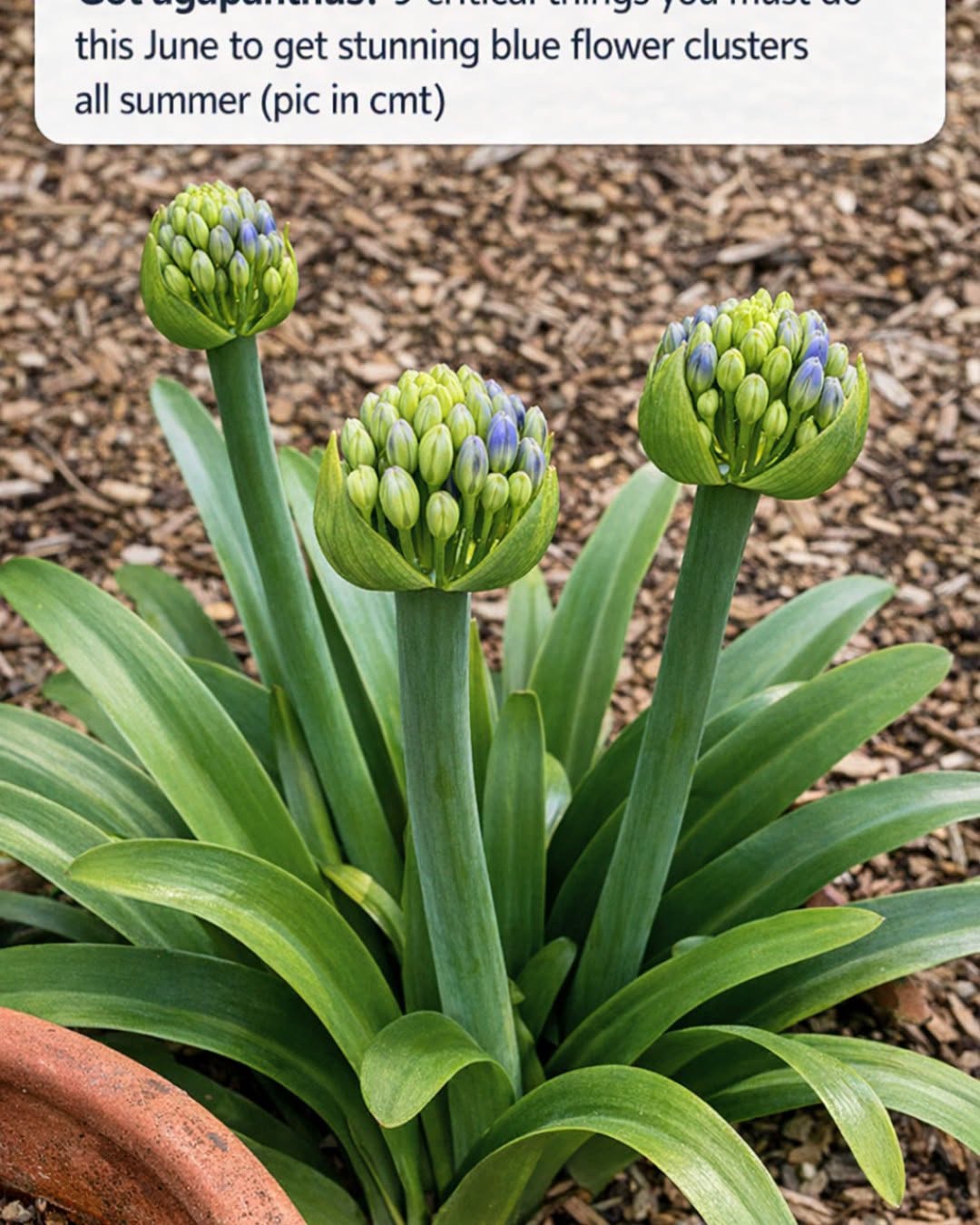
June is the month when agapanthus either gears up for a spectacular show or quietly underperforms, and after years of fussing over pots on my Chicago-area patio and helping friends troubleshoot crowded clumps in city gardens, I can tell you the difference usually comes down to a handful of timely jobs. These strap-leaved plants can look almost indestructible, but if you want those saturated blue flower heads rising cleanly above the foliage and continuing through summer, June is when you need to be paying close attention.
What follows are the jobs I never skip once early summer settles in: light, watering, feeding, grooming, staking, pest checks, and a few details people often overlook with container-grown agapanthus. The headline promises nine, but I’m going further, because in my experience a couple of “extra” June tasks are exactly what separates a decent display from the kind that stops people on the walkway.
1. Move them into full, dependable sun
Agapanthus flowers best with 6 to 8 hours of direct sun a day, and in many Midwestern gardens June is the moment surrounding trees, pergolas, and neighboring plants finally reveal where the shade really falls. If your plant gets bright morning light but is shaded by noon, you may still get foliage and a few blooms, but not the fullest possible display. For the strongest stems and richest blue color, aim for a spot with sun from at least 10 a.m. through late afternoon.
In containers, I rotate pots every week or two so all sides get even exposure and the stems don’t lean toward the light. If a pot is tucked against a warm brick wall, that can actually help bloom production, provided you keep up with watering. In the ground, don’t be afraid to cut back a nearby perennial that is casting unnecessary shade; losing 12 inches of flopping growth from a neighbor plant can make a noticeable difference.
2. Water deeply, but stop the constant light sprinkling
One of the most common mistakes I see is frequent shallow watering. Agapanthus prefers a thorough soak that moistens the root zone 6 to 8 inches deep, followed by a slight drying period near the surface. In June, that usually means watering in-ground plants once or twice a week if rainfall is under 1 inch. Container plants are thirstier and may need water every 2 to 3 days, or even daily during hot, windy spells above 85°F.
When I water pots, I do it until liquid runs from the drainage holes, then I empty saucers if water sits longer than 30 minutes. Soggy roots can reduce flowering and invite rot. If you’re unsure whether to water, push a finger 2 inches into the soil. Dry at that depth in a pot means water now; slightly moist means wait a day.
3. Feed for flowers, not just leaves
June feeding matters because agapanthus is actively building buds and flower stems. Use a fertilizer that is lower in nitrogen and a bit higher in phosphorus and potassium, such as a 5-10-10, 4-8-6, or similar bloom formula. Too much nitrogen gives you lush green leaves at the expense of flowers, which is frustratingly common when plants are near lawns being fed with high-nitrogen turf products.
For potted plants, I like a liquid feed at half strength every 10 to 14 days through mid-July, or a slow-release granular fertilizer applied according to label rates. For plants in the ground, one light June feeding is often enough if the soil is reasonably fertile. As a rough example, a mature clump may need only 1/4 to 1/2 cup of granular fertilizer spread around the drip zone, not piled against the crown.
4. Check that the crown is not buried too deeply
Agapanthus wants good drainage and a crown that sits comfortably at or just above soil level, especially in containers. If soil or mulch has built up over the base of the plant, gently pull it back. A buried crown can stay too damp, reduce vigor, and sometimes delay blooming.
I often find this problem after spring top-dressing, when compost has been layered too generously. Keep mulch 1 to 2 inches away from the crown and no deeper than about 2 inches overall. Use fine bark, gravel, or another airy mulch rather than dense, wet material that mats down around the plant.
5. Thin out damaged leaves and old flower debris
June is a grooming month. By now, winter-tattered leaves, yellow tips, and any mushy or split foliage should be removed so the plant can direct energy into fresh growth and buds. Use clean pruners or scissors and cut damaged leaves back at the base, rather than snipping halfway down and leaving ragged ends.
If your agapanthus has any leftover spent stems from last year, remove them cleanly. I also clear away fallen leaves and debris from the center of the clump because that damp, shaded pocket can harbor slugs, snails, and fungal issues. A five-minute cleanup noticeably improves airflow.
6. Keep them slightly snug in pots instead of overpotting
Agapanthus often flowers better when somewhat root-bound, which surprises gardeners who assume a bigger pot always means a bigger show. If you moved your plant into an oversized container this spring, it may focus on root growth first. A pot just 1 to 2 inches wider than the root mass is usually plenty. For a mature plant, a container 12 to 16 inches across can hold a surprising amount of bloom potential.
That said, if roots are circling so tightly that water races straight through and the plant dries out within hours, you may need to step up one size. The goal is snug, not strangled. In my own containers, terracotta dries faster but gives excellent root-zone aeration; glazed pots hold moisture longer, which can be useful during city heat waves.
7. Stake flower stems early if your site is windy
Those tall blue globes are gorgeous, but in exposed patios, rooftop gardens, and breezy borders, flower stems can lean or snap after a summer thunderstorm. The trick is to support them before they are fully extended. Once stems are 8 to 12 inches tall, place discreet green stakes or a low support ring around the clump.
I prefer slim bamboo canes and soft ties because they disappear into the foliage. Tie loosely, leaving room for the stem to thicken and move naturally. In the Midwest, one storm with 25 to 35 mph gusts and hard rain can flatten a beautiful display overnight, so this is one of those small preventive jobs that pays off.
8. Patrol for slugs, snails, and aphids before they multiply
Agapanthus is fairly sturdy, but June pests can still interfere with clean growth and flower development. Slugs and snails chew foliage, especially on container plants near shaded walls or heavily mulched areas. Aphids may gather on developing stems and buds, causing distortion and sticky residue.
Check plants every 3 to 4 days. Look deep into the leaf bases and around emerging flower stalks. Hand-pick slugs in the evening, use iron phosphate bait if pressure is high, and wash aphids off with a strong spray of water in the morning. If needed, insecticidal soap works, but apply when temperatures are below about 85°F to avoid stressing the leaves.
9. Cut back competition from neighboring plants
By June, surrounding perennials can crowd agapanthus without you fully noticing. Daylilies, catmint, salvia, ornamental grasses, and even vigorous annuals can press into the clump, reducing airflow and intercepting light. Agapanthus looks architectural, but it does not love being smothered.
Give each clump at least 12 to 18 inches of breathing room on all sides if possible. I routinely edit nearby growth with a pair of hand pruners, especially anything flopping over the leaves. This makes watering more effective too, because moisture reaches the soil rather than catching on neighboring foliage.
10. Deadhead promptly once the first blooms fade
