
9. How To Safely Remove And Control Puss Caterpillars In Your Yard
To manage a puss caterpillar infestation, it’s important to regularly inspect trees and shrubs during their active months. Wearing gloves and using a stick or similar tool, gently dislodge caterpillars into a container for safe removal.
Professional pest control services can also be employed to manage larger infestations. Insecticides approved for caterpillar control may be used, but care should be taken to apply them according to safety guidelines to minimize impact on non-target species.
10. Protecting Kids, Pets, And Curious Neighbors From Fuzzy Stingers
Educate family members, especially children, about the dangers of touching unknown fuzzy caterpillars. Supervise outdoor play in areas where puss caterpillars are known to inhabit, and teach children to recognize and avoid these insects.
For pets, keep them on a leash or under close supervision when outside to prevent them from interacting with caterpillars. Inform neighbors about the presence of puss caterpillars, as awareness is key to preventing unwanted encounters and stings.
11. When The ‘Toupee’ Turns Into A Moth: The Caterpillar’s Life Cycle
The puss caterpillar eventually transforms into the southern flannel moth, a small, furry moth with a wingspan of approximately 1 to 1.5 inches. The moth’s coloration ranges from creamy white to yellow and orange, with fine, fluffy hairs.
The life cycle from caterpillar to moth can take several weeks to months, depending on environmental conditions. The moth stage is less of a concern in terms of stings, as it does not possess the venomous spines characteristic of its larval form. However, understanding this transformation is important for managing and predicting caterpillar populations.
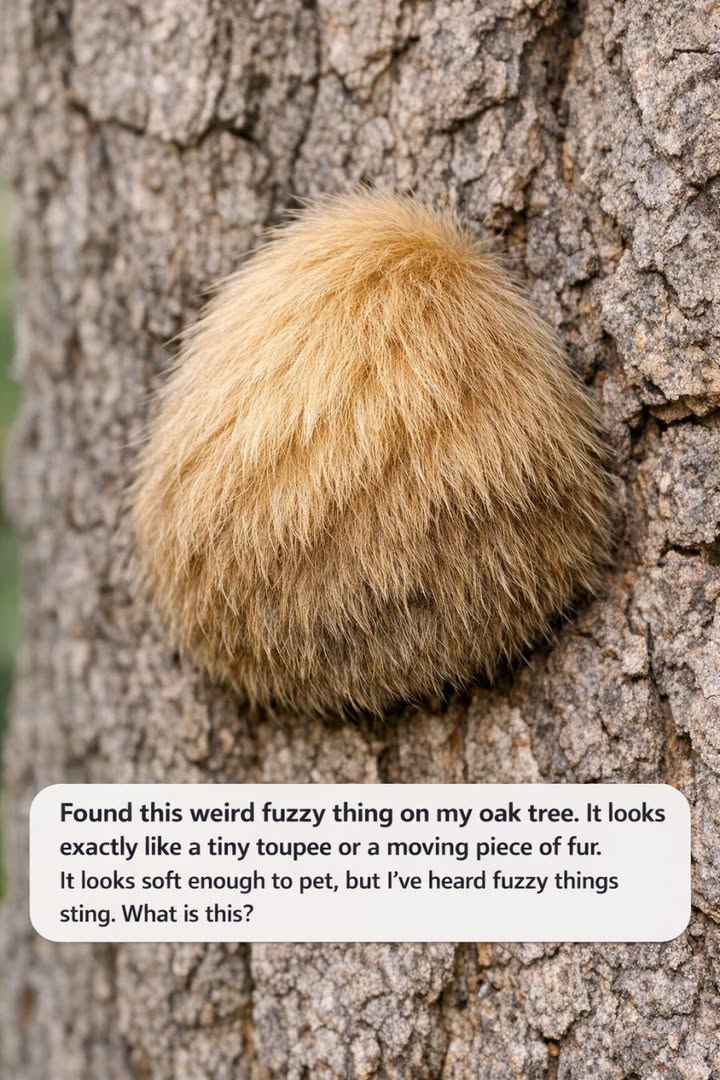
Found this weird fuzzy thing on my oak tree. It looks exactly like a tiny toupee or a moving piece of fur. It looks soft enough to pet, but I’ve heard fuzzy things sting. What is this?
Pages: 1 2
