
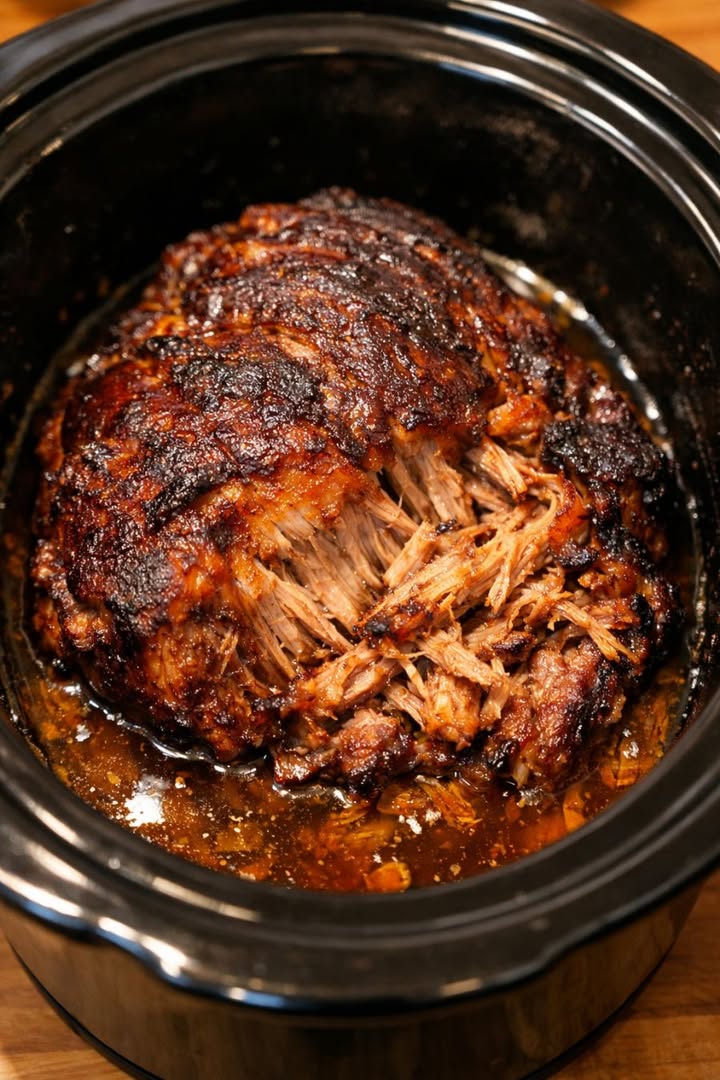
If you’d like a slightly thicker, more caramelized finish, you can transfer the pork and some of the juices to a baking dish and broil on high for 3–5 minutes, just until the edges crisp and darken, then return it to the slow cooker to stay warm.
Shredded pork glistening in cooking juices
Shredded pork glistening in cooking juices
Turn the slow cooker to WARM and let the pork rest for at least 15 minutes before serving so the juices can soak back into the meat. Serve straight from the slow cooker insert for that cozy, church-basement potluck feel.
Variations & Tips
To lean more sweet and smoky, use a smoky barbecue sauce and add 1 teaspoon smoked paprika to the sauce mixture. For a tangier, more old-fashioned flavor, increase the apple cider vinegar to 1/2 cup and cut the brown sugar down to 1/4 cup. If you like a little heat, stir in 1/2–1 teaspoon crushed red pepper flakes or a few dashes of hot sauce.
You can also swap the barbecue sauce for 1 cup of condensed tomato soup or tomato sauce plus 1 teaspoon onion powder for a very vintage, church-supper style roast that’s less obviously “BBQ.” For a slightly leaner dish, trim away any very thick exterior fat cap before cooking, but leave some fat for flavor and moisture.
Pulled pork meal prep bowls on a kitchen counter
Pulled pork meal prep bowls on a kitchen counter
Food safety tips: Always thaw pork butt completely in the refrigerator (not on the counter) before cooking. Keep the pork refrigerated until you’re ready to place it in the slow cooker. Cook on LOW or HIGH as directed, making sure the internal temperature of the thickest part of the pork reaches at least 190–205°F for easy shredding and safe consumption. Do not cook on the warm setting from the start; it won’t heat the meat quickly enough to be safe. Once cooked, don’t leave the pork at room temperature for more than 2 hours. Cool leftovers promptly, store in shallow containers in the refrigerator, and use within 3–4 days or freeze for longer storage.
