
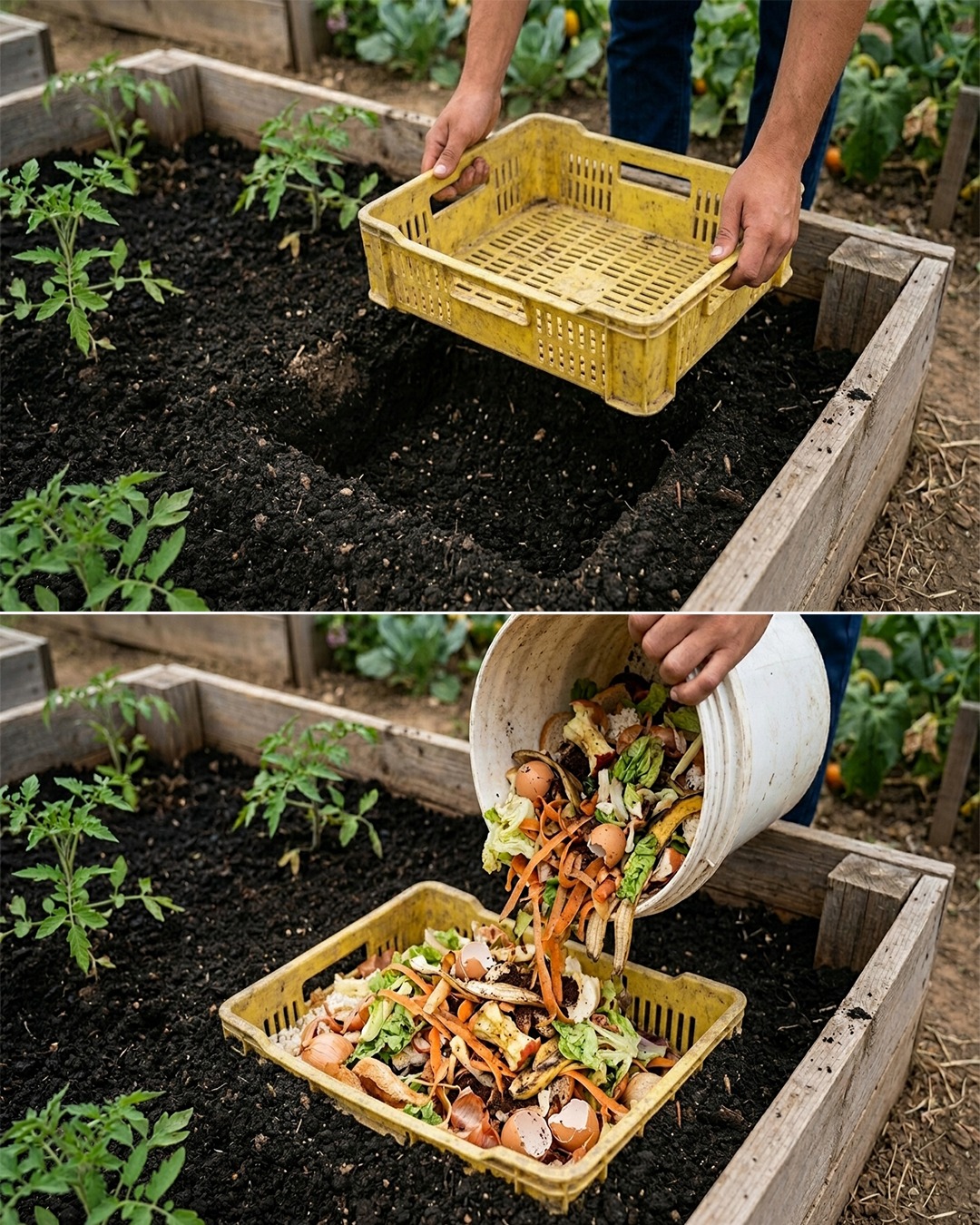
Moisten the System: Give the basket a gentle watering. The contents should feel moist like a damp sponge, but never dripping wet.
What to Feed Your System To keep your homemade compost healthy, it is important to add the right types of food and keep a good balance.
**Good Additions: Vegetable peels, fruit scraps, crushed eggshells, used tea leaves, and coffee grounds.
Items to Avoid: Meat, dairy products, oils, greasy foods, and pet waste. These items create bad smells and attract unwanted pests like rats or mice.
Use in Moderation: Avoid large amounts of citrus peels or strong onions, as worms naturally tend to avoid highly acidic or pungent foods.
Maintaining Your System Taking care of this in-garden system requires very little effort throughout the growing season.
Regular Feeding: Open the top layer of soil or mulch once a week to drop in fresh kitchen scraps.
Always Cover: Every time you add new food, completely cover it with a handful of soil, dry leaves, or shredded paper. Leaving food exposed is the primary cause of smells and bugs.
Manage Moisture: Check the moisture level when you feed the system. If the pile looks dry, sprinkle a small amount of water over it. If the pile looks wet, muddy, or smells sour, mix in dry shredded paper or leaves to soak up the extra liquid.
By following this simple technique, you can recycle your kitchen waste safely and efficiently. The crate system takes advantage of the natural behaviors of worms, allowing them to do the hard work of fertilizing your garden. It is a completely free, highly effective way to grow healthier, stronger plants while reducing the amount of organic waste sent to the landfill.
Inspired by this? Share the article with your friends!
