
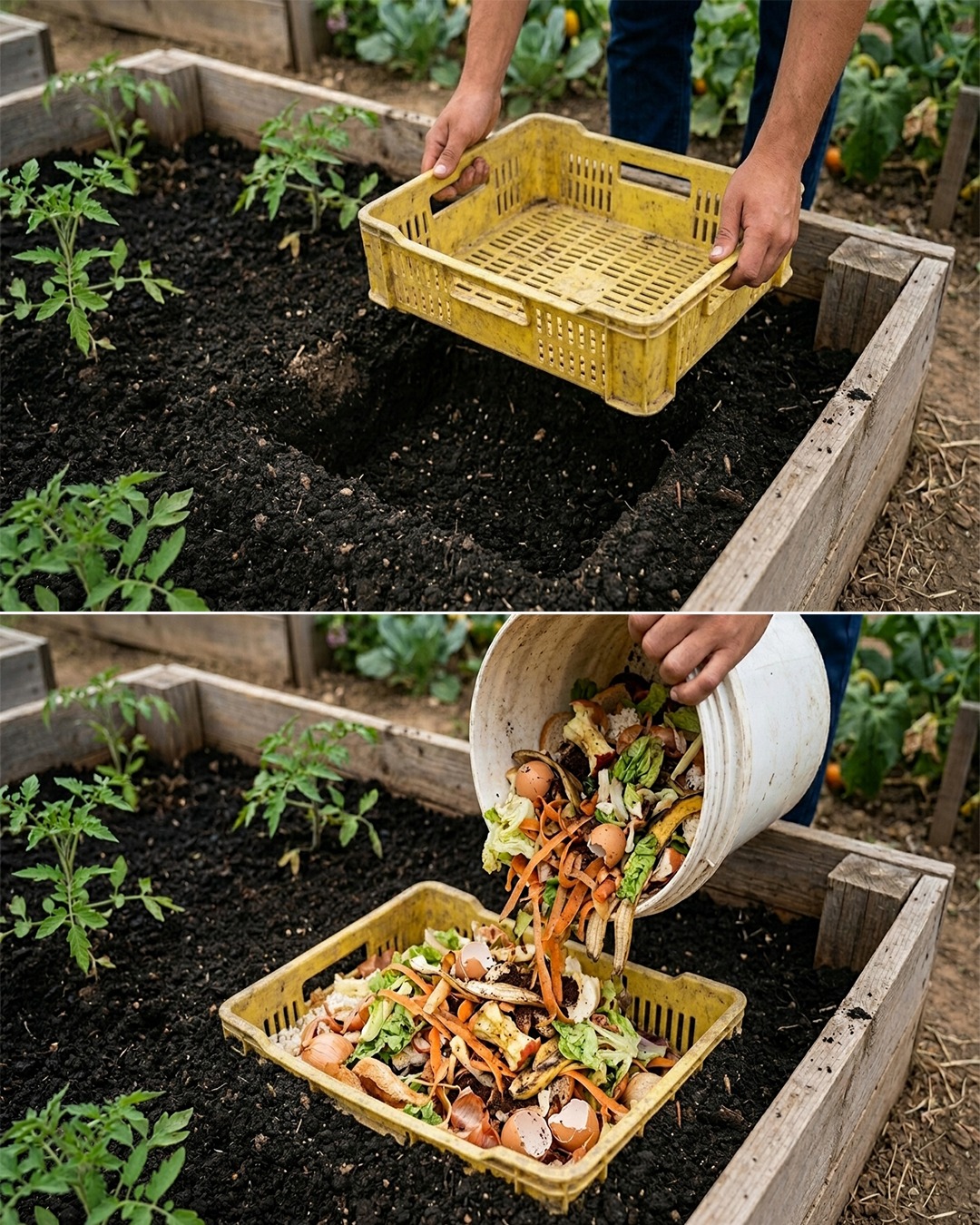
Turning everyday kitchen waste into rich soil does not require an expensive setup or a massive backyard bin. One of the most effective and accessible ways to boost your garden’s health is by building a small, worm-powered compost system directly inside your garden bed. This technique, often called in-bed vermicomposting, takes advantage of nature’s best soil workers: earthworms. By feeding them your leftover vegetable peels and organic scraps, they convert waste into valuable nutrients right where your plants need them the most. This process improves soil quality, helps the ground hold more water, and provides a steady supply of food for your garden.
The secret to this homemade system is using a simple container with holes, such as an old plastic fruit crate or a small laundry basket. When placed directly into the soil, this basket acts as a feeding station. The holes allow worms to move freely between the compost and your garden bed. They enter the basket to eat the kitchen waste and then travel back out, spreading rich, natural fertilizer—known as worm castings—throughout the surrounding soil. This saves you the step of harvesting and moving heavy compost manually.
A small plastic or wooden basket with plenty of holes (such as a fruit crate)
A small shovel or garden trowel
Dry materials (dried leaves, shredded plain paper, or small pieces of cardboard)
Kitchen scraps (vegetable and fruit peels)
A handful of finished compost or garden soil
Mulch or extra soil for covering
Step-by-Step Instructions
Choose the Right Spot: Find a location in your garden bed near your growing plants. Be careful not to dig directly on top of delicate plant roots.
Dig the Hole: Use a shovel to dig a hole deep enough to hold the basket. The majority of the basket should sit below the soil level, with just the very top rim resting slightly above the surface to stop mud from washing inside when it rains.
Place and Secure the Basket: Set the basket into the ground. Pack the surrounding garden soil firmly around the outside edges so the basket is stable and stays permanently in place.
Add the Base Layer: Start by placing a layer of dry materials at the bottom of the basket. Use shredded paper, dry leaves, or cardboard. This base absorbs excess moisture and keeps the system from getting overly wet.
Add the Food: Toss in your kitchen scraps. Chopping the scraps into smaller pieces will help the materials break down faster and make it much easier for the worms to consume.
Add a Starter Layer: Sprinkle a layer of finished compost, vermicompost, or rich garden soil over the scraps. This introduces helpful microbes and alerts local worms that food is available.
Cover and Protect: Top the entire mixture with a thick layer of soil or mulch. This step is crucial because it blocks odors, keeps fruit flies away, protects the worms from hot sunlight, and helps keep the temperature inside the crate stable.
