
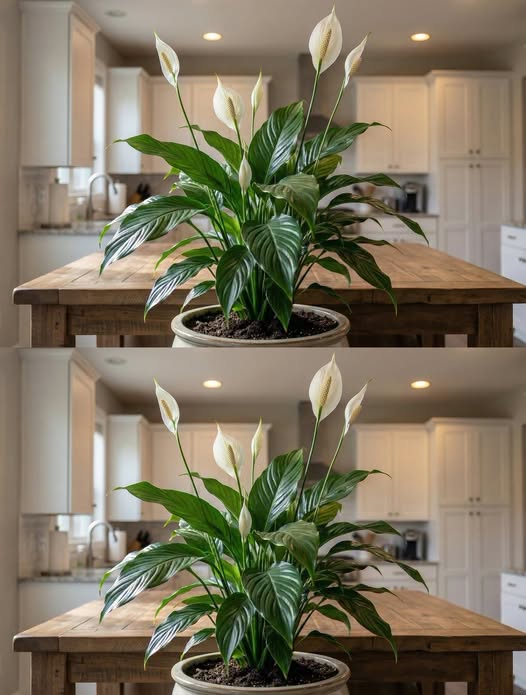

Peace lilies (Spathiphyllum spp.) are famous for their beautiful, glossy green leaves and lovely, elegant white flowers. Because of this, they are incredibly popular among houseplant lovers.
In fact, peace lilies are generally an easy houseplant to care for; however, they do sometimes become a bit tricky to get to flower regularly. Mine rarely flowers, but when it does, I feel like I have accomplished something! I feel like the plant is telling me, “You’re doing alright, you are not killing us.”
I am always on the lookout for some even better tips for care. In this article, I will provide some tricks and tips for getting your peace lily to produce more flowers, as well as some care and maintenance recommendations to help the overall plant health so you can benefit from all the beauty of blooms!
💡 1. Light Them Up: Find the “Goldilocks” Zone
Peace lilies thrive in bright, indirect light. The best location for your peace lily is next to an east- or north-facing window, or in a spot that receives filtered light through a sheer curtain.
While they are famous for surviving in low-light offices, low light is the number one reason a peace lily refuses to bloom. They need energy to produce flowers, and they can’t get that energy in the dark.
|
Light Condition
|
Effect on the Plant
|
|---|---|
|
**Too Dark **(Deep shade)
|
Survives, grows slowly, produces lush green leaves, but will not flower.
|
|
**Bright, Indirect **(Perfect)
|
Thrives, grows steadily, and produces frequent, large white blooms.
|
|
**Direct Sunlight **(Too harsh)
|
Leaves will scorch, turn yellow/brown, and the plant will become stressed.
|
💡 Pro Tip: If your plant is in a dark corner, slowly move it a few feet closer to a window every week. Sudden changes in light can shock the plant. When watering, it is important not to let them sit in saturated water, so be sure the pot has drainage holes so excess water can escape. Peace lilies love light, and this is important for flowering, so be sure they are getting enough!
