
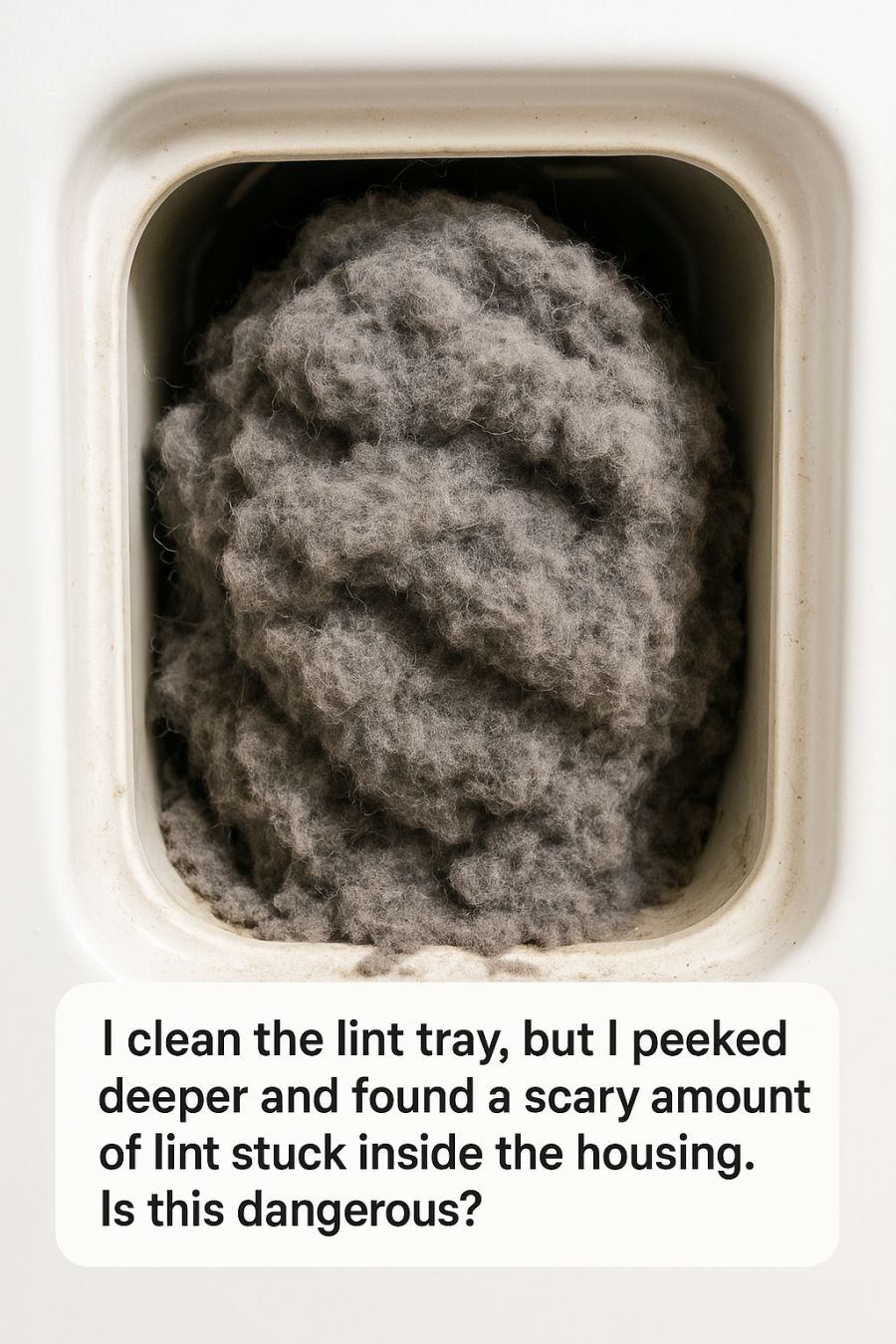
I clean the lint tray, but I peeked deeper and found a scary amount of lint stuck inside the housing. Is this dangerous?
7. The Safest Way to Inspect Deeper Inside the Lint Housing
To safely inspect deeper inside the lint housing, first, unplug the dryer from the electrical outlet to eliminate any risk of electric shock. Remove the lint trap and use a flashlight to look inside the housing. If you notice an excessive buildup of lint, gently use a flexible brush or a vacuum cleaner with a narrow attachment to remove the debris.
Be careful not to dislodge any wires or damage the components inside the dryer. If you’re unsure about doing this safely, it may be wise to contact a professional for assistance.
8. Step-By-Step: How to Remove Compacted Lint Without Damaging Your Dryer
Step 1: Unplug the dryer and remove the lint trap.
Step 2: Use a flashlight to inspect the area inside the lint trap housing.
Step 3: Gently use a flexible brush to loosen compacted lint, being careful not to damage any internal components.
Step 4: Use a vacuum with a narrow nozzle to suck out the loosened lint.
Step 5: Reassemble the lint trap and plug the dryer back in.
Step 2: Use a flashlight to inspect the area inside the lint trap housing.
Step 3: Gently use a flexible brush to loosen compacted lint, being careful not to damage any internal components.
Step 4: Use a vacuum with a narrow nozzle to suck out the loosened lint.
Step 5: Reassemble the lint trap and plug the dryer back in.
Perform these steps regularly to prevent significant lint buildup and maintain dryer efficiency.
9. When to Call a Pro Dryer Vent Cleaning Service
If you notice persistent issues such as unusually long drying times, excessive heat, or a burning smell, it may be time to call a professional dryer vent cleaning service. Professionals have the tools and expertise to thoroughly clean the vent system and ensure there are no blockages or safety hazards.
It’s also advisable to have a professional inspection and cleaning at least once a year as part of regular home maintenance, especially if you have a large family or do frequent laundry.
10. How Often You Really Need to Deep-Clean the Lint System
The frequency of deep-cleaning your dryer’s lint system depends on usage. For an average household, deep cleaning every six months is recommended. However, for larger households or frequent users, a quarterly cleaning schedule may be more appropriate.
Regular maintenance not only prevents dangerous lint buildup but also enhances the dryer’s performance and energy efficiency.
11. Simple Daily Habits That Dramatically Cut Lint Buildup
To minimize lint buildup, always clean the lint trap after every drying cycle. Avoid overloading the dryer, as this can cause more lint to be released. Consider air drying clothes that produce excessive lint, such as towels and blankets.
Additionally, periodically washing the lint trap with water and soap can help remove any fabric softener residue that may trap lint.
12. Extra Safety Checks: Vents, Hoses, and the Space Around Your Dryer
Ensure that the dryer’s vent hose is properly connected and not kinked or crushed, as this can restrict airflow and cause lint buildup. The vent outlet should be checked regularly to ensure there are no blockages.
Maintain at least a few inches of space between the dryer and the wall to promote proper ventilation. Regularly inspect the area around the dryer for lint accumulation and clean as necessary to prevent fire hazards.
