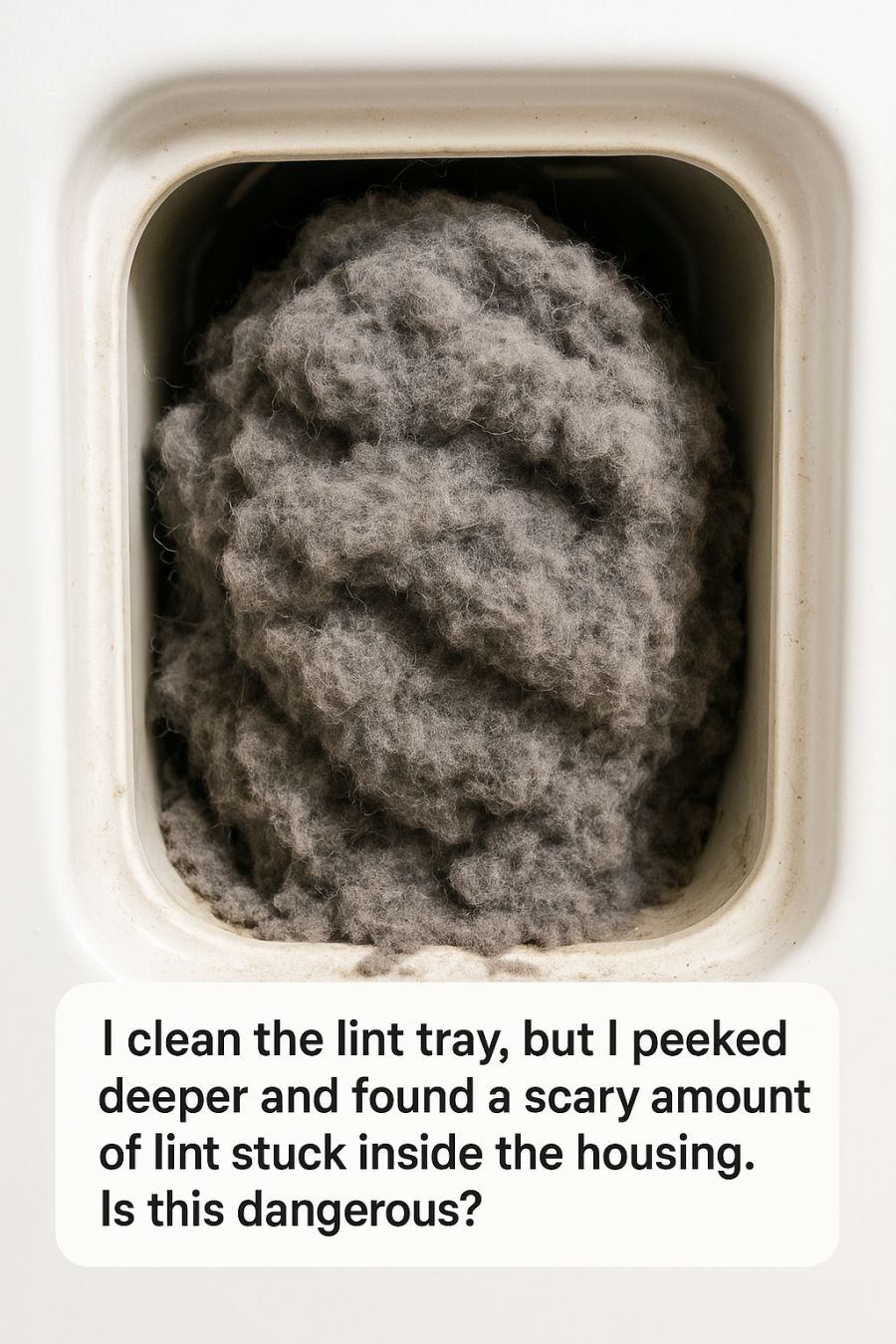
1. Why Your Dryer Hides So Much Lint Behind the Tray
Lint accumulation occurs because dryers are designed to pull air through the clothes during the drying process. This airflow picks up small fibers from the clothing, which then get trapped in the lint filter. However, not all lint is captured by the filter; some of it escapes into the dryer’s internal housing. Depending on the model and age of the dryer, this can be a considerable amount—sometimes up to 30% of the total lint generated per load.
As the dryer operates, the vibrations can cause lint particles to dislodge and settle in various nooks and crannies inside the appliance. Over time, this buildup can become significant, especially if the dryer is not regularly maintained or if the lint trap is not effectively capturing all the lint.
2. How Dangerous Is Hidden Lint Buildup, Really?
Hidden lint buildup is more than just an inconvenience; it’s a major safety hazard. The U.S. Fire Administration reports that clothes dryers are responsible for an estimated 2,900 home fires each year, resulting in approximately 5 deaths, 100 injuries, and $35 million in property loss. The leading cause of these fires is the failure to clean lint from the dryer, which can ignite when exposed to the high temperatures generated during operation.
Additionally, excessive lint buildup can obstruct airflow, causing the dryer to overheat. This not only increases the risk of fire but can also cause mechanical failures and reduce the lifespan of the appliance.
3. Fire Risk 101: What Experts Say About Compacted Lint
Experts agree that compacted lint poses a significant fire risk, primarily because it is highly flammable. When lint is compacted, it can quickly ignite if exposed to a spark or high temperatures. In a dryer, the heating element can reach temperatures of up to 250 degrees Fahrenheit, which is more than enough to ignite dry lint.
Professional dryer maintenance technicians recommend regularly inspecting and cleaning the entire lint system to prevent buildup. They also suggest that homeowners be aware of any unusual smells, excessive heat, or longer drying times, which could indicate a significant lint blockage.
4. Signs Your Dryer Has a Hidden Lint Problem
There are several telltale signs that your dryer may have a hidden lint problem. These include clothes taking longer to dry, the dryer feeling excessively hot to the touch, or a burning smell during operation. Another sign is if the lint trap is collecting less lint than usual, which could indicate that lint is bypassing the filter and accumulating elsewhere.
If you notice any of these symptoms, it’s important to investigate further. Ignoring them could lead to decreased efficiency and potentially dangerous conditions.
5. When a Scary Amount of Lint Is Normal—And When It’s Not
A certain amount of lint accumulation is expected in any dryer, especially after several loads. However, the amount should not be excessive if the lint trap is working properly. If you’re finding handfuls of lint in places other than the lint tray, it’s a sign that something may be wrong.
Consulting your dryer’s user manual can provide guidance on what is normal for your specific model. Regular inspections and cleanings can help determine if the amount of lint is within the normal range or if professional cleaning is necessary.
6. Viral Dryer-Cleaning Hacks: What Works and What to Skip
The internet is full of viral hacks claiming to solve dryer lint problems easily, but not all are effective or safe. For instance, using a vacuum cleaner with a narrow nozzle attachment is recommended for removing lint from hard-to-reach areas, but using flammable cleaning agents should be avoided. Additionally, some hacks suggest using brushes to clean the vent, which can be effective if done carefully.
It’s important to approach these hacks with caution and prioritize methods that are safe and recommended by professionals. Always verify the credibility of the source before attempting any cleaning hack.