
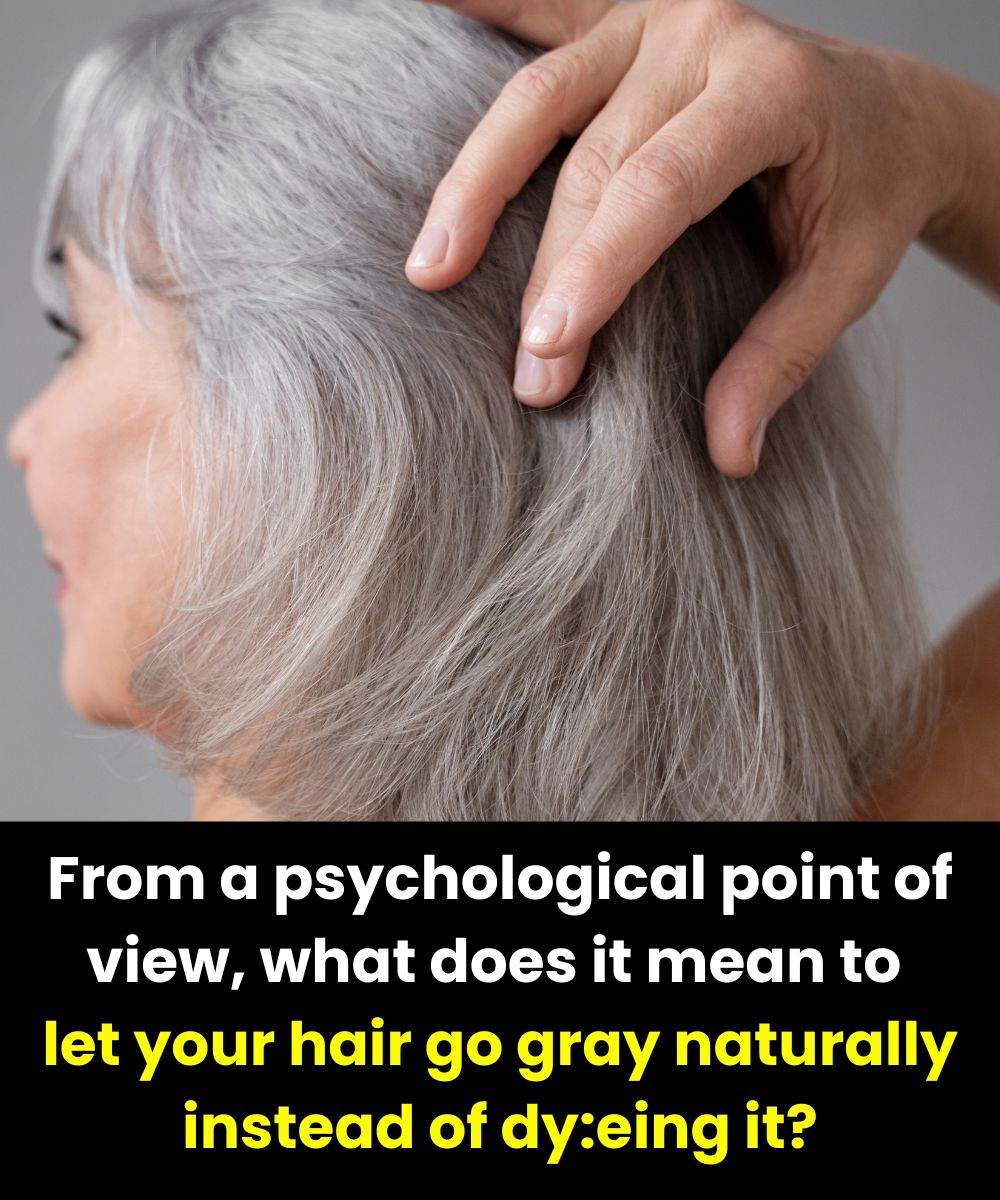
It Challenges Social Expectations, Especially for Women
Gray hair is not judged equally across genders. On men, it is often framed as “distinguished” or “experienced.” On women, it is more likely to be interpreted as neglect, decline, or a lack of effort.
This double standard is deeply ingrained. Society expects women to remain visually pleasing, youthful, and well-maintained for far longer than it expects the same of men. Letting hair go gray violates this expectation.
As a result, people may react with discomfort because the choice feels like a refusal to perform a role they unconsciously believe women are obligated to play.
It Signals Independence from External Validation
Many people rely—more than they realize—on external approval to feel secure. Appearance becomes a way to signal belonging: “I care,” “I’m trying,” “I fit in.”
Someone who lets their hair go gray may be perceived as stepping outside this system. They appear less concerned with approval, trends, or pleasing others. This can be deeply unsettling to those who still depend on those signals for reassurance.
Psychologically, this reaction is known as projection. The discomfort is not about the gray-haired person, but about what their confidence reflects back: What if I didn’t need approval either? What
Gray Hair Refuses to Apologize for Aging
In many cultures, aging is treated as something that should be softened, disguised, or politely hidden. Gray hair does none of these things. It is visible. Honest. Unedited.
Because of this, people often expect those with gray hair to explain themselves—to justify the choice, to reassure others that they haven’t “given up.” When no explanation comes, the silence can feel confrontational.
Not because it is aggressive, but because it refuses to apologize.
It Represents a Different Relationship with Time
Letting hair go gray often reflects a psychological shift: from resisting life’s stages to integrating them. From striving to be seen as younger to allowing oneself to be seen as whole.
This way of relating to time can unsettle others who are still fighting it. It introduces a different narrative—one in which worth is not tied to youth, and identity is not frozen at its most socially rewarded version.
For those not ready to adopt that narrative, the presence of someone who already has can feel destabilizing.
