
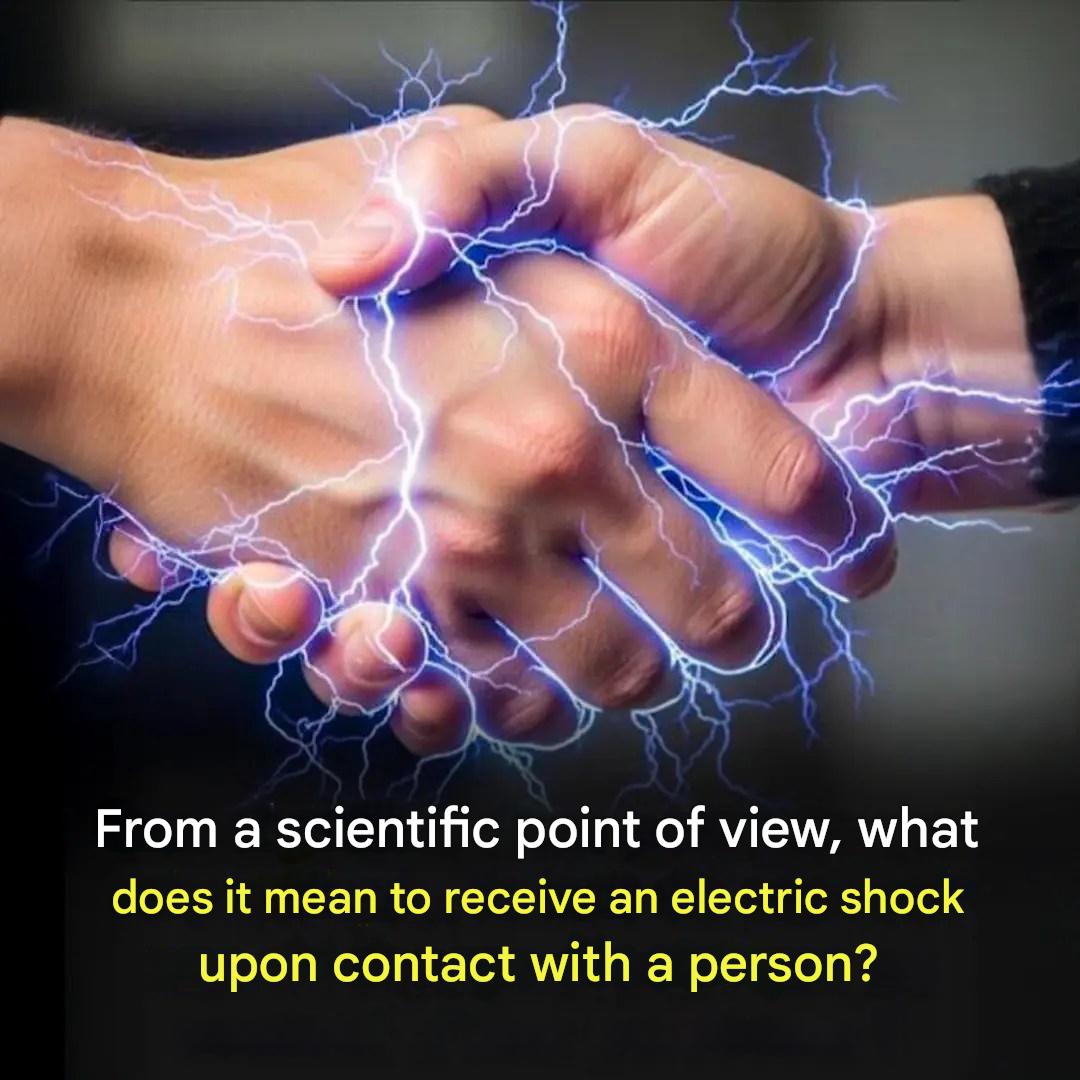
That little jolt we sometimes feel when touching a doorknob or someone can be surprising. Yet, this very common phenomenon is easily explained by a scientific mechanism linked to static electricity. Have you ever had that strange sensation when shaking someone’s hand or touching a doorknob: a tiny spark, almost imperceptible, but enough to make you jump? This phenomenon, as surprising as it is commonplace, happens to everyone. Yet, behind this tiny “zap” lies a fascinating mechanism that combines physics, environment, and everyday habits. And science has a much simpler explanation than you might imagine.
Why do we feel a little electric shock?
Screenshot
It all starts with a very common phenomenon: static electricity. Our bodies can accumulate tiny electrical charges without us even realizing it.
See more
Science
How does this happen? Simply by moving. Walking on the floor, sitting on a sofa, taking off a sweater, or even turning over in bed causes tiny exchanges of electrons between surfaces and our bodies.
Throughout the day, this charge accumulates like a small, invisible energy reserve. But at some point, the balance must be restored. And that’s precisely when the famous spark appears.
When you touch another person or a conductive object, the accumulated electricity instantly seeks to dissipate. This very rapid release creates a minuscule discharge that our skin perceives as a tingling sensation.
Rest assured: the energy is extremely weak. It’s impressive at the time, but completely harmless. The surprising role of air and humidity
You may have noticed that these little sparks are more frequent in winter. This is no coincidence.
The humidity in the air plays a key role in dissipating static electricity. When the air is humid, electrical charges disperse more easily into the environment.
Conversely, in dry air—typical of cold days or heated homes—charges remain trapped on our bodies for longer.
As a result, they accumulate more, and discharge becomes more likely.
This is also why air-conditioned or very heated spaces can promote this phenomenon.
Clothing and shoes: unexpected accomplices
Our clothing can also influence these small discharges.
Some fabrics, particularly synthetic materials like polyester or nylon, promote the accumulation of static electricity. When these fibers rub against the skin or against each other, they easily generate electrical charges.
Conversely, natural fibers like cotton or wool tend to limit this phenomenon.
Shoes also play a role. Rubber soles, for example, insulate the body from the ground and prevent the electricity from dissipating gradually. The charge remains stored until the next contact.
Why does this also happen when touching someone?
When you touch another person, a very simple phenomenon occurs: the two bodies can carry slightly different electrical charges.
If one of the two is more charged than the other, electricity flows instantly to restore balance. This micro-circulation of energy corresponds precisely to what we feel as a small shock.
Contrary to some popular beliefs, this has nothing to do with “personal energy” or a mysterious connection between two people. It is simply a momentary electrical imbalance.
« Previous
Next Can we avoid these little sparks?
Even though they are harmless, these discharges can be slightly unpleasant. Fortunately, a few simple steps can help limit them.
Moisturizing your skin is already a good habit: well-hydrated skin conducts electricity better and limits the accumulation of charges.
Slightly increasing the humidity in your home can also make a real difference, for example with a humidifier or simply by regularly airing out the rooms.
Finally, choosing clothing made of natural fibers and briefly touching a metallic object (like a key) before certain surfaces can help dissipate the charge more gradually.
When Physics Enters Everyday Life
These little everyday sparks remind us of something fascinating: even the simplest actions sometimes conceal genuine little scientific phenomena.
And the next time a doorknob surprises you with a small electric shock, you’ll know it’s simply physics restoring balance.
