
5. Smell and Touch Checks You Should Never Skip
Your nose and hands can be just as important as your eyes when judging deli ham. Fresh ham should smell mild and slightly sweet. Any sour, ammonia-like, or otherwise unpleasant odor usually means the meat has gone bad.
Texture matters too. The surface should feel dry or just lightly moist, not sticky or slippery. A slimy feel is a classic indicator of bacterial activity and is a clear sign that the ham should be discarded.
6. How Processing and Slicing Create That Shimmer
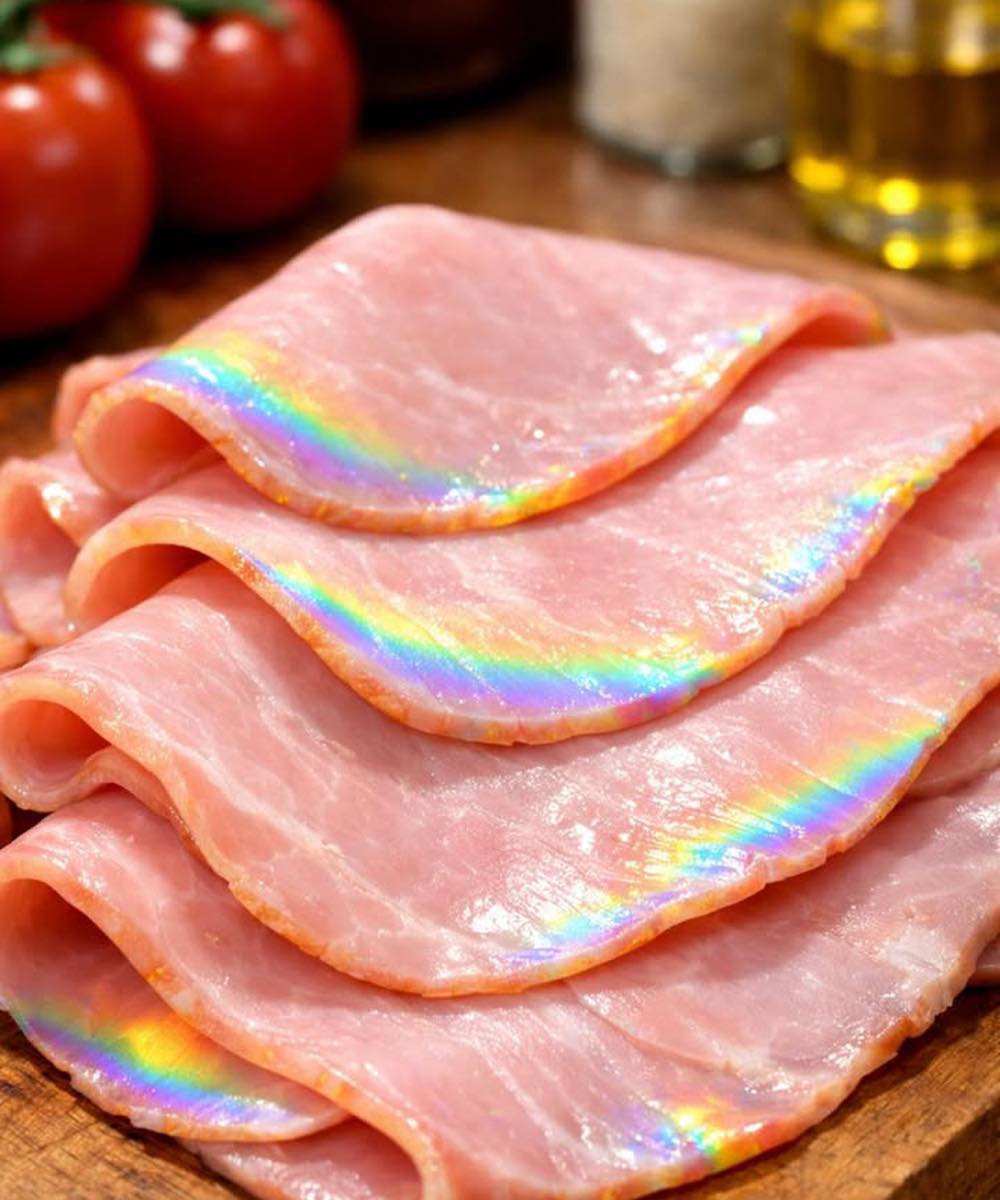
The way deli ham is processed and sliced plays a big role in creating its iridescent appearance. Ham is typically cut very thin to achieve a tender texture and consistent flavor. This thin slicing lines up the muscle fibers, increasing light diffraction and producing the familiar rainbow effect.
In addition, sharp, precision slicing equipment creates smooth, clean surfaces. The smoother the slice, the more evenly it reflects light—making that shimmering, multicolored sheen more noticeable.
7. Additives, Curing, and Why Some Hams Look Shinier
Certain ingredients and curing techniques can affect how strongly iridescence appears on deli ham. Phosphates, for instance, are commonly used to help the meat retain moisture and improve texture. These additives can change how light passes through the meat, making the rainbow-like sheen more noticeable.
The curing process itself—typically involving salt and nitrates—also alters the structure of the meat’s surface. These changes can increase light diffraction, which is why cured or smoked hams often display a more vivid, shimmering appearance than uncured varieties.
