
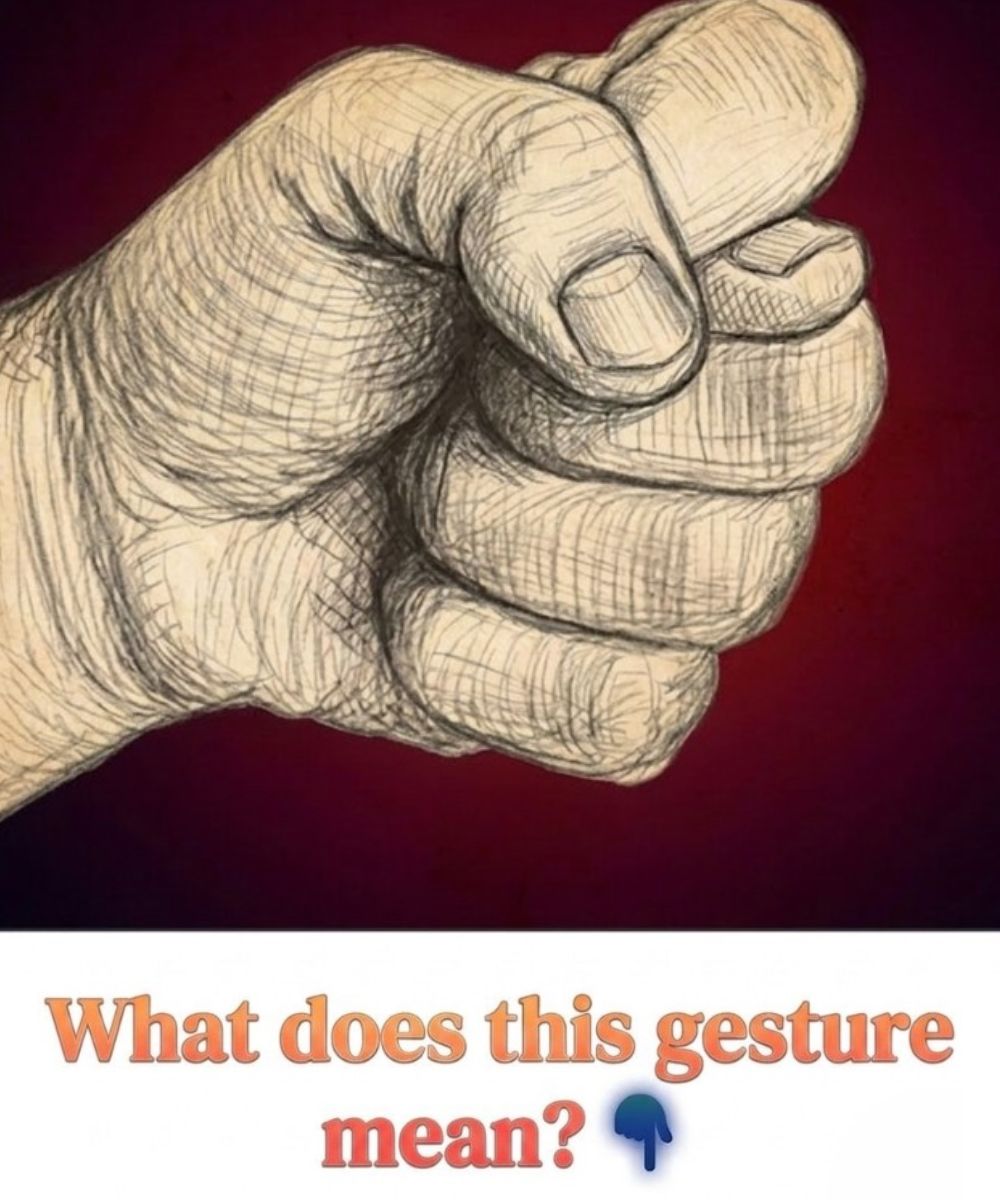
A Gesture That Can Be Offensive
However, the meaning is not always positive. In some countries, the fig gesture is considered rude or insulting. It can carry an offensive meaning, especially when directed at another person. Because of this, the gesture can be misunderstood if used in the wrong place.
For example, someone from one culture might see it as a harmless symbol of luck, while someone from another culture might see it as disrespectful. This is why context matters. A hand sign is not just about the shape of the fingers; it is also about where it is used, who uses it, and how people around them understand it.
A Playful Meaning in Some Places
In some modern contexts, especially in Western countries, a similar hand shape is used in the children’s game “got your nose.” An adult may pretend to take a child’s nose by placing the thumb between the fingers. In that situation, the gesture has no serious or offensive meaning. It is playful, silly, and meant to make a child laugh.
This shows how symbols can change over time. A gesture that once had magical or protective meaning can later become a joke, a charm, or even an insult depending on the culture.
What Is the User Trying to Communicate?

When someone uses this gesture today, they may be trying to communicate one of several messages. They may want to express protection, good luck, rejection of bad energy, or playful teasing. In a more aggressive context, they may be trying to insult or provoke someone.
The most important message behind the fig gesture is that it is rarely neutral. It usually carries emotion, whether that emotion is confidence, humor, superstition, or disrespect.
Why This Gesture Still Gets Attention
The fig gesture remains interesting because it proves that body language is not universal. A small movement of the hand can hold centuries of meaning. It can be a lucky charm in one place, a childish joke in another, and an offensive sign somewhere else.
So, when people use this gesture, the message they want to send depends heavily on culture and situation. But at its core, the fig gesture often says one thing clearly: the person using it wants to express power, protection, or resistance without saying a word.
