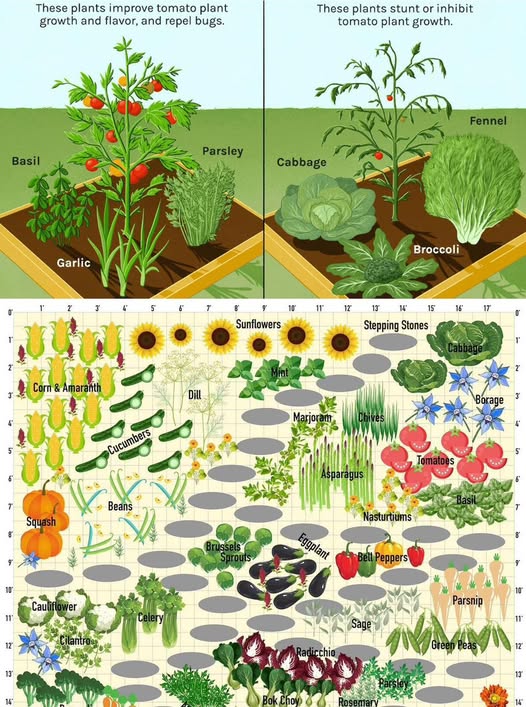
Basil: Enhances tomato flavor while repelling flies and mosquitoes.
Marigolds: Keep away nematodes and other garden pests.
Carrots: Help loosen the soil, facilitating better air and water flow around the tomato roots.
For Cucumbers:
Radihes: Act as a deterrent against cucumber beetles.
Sunflowers: Provide a natural trellis for cucumber vines and attract pollinators.
Lettuce: Benefits from the shade provided by cucumber plants, which helps keep the root environment cool.
Implementing Companion Planting in Your Vegetable Garden
Plan Your Garden Layout: Consider each plant’s needs, including sunlight, water, and space. Arrange plant companions to fulfill these needs without causing competition.
Rotate Crops Annually: Prevent disease and pest buildup by not planting the same crop family in the same location consecutively.
Observe and Adapt: Keep an eye on plant health and growth. If some combinations aren’t thriving, be ready to adjust your planting strategy.
The interaction between tomatoes and cucumbers underscores the critical nature of understanding plant relationships in gardening. By adhering to companion planting principles, gardeners can cultivate a more diverse, productive, and healthy garden ecosystem. Remember, knowing which plants to pair together is as crucial as knowing how to plant them.
Inspired by this? Share the article with your friends!