
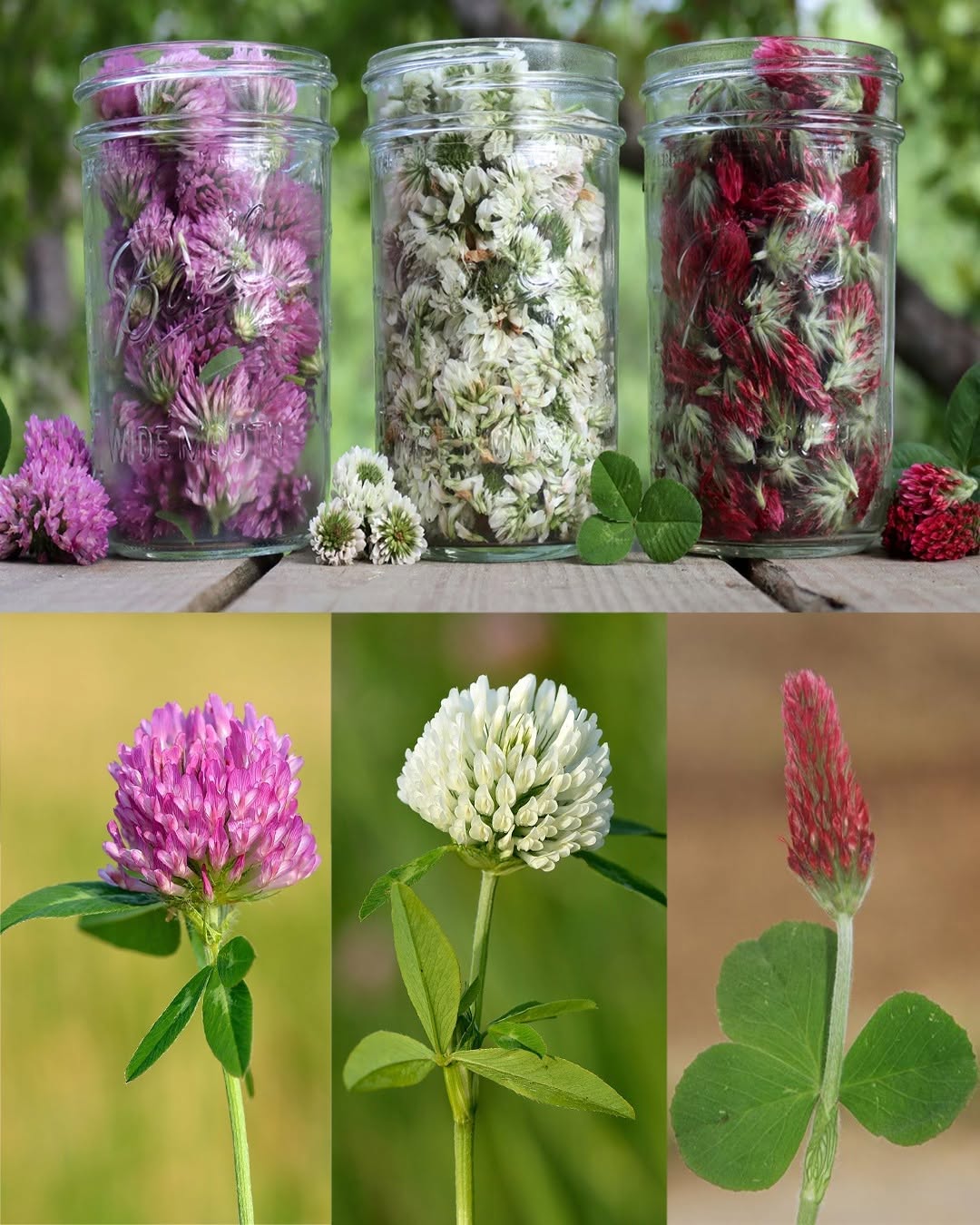
✅ Shared Benefits of All Clover Types
red white crimson clover benefits bees garden
Regardless of the species, all three clovers offer:
Nitrogen Fixation – Enrich the soil naturally by drawing nitrogen from the air.
Attract Pollinators – All produce nectar-rich flowers loved by bees and butterflies.
Edibility – Young leaves and flowers are edible and can be used in salads or tea.
Medicinal Potential – All clovers have anti-inflammatory and detoxifying effects.
Ground Cover – Reduce soil erosion and compete with unwanted weeds.
Drought Tolerance – Hardy plants that require minimal water once established.
🌱 Homemade Uses and Preparations
Clover Tea (White or Red)
Dry the flower heads.
Steep 1–2 teaspoons in hot water for 10 minutes.
Drink for respiratory or hormonal support.
Infused Clover Oil (Red Clover)
Fill a jar with dried red clover flowers.
Cover with carrier oil (like olive oil).
Let sit for 2–3 weeks in a sunny spot, strain, and use for skin care.
Clover Salve
Combine clover-infused oil with beeswax.
Use topically for dry or irritated skin.
Soil Booster (Crimson Clover)
Plant crimson clover as a green manure.
Mow down before flowering and mix into the soil to add organic matter.
⚠️ Disclaimer
While clover plants are generally safe, they should not be consumed in large quantities without consulting a healthcare provider—especially red clover, due to its estrogen-like compounds. People on blood thinners or with hormone-sensitive conditions should avoid it unless supervised.
clover tea red white infused oil natural remedy
White, red, and crimson clovers are more than just pretty faces in the garden. They offer a combination of healing potential, soil enrichment, and ecological benefits. Whether you’re making herbal tea, improving your lawn, or supporting pollinators, clover is a humble yet powerful plant that deserves your attention.
Inspired by this? Share the article with your friends!
