
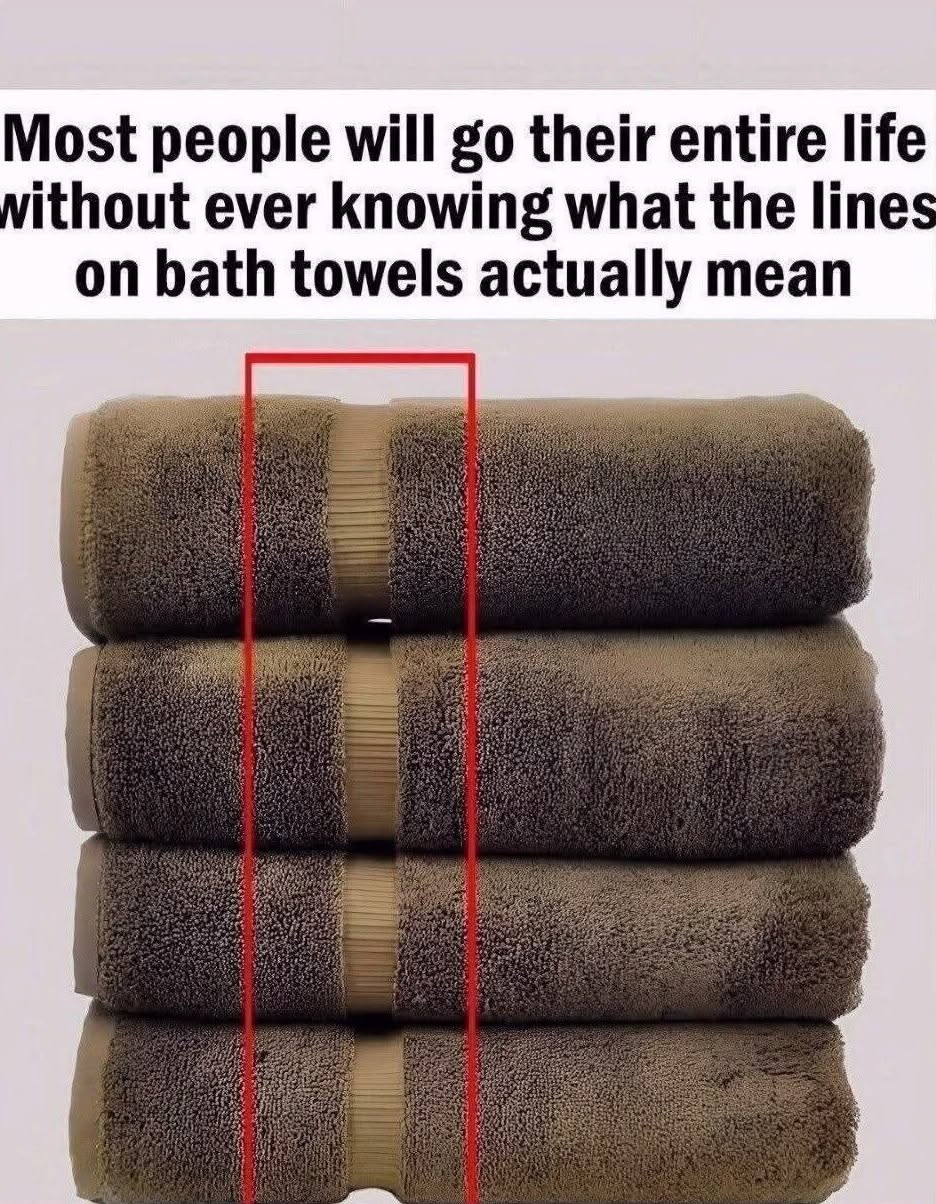
You have seen them before, maybe without giving them a second thought: those subtle stripes, bands, or woven patterns along the edges of your bath towels. Are they purely decorative, a sign of quality, or a hidden message from the manufacturer? As it turns out, they are not random. Once you know what they mean, you may never look at your towel rack quite the same way again.
The Short Answer: Mostly Decorative
Here is the reassuring truth: in most modern towels, those lines are primarily aesthetic. Brands add stripes, borders, and woven patterns to:
- Create visual interest and match bathroom decor.
- Distinguish product lines, such as basic versus premium.
- Subtly reinforce or hide the seams at the edges.
- Follow current design trends, like clean minimalist stripes.
But some lines do more than look pretty. In the world of textiles, the way an edge is woven can hint at a towel’s durability, absorbency, and even its quality tier.
The Four Types of Towel Lines
Most towel edges fall into one of four categories, each with its own story.
- The dobby border: a narrow, textured band, often geometric or honeycomb-patterned, woven with a special loom attachment. It adds structure to the edge and usually signals a mid-to-high-tier towel.
- The hemstitch: a ladder-like pattern of tiny openings where threads are drawn together and bound. It is elegant and craftsmanship-heavy, but more delicate and prone to snagging.
- The solid band: a wide block of color at each end, usually a design choice for a spa-like or hotel look. It can indicate a slight change in weave density.
- The no-line edge: a simple folded and sewn hem, standard on budget-friendly towels. It is plain but often the most rugged and easy to care for.
