
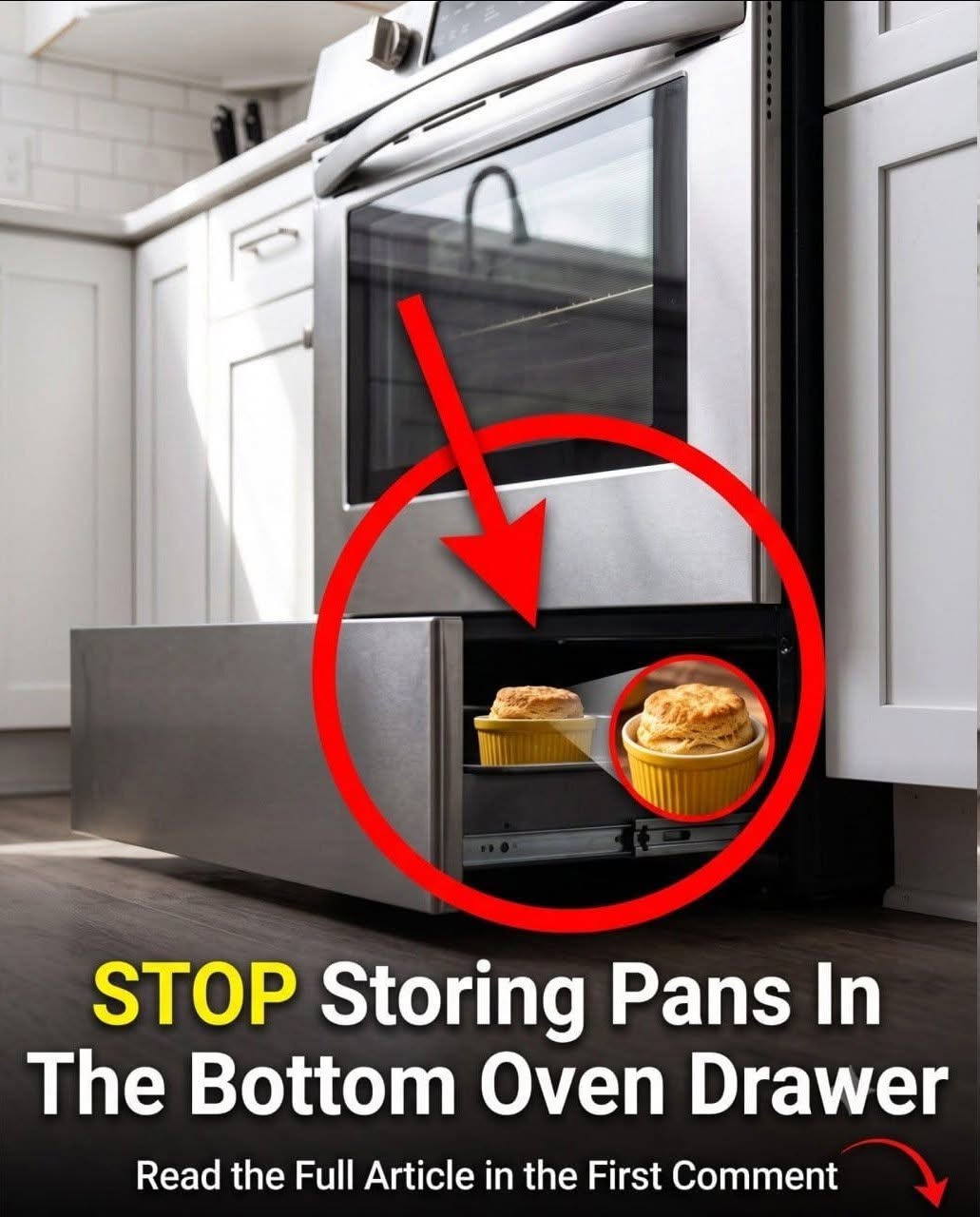
This ergonomic assumption is reinforced by common household habits. Our parents stored pans there, their parents stored pans there, and we do too. It’s an inherited kitchen truth we rarely question. Even for some professional chefs, who might use this space differently, the “storage default” remains the leading assumption in residential settings.
But the reality is that the design constraints of a heating appliance dictate its structure. The space below the main oven cavity is directly impacted by the primary heat source (the lower baking burner or heating element), creating a functional zone that differs from a simple, cool cabinet. Depending on your oven’s engineering, this drawer is either actively heated or passively warmed, and using it incorrectly can affect your appliance’s performance and your cookware.
The Real Revelation: It’s Often a Warmer (or Broiler) Drawer
There are two primary non-storage functions for the drawer beneath your oven, and which one you have depends on your specific model of range—specifically, whether it is gas or electric, and the year it was manufactured.
1. The Warmer Drawer
On modern, higher-end electric ranges, that bottom drawer is frequently a sophisticated Warming Drawer. This is a functional zone designed to operate at low temperatures, typically between 140°F (60°C) and 200°F (93°C).
It is designed to solve a critical problem: timing your meal. When you have multiple components—such as roasted chicken that is ready to serve but the mashed potatoes and gravy still need five more minutes—you can place the chicken into this drawer. The warm air circulates, keeping the chicken hot and safe (outside the “danger zone” of temperature where bacteria multiply rapidly), but without continuing to cook the meat or dry it out.
It is not designed for baking or roasting from scratch. Its only job is maintaining warmth, which makes it perfect for keeping pancakes or tortillas warm during breakfast, keeping a casserole warm for late arrivals, or even warming plates and serving platters (a common trick in restaurants).
2. The Broiler Compartment (Common in Older Gas Ranges)
On many older or basic gas ranges, the burner that heats the oven for baking is located at the top of the cavity. However, a second burner exists beneath the floor of the oven. On some of these designs, this second burner heats the very drawer you’ve been using for pans.
In these models, the drawer is the actual Broiler Compartment. Instead of browning or crisping food inside the main oven, you pull the drawer out, place a broiler pan into the specialized metal tracks, and cook the food directly beneath the open gas flame. This high, direct, radiant heat is perfect for searing steaks, melting cheese on casseroles, or charring the tops of peppers.
