
10. Reporting Sightings: Helping Scientists Track the Invasion
If you encounter the blue garden flatworm in your area, consider reporting the sighting to local environmental authorities or citizen science projects. These reports can help track the spread of the species and inform management strategies.
Providing detailed information, such as location, date, and photographs, can aid researchers in understanding the flatworm’s distribution and impact. Participating in these efforts contributes to broader ecological management and conservation goals.
11. Common Lookalikes and How to Tell Them Apart
While the blue garden flatworm has distinct features, it may be confused with other similar garden inhabitants, such as earthworms or leeches. Earthworms typically have a segmented, non-glossy body and move by inching, making them easy to distinguish from flatworms.
Leeches, on the other hand, may share the flatworm’s glossy appearance but often have a more robust, muscular body and are commonly found in aquatic environments. Observing the flatworm’s unique gliding motion and central stripe can help differentiate it from these lookalikes, ensuring accurate identification.
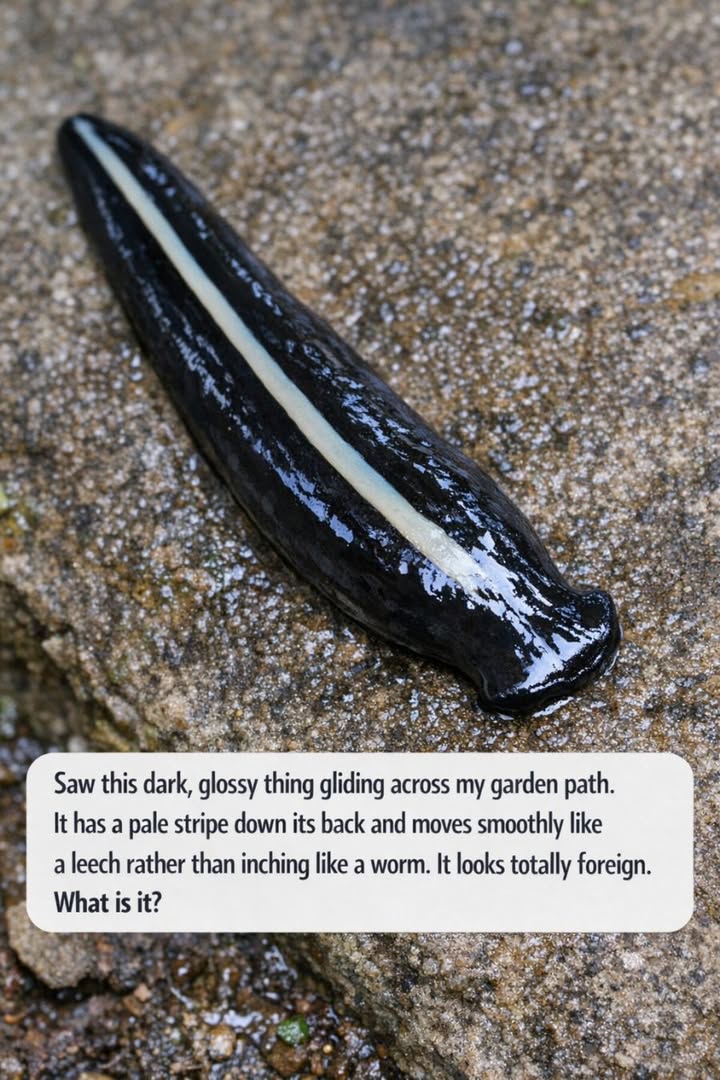
Saw this dark, glossy thing gliding across my garden path. It has a pale stripe down its back and moves smoothly like a leech rather than inching like a worm. It looks totally foreign. What is it?
Pages: 1 2
