
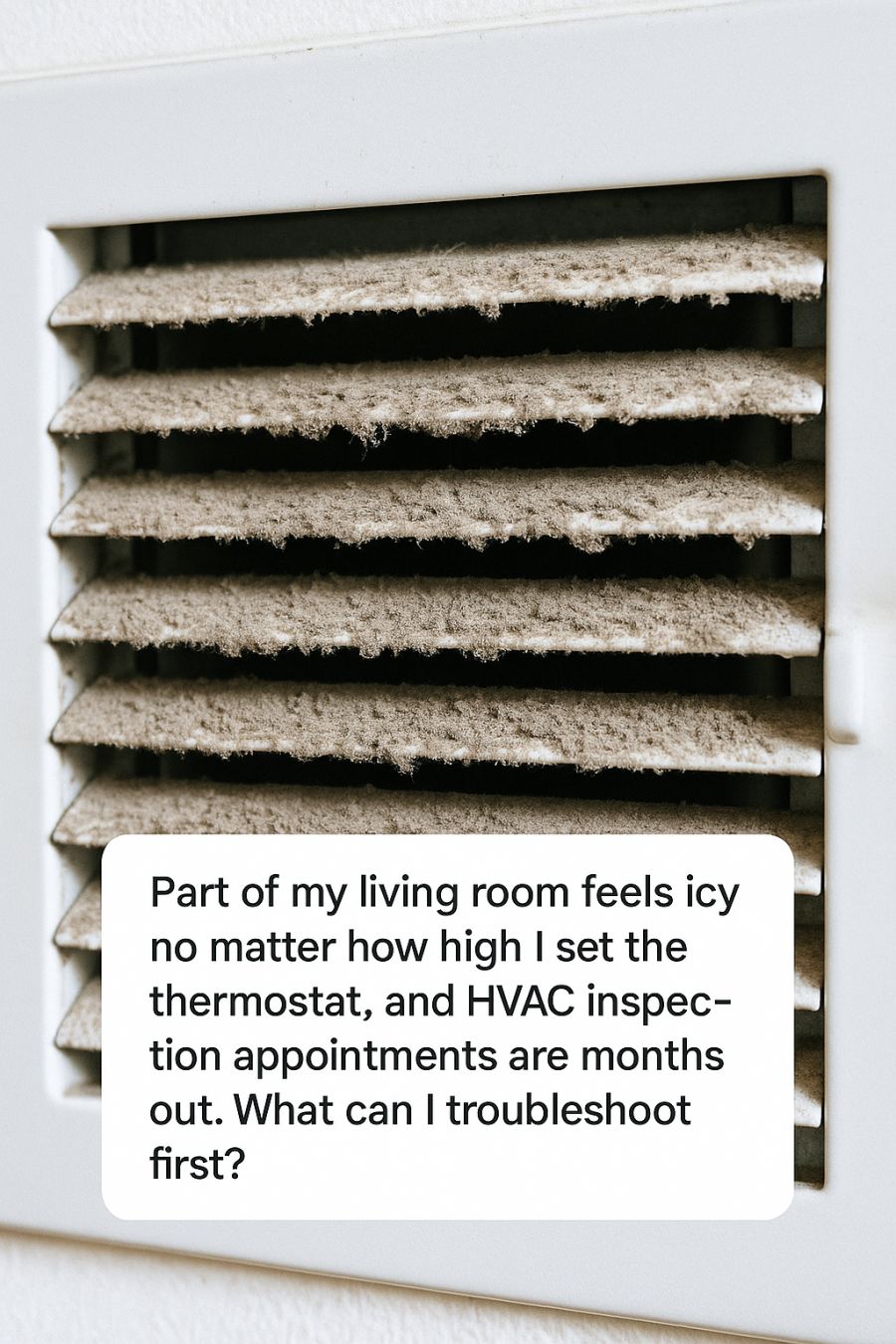
9. Try Easy DIY Balancing: Adjusting Dampers and Registers
Balancing the airflow in your home can help eliminate cold spots. Many HVAC systems have dampers installed in the ductwork that can be adjusted to control airflow to different areas.
Locate the dampers, which are usually in the basement or attic, and adjust them to direct more airflow to the colder part of your living room. Additionally, adjust the registers on the vents to increase airflow to that area. This DIY balancing act can often make a significant difference in room temperature.
10. Use Fans and Smart Airflow Tricks to Mix Warm and Cold Air
Ceiling fans can be an effective tool in redistributing warm air throughout your living room. Set your ceiling fan to rotate clockwise at a low speed during the winter months to gently push warm air downward.
Additionally, consider using portable fans strategically placed to direct warm air from heated areas to colder ones. These simple tricks can help mix the air more evenly, reducing cold spots and improving overall comfort.
11. When to Stop Troubleshooting and Wait for the HVAC Pro
While many issues can be resolved with DIY efforts, some problems require professional attention. If you’ve exhausted all troubleshooting steps and still experience significant comfort issues, it may be time to wait for an HVAC professional.
Issues like significant ductwork damage, complex system imbalances, or malfunctioning equipment are best left to experts. Continuing to troubleshoot without success can lead to frustration and potential damage to your system. Prioritize your comfort and safety by knowing when to call in the pros.
