
Aside from the obvious white cotton-like clumps, there are other signs to look out for if you suspect a mealybug infestation. Check for stunted growth or yellowing leaves, as these pests drain the nutrients from your plants.
You might also notice a sticky substance on the leaves or surrounding surfaces, known as honeydew, which is a byproduct of the mealybugs’ feeding process. This can lead to secondary issues, such as sooty mold, which thrives on the sugary residue.
5. Immediate Steps To Take The Moment You Spot Them
As soon as you identify mealybugs on your plant, isolate the affected plant to prevent the pests from spreading to other plants. Carefully inspect all nearby plants to ensure they are not also infested.
Begin by manually removing as many mealybugs as possible using a cotton swab or a soft brush. This immediate action can help reduce the pest population and prevent further damage to the plant.
6. The Cotton Swab And Alcohol Method That Really Works
One of the most effective methods for tackling mealybugs is the use of isopropyl alcohol (70% concentration or higher). Dip a cotton swab in the alcohol and apply it directly to the mealybugs. The alcohol dissolves their protective coating, killing them on contact.
Be thorough in your application, ensuring you reach into all the nooks and crannies where these pests might be hiding. Repeat this process every few days to ensure you catch any newly hatched bugs.
7. Natural Sprays And Soaps To Control Mealybugs Safely
For those who prefer a more natural approach, insecticidal soaps and neem oil sprays can be effective in controlling mealybug populations. These products work by suffocating the insects or disrupting their growth and reproduction.
When using these treatments, follow the instructions on the label carefully, and test the spray on a small area of the plant first to ensure it does not cause any adverse reactions. Regular application may be necessary to keep the infestation under control.
8. When You Need Stronger Chemical Treatments
In severe cases where natural methods fail to curb the infestation, you might need to resort to stronger chemical treatments. Systemic insecticides are absorbed by the plant and target the pests from the inside, providing long-lasting protection.
However, these chemicals can be harmful to beneficial insects and the environment, so they should be used as a last resort. Always follow the manufacturer’s instructions and consider consulting with a professional before application.
9. How To Quarantine, Clean, And Protect Nearby Plants
Quarantining the infested plant is crucial to prevent mealybugs from spreading. Place the plant in a separate room and avoid moving it until the infestation is fully resolved. Clean the surrounding area thoroughly to remove any honeydew or stray bugs.
Regularly inspect nearby plants for signs of infestation, and consider preventive treatments with neem oil or insecticidal soap to protect them. Maintaining a clean and healthy environment can go a long way in preventing pest issues.
10. Long-Term Prevention Habits To Keep Mealybugs Away
To prevent future mealybug infestations, maintain a regular plant care routine that includes cleaning leaves and stems and monitoring for pests. Ensure your plants are healthy and not stressed, as healthy plants are less susceptible to infestations.
Introduce beneficial insects, such as ladybugs or predatory mites, to your indoor garden to help naturally control pest populations. Additionally, avoid over-fertilizing, as lush new growth can attract mealybugs. Regularly inspect any new plants before bringing them into your home to catch any potential pests early.
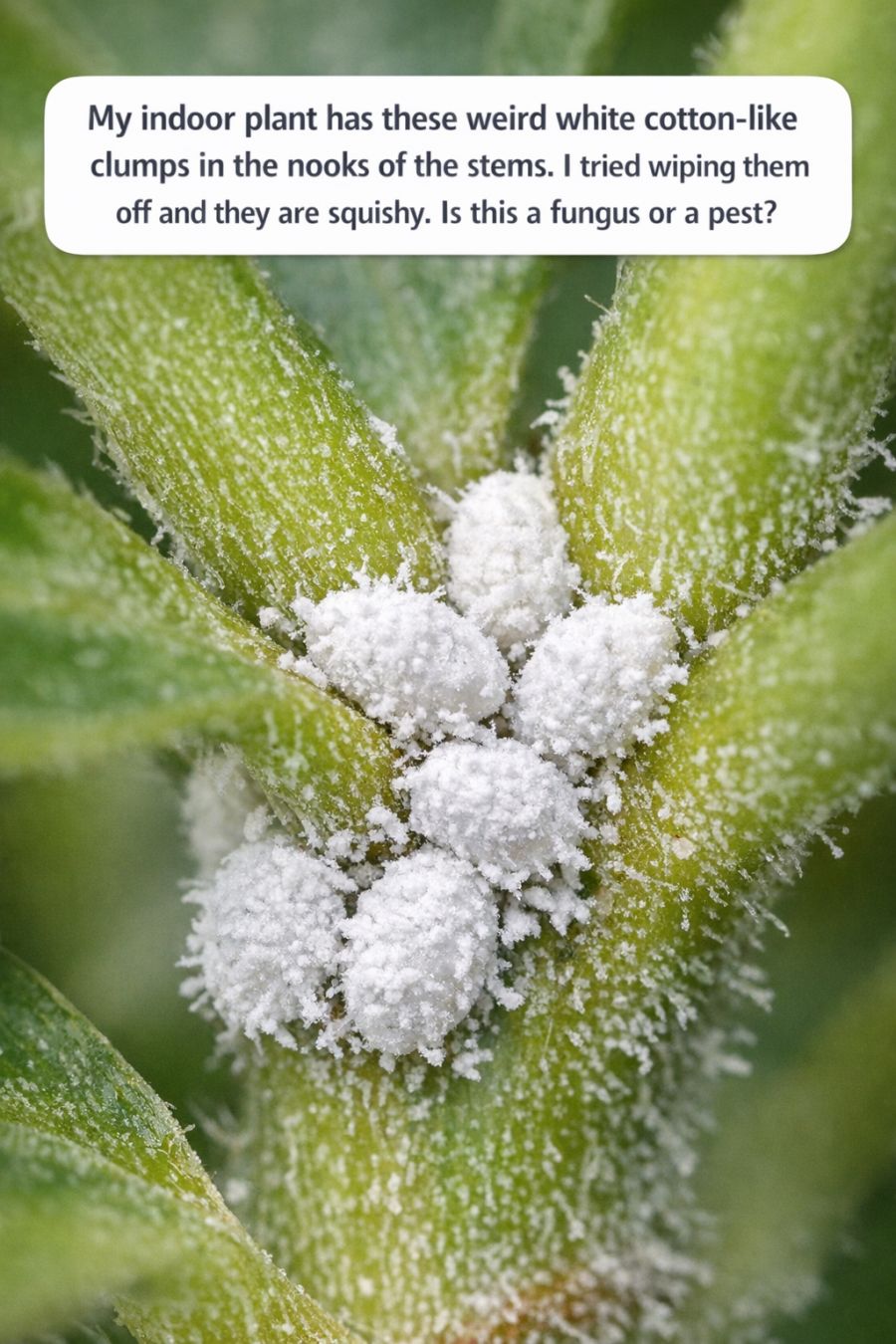
My indoor plant has these weird white cotton-like clumps in the nooks of the stems. I tried wiping them off and they are squishy. Is this a fungus or a pest?
Pages: 1 2
