
5. When Japanese Beetles Attack: Timing and Life Cycle Basics
Understanding the life cycle of Japanese beetles is crucial for effective management. Adult beetles emerge from the soil in late spring to early summer, usually around June or July, depending on the climate. They are active for 4 to 6 weeks, during which time they mate and lay eggs in the soil.
The eggs hatch into grubs, which feed on grassroots and organic matter in the soil. These grubs overwinter below the frost line and resume feeding in the spring, eventually pupating and emerging as adults to continue the cycle. Knowing this cycle helps gardeners time their interventions effectively to reduce beetle populations.
6. Where They Come From: Grubs in Your Lawn and Nearby Soil
Japanese beetle grubs are often found in lawns and garden soils, where they can cause damage by feeding on the roots of grasses and other plants. A high population of grubs can lead to brown patches in lawns due to root damage.
These grubs are white and C-shaped, and they develop in the soil over a period of about 10 months. Managing grub populations in the soil can be an effective way to reduce the number of adult beetles that emerge and subsequently attack your plants.
7. Plants They Prefer (And Why Beans Are on the Menu)
Japanese beetles are not particularly picky eaters, but they do have some preferences. They are attracted to plants with smooth, soft foliage, which makes green beans an ideal target. Other common targets include roses, grapes, and linden trees.
The beetles are drawn to plants that are in direct sunlight, as they are more active during warm, sunny weather. By understanding the plants that Japanese beetles prefer, gardeners can plan their planting and pest management strategies more effectively.
8. Simple Ways to Check for Japanese Beetles on Your Beans
Monitoring your plants regularly is key to managing Japanese beetle infestations. Start by inspecting the leaves for signs of skeletonization. Look for the beetles themselves, which are often visible on the upper surfaces of leaves.
Another effective method is to shake the plant gently over a white sheet or tarp. The beetles will fall off and can be easily collected and disposed of. Early detection allows for more timely and effective control measures.
9. Hand-Picking, Traps, and Barriers: Non-Chemical Control Options
One of the simplest and most effective ways to control Japanese beetles is manual removal. Hand-picking the beetles off plants and dropping them into a bucket of soapy water can significantly reduce their numbers.
Traps can also be used, but they should be placed away from the plants you want to protect to avoid attracting more beetles to your garden. Additionally, using physical barriers like row covers can help prevent beetles from reaching your plants, especially during peak activity times.
10. Sprays and Dusts: Chemical Controls That Actually Work
For more severe infestations, chemical controls may be necessary. Insecticidal soaps and neem oil sprays can be effective against Japanese beetles when applied according to the manufacturer’s instructions.
Systemic insecticides, which are absorbed by the plant and kill the beetles when they feed, can also be used, but care should be taken to avoid harming beneficial insects. Always follow label instructions and consider the environmental impact before using chemical solutions.
11. Long-Term Strategies to Prevent Future Japanese Beetle Outbreaks
Preventing future outbreaks of Japanese beetles involves both cultural and biological control strategies. Encouraging natural predators, such as birds and beneficial insects, can help keep beetle populations in check.
Maintaining healthy soil and reducing lawn thatch can also reduce grub populations. Additionally, planting beetle-resistant plant varieties and using companion planting techniques can help reduce the attractiveness of your garden to Japanese beetles, leading to more sustainable pest management.
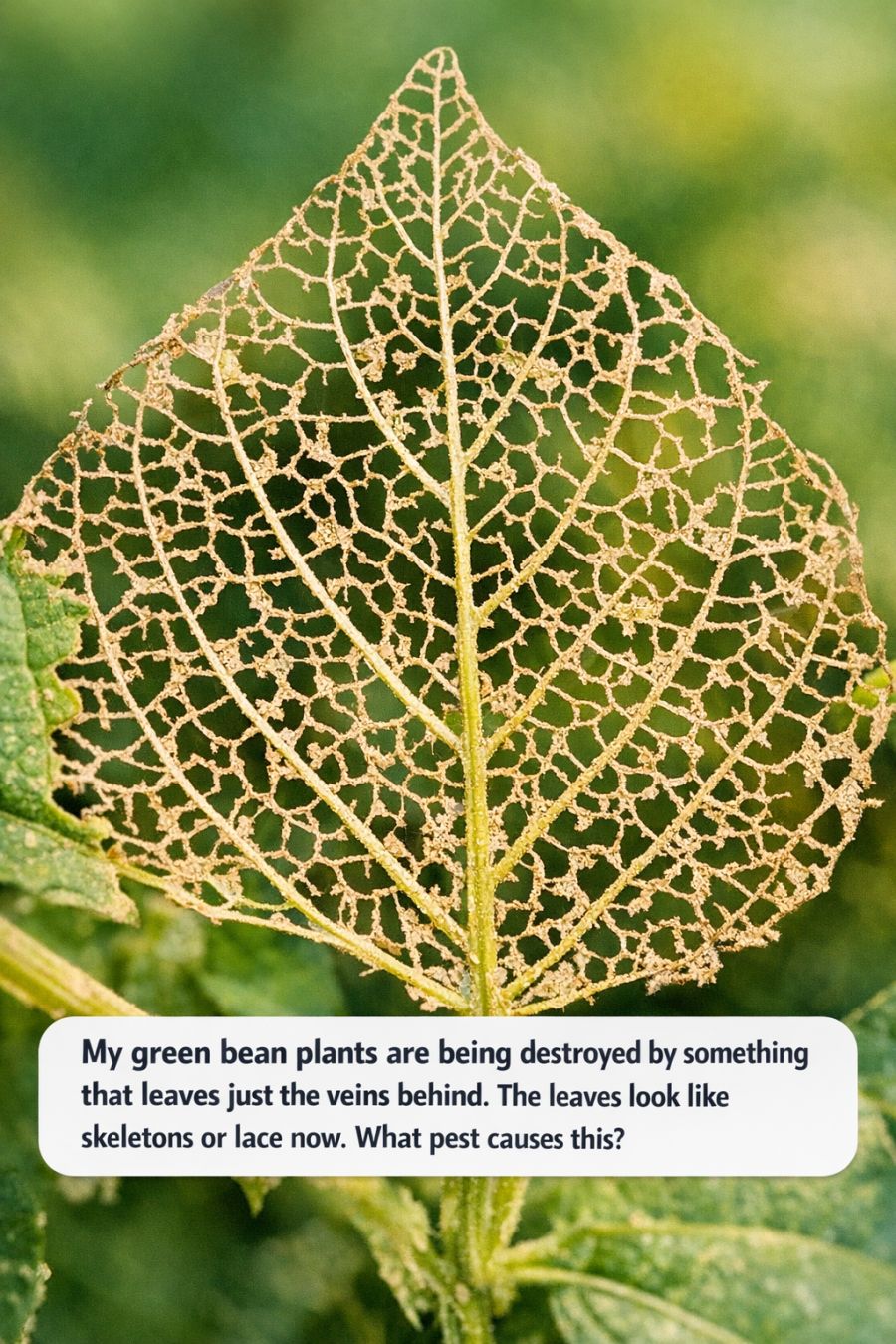
My green bean plants are being destroyed by something that leaves just the veins behind. The leaves look like skeletons or lace now. What pest causes this?
Pages: 1 2
