
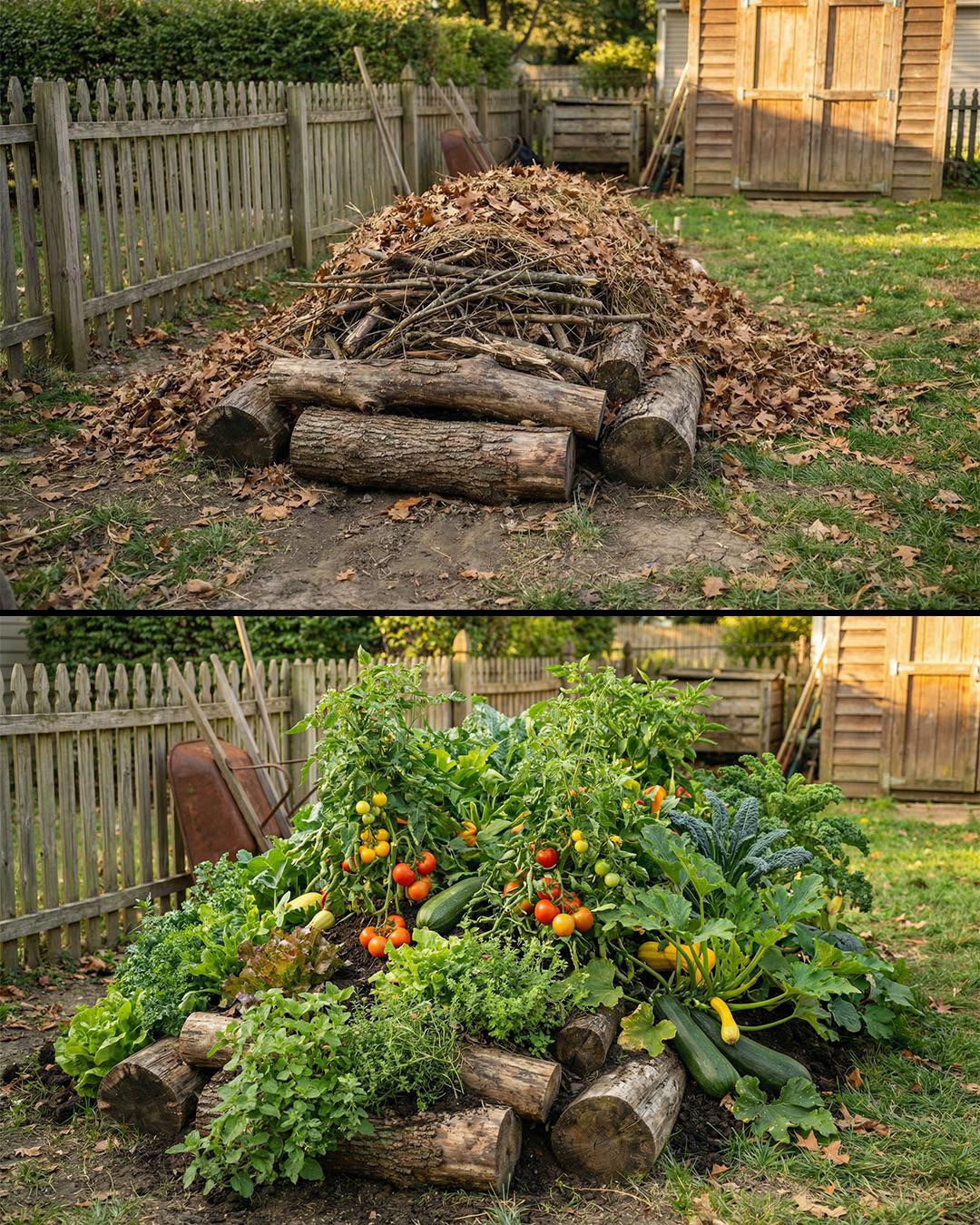
Orientation: North to south for even sunlight
Fresh height: 90–120 cm (3–4 feet)
Width: 1.2–1.5 m (4–5 feet)
Side slope: about 45° for stability
Length: any size you want
Expect the mound to settle about 30% in the first year as materials compact and decompose.
How Hugelkultur Manages Water Naturally
Fresh wood captures rainfall underground
Moisture is stored inside the logs like a reservoir
Plant roots grow downward toward the water source
The surface soil may dry quickly, but the core stays cool and damp
Mature mounds often need little to no extra watering
In hot climates, hugelkultur beds can reduce watering by 50–80%.
Best Crops by Year
Because the soil changes over time, different plants perform best in different years.
Year 1 – Heavy Feeders
Squash
Pumpkins
Zucchini
Melons
Cucumbers (large varieties)
These plants love the heat and nutrients from fresh decomposition.
Year 2 – Balanced Crops
Tomatoes
Cucumbers
Beans
Peppers
Corn
The soil becomes more stable and nutrient‑rich.
Year 3 and Beyond – Almost Anything
Leafy greens
Herbs
Root vegetables
Strawberries
Onions
Garlic
By this stage, the mound behaves like premium garden soil.
Extra Tips for Better Results
Choose the Right Location
Full sun is best (6–8 hours daily)
Avoid low areas where water pools
Keep at least 50 cm (20 inches) from fences
Plant Densely
Hugelkultur beds support dense planting because:
Roots grow vertically and horizontally
Moisture is abundant
Nutrients are continuously released
Dense planting also shades the soil and reduces evaporation.
Mulch the Surface
Cover with:
Straw
Dry leaves
Grass clippings
Mulch reduces water loss and prevents erosion.
Expect Some Nitrogen Use Early
Fresh wood may temporarily absorb nitrogen during decomposition.
To compensate:
Add compost or manure to the top layer
Plant legumes (beans, peas) in the first year
Use organic fertilizer if needed
Longevity
A well‑built hugelkultur mound can remain productive for:
5–10 years (softwood base)
10–20+ years (hardwood base)
hugelkultur vegetable garden harvest
Common Mistakes to Avoid
Using treated or painted wood
Making slopes too steep
Skipping compost in the top layer
Planting root vegetables in year one
Building too small (larger mounds perform better)
Why Many Gardeners Switch to Hugelkultur
Uses free materials
Reduces watering
Improves poor soil
Raises planting area (better drainage)
Produces heavy harvests
Requires little maintenance after setup
Hugelkultur turns yard waste into a self‑watering garden system.
One afternoon of stacking can create years of low‑maintenance harvests 🌱
Inspired by this? Share the article with your friends!
