
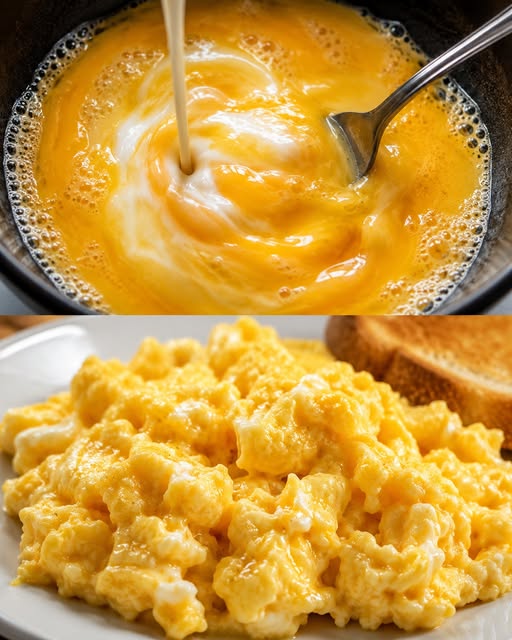
Let me tell you about the first time I realized I’d been making scrambled eggs wrong my entire life.
I was staying with a friend who had trained as a chef. In the morning, he offered to make breakfast. I watched as he cracked eggs into a bowl, whisked them briefly, then melted butter in a pan over low heat—lower than I’d ever used. He stirred slowly, gently, scraping the bottom of the pan with a rubber spatula. The eggs came together in soft, pillowy curds that looked nothing like the dry, rubbery chunks I’d been serving my family for years.
He slid them onto toast, and I took a bite.
These weren’t scrambled eggs. These were clouds. They were silk. They were everything I never knew eggs could be.
“What did you do differently?” I asked.
He shrugged. “Nothing special. I just didn’t murder them.”
That was the lesson. Most people overcook scrambled eggs. They use high heat, stir too aggressively, and leave the eggs on the burner far too long. The result is dry, tough, and flavorless—eggs that need ketchup or hot sauce to be edible.
Discover more
Salt
Cheese
butter
Perfect scrambled eggs aren’t dry, rubbery, or overcooked—they’re silky, moist, and cloud-like, with soft curds that melt on the tongue. And despite what you might think, they don’t require fancy tools or ingredients. Just 3 essentials: eggs, butter, and patience.
Here’s the trusted method—backed by chefs and grandmothers alike—that delivers perfection every time.
🥚 The 3 Essential Ingredients (Nothing More)
|
Ingredient
|
Why It Matters
|
Pro Tip
|
|---|---|---|
|
Fresh eggs (2–3 per person)
|
Fresh eggs have firmer whites and richer yolks, which create better texture and flavor
|
Use eggs within 2 weeks of purchase for best results; room-temperature eggs cook more evenly
|
|
Unsalted butter (1 tbsp per 2 eggs)
|
Butter adds richness, helps control heat, and creates that signature silky mouthfeel
|
Unsalted lets you control seasoning; add a tiny pinch of salt to the butter if desired
|
|
A pinch of salt
|
Salt enhances flavor and helps break down egg proteins for a tender texture
|
Add salt just before cooking (not while whisking) to avoid watery eggs
|
Optional Upgrades (If You Want to Level Up)
-
- A splash of cream or crème fraîche (1 tsp per egg): Adds extra richness and helps prevent overcooking
- Fresh herbs (chives, parsley, tarragon): Stir in at the end for brightness
Discover more
crème fraîche
salt
Egg
- A drop of lemon juice: Brightens flavor without making eggs taste citrusy
- Grated cheese (Gruyère, cheddar, goat): Fold in just before eggs are done
💡 Myth Buster: You don’t need milk. Many chefs skip it entirely. Milk can make eggs watery if not cooked carefully. If you love the taste, use a tiny splash of whole milk or cream—but it’s not required for perfection.
🍳 The Method: Step-by-Step to Egg Perfection:
Pages: 1 2
