
Remove shoots that grow from below the graft point
Trim long, weak branches to maintain shape
Thin the canopy slightly so light reaches the interior
This helps create a compact, bushy, fruit-producing tree.
4.2. Pollination
Most oranges are self-fertile.
Outdoors: insects handle it naturally
Indoors: gently shaking branches or brushing flowers improves fruit set
4.3. Common Problems
Pests:
Aphids, scale, spider mites, and mealybugs may appear.
Treat early with gentle washing or safe horticultural sprays.
Leaf drop:
Often caused by sudden temperature changes, lack of light, or watering issues.
Poor fruiting:
Tree is too young
Not enough sun
Nutrient imbalance
Rootbound pot
Too many fruits for the tree’s size (thin if necessary)
5. Timeline to Expect Fruit
Here’s a realistic view depending on your starting method:
Seed-grown tree:
Many years, unpredictable, and sometimes never fruits.
Grafted tree from a nursery:
Usually 1–3 years in a pot.
Your own graft on a seedling:
Typically 2–4 years, depending on the maturity of the scion.
If your priority is to enjoy oranges sooner, a grafted tree is the clear winner.
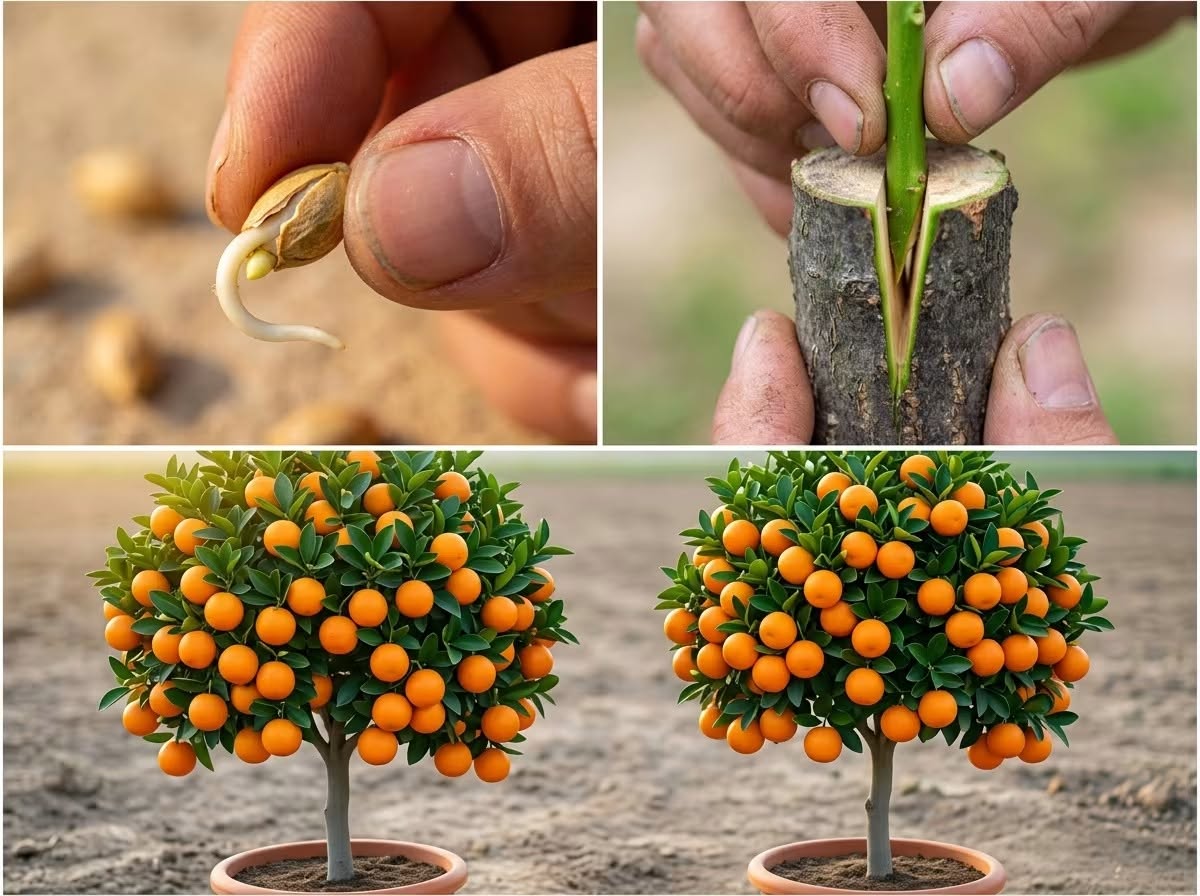
mature orange tree bearing fruit in container
6. Final Tips for Success
Always choose a sunny location
Use a fast-draining soil mix
Let the top layer of soil dry slightly between waterings
Feed regularly during warm months
Protect from cold drafts and frost
Repot slowly (one size up at a time)
Prune lightly but consistently
Stay patient—citrus rewards steady care
A potted orange tree can grow beautifully and produce sweet, fragrant fruit right at home if you choose the right starting method and give it the conditions it needs. Growing from seed is a fun, long-term project. Grafting your own tree speeds things up, and buying a grafted dwarf tree is the best way to get fruit quickly.
With sunlight, proper watering, regular feeding, and a bit of patience, you can enjoy your own home-grown oranges from a compact, healthy, and attractive potted tree.
Inspired by this? Share the article with your friends!
