
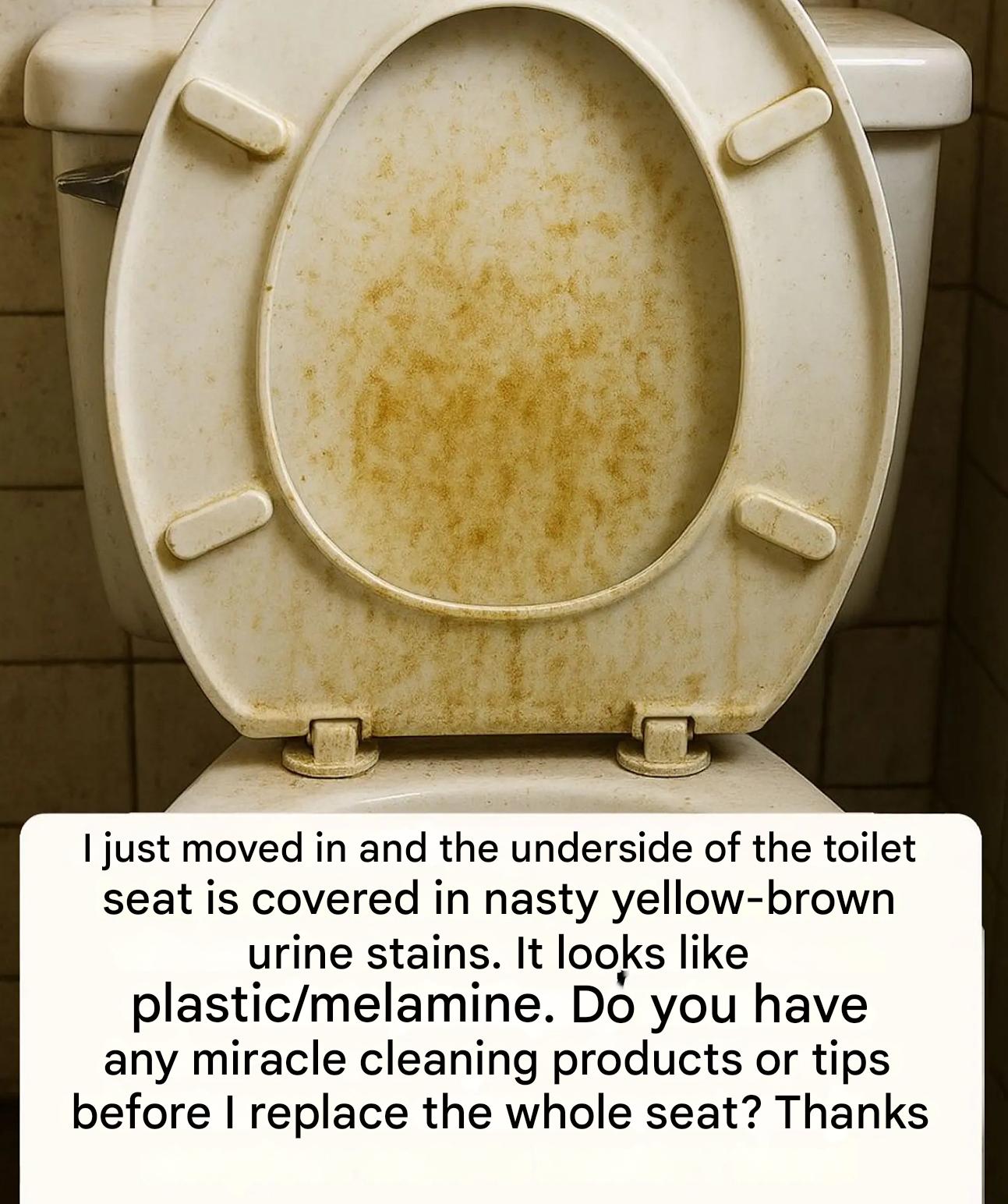
Moving house is a bit like opening a surprise gift… sometimes with a few unpleasant surprises inside. And among the less glamorous is that dreaded discovery: the underside of the toilet seat, marked with unsightly yellowish or brownish stains, often caused by limescale buildup. Before you sigh and rush out to buy a new toilet seat, know that there are several affordable, economical, and often very effective solutions. And the good news is: you’re definitely not the only one facing this everyday challenge.
Why do these stains become so stubborn?
On plastic or resin toilet seats, certain marks appear over time, especially if they haven’t been cleaned regularly. Humidity, everyday residues, and minerals in the water can eventually dull the surface. Plastic, even if it appears smooth, can trap these deposits in micro-irregularities invisible to the naked eye. The result: an unappealing discoloration, but not necessarily permanent. Clean or replace: how to decide
See more
Toilet seat
Toilets
Toilets
Before reaching for your credit card, check the overall condition of the toilet seat. If it’s solid, without cracks or deep scratches, cleaning it is definitely worthwhile. On the other hand, if the surface is damaged or remains dull despite your efforts, replacement may be the most sensible solution. In France, a standard toilet seat often costs less than €25, but attempting to clean the toilet seat remains a smart and eco-friendly option.
Always start gently
The first step is also the simplest: warm water, mild dish soap, and a non-abrasive sponge. Scrub gently, without forcing it, like when you’re cleaning a pan after a raclette dinner. This basic cleaning already removes superficial dirt and allows you to better assess the actual condition of the surface before proceeding further. The natural combo that works wonders
See more
Toilet seat
Microfiber
Microfiber
When stains persist, the baking soda and white vinegar duo comes to the rescue. Sprinkle baking soda on the affected areas, add a little vinegar, let it fizz for a few minutes, then rub gently. This method is effective, without any lingering odor or harsh chemicals, and is very popular with fans of natural cleaning.
For really stubborn stains
Another popular tip: the magic eraser. Slightly dampened, it acts like a very fine eraser that lifts away ingrained stains. Just be careful not to rub too hard in one spot to avoid dulling the surface. A thorough rinse and a wipe with a microfiber cloth are all that’s needed to finish cleaning. Solutions that require a little patience
See more
Toilet seat
Toilets
Toilets
Some techniques, popularized on social media, rely on time rather than elbow grease. Applying a cleaning product, covering with cling film, and leaving it for several hours helps limit evaporation and optimize effectiveness. For extreme cases, removing the seat and soaking it overnight in hot water with a mild cleaner can really make a difference.
And if nothing works?
Sometimes discoloration is due to wear and tear on the material itself. In this case, even the best tips can’t work miracles. You can improve the appearance, but you can’t always restore the original white. This is often a sign that it’s time for a fresh start. Prevention is better than cure.
Once the toilet seat is clean or replaced, adopt a simple weekly ritual: a quick cleaning with a mild product is all it takes to avoid unpleasant surprises. Glossy surfaces are less prone to staining and are quicker to clean, a detail to keep in mind when making a future purchase.
Because a home where you feel good also depends on these small, everyday details, taking care of your bathroom is already taking care of yourself.
