
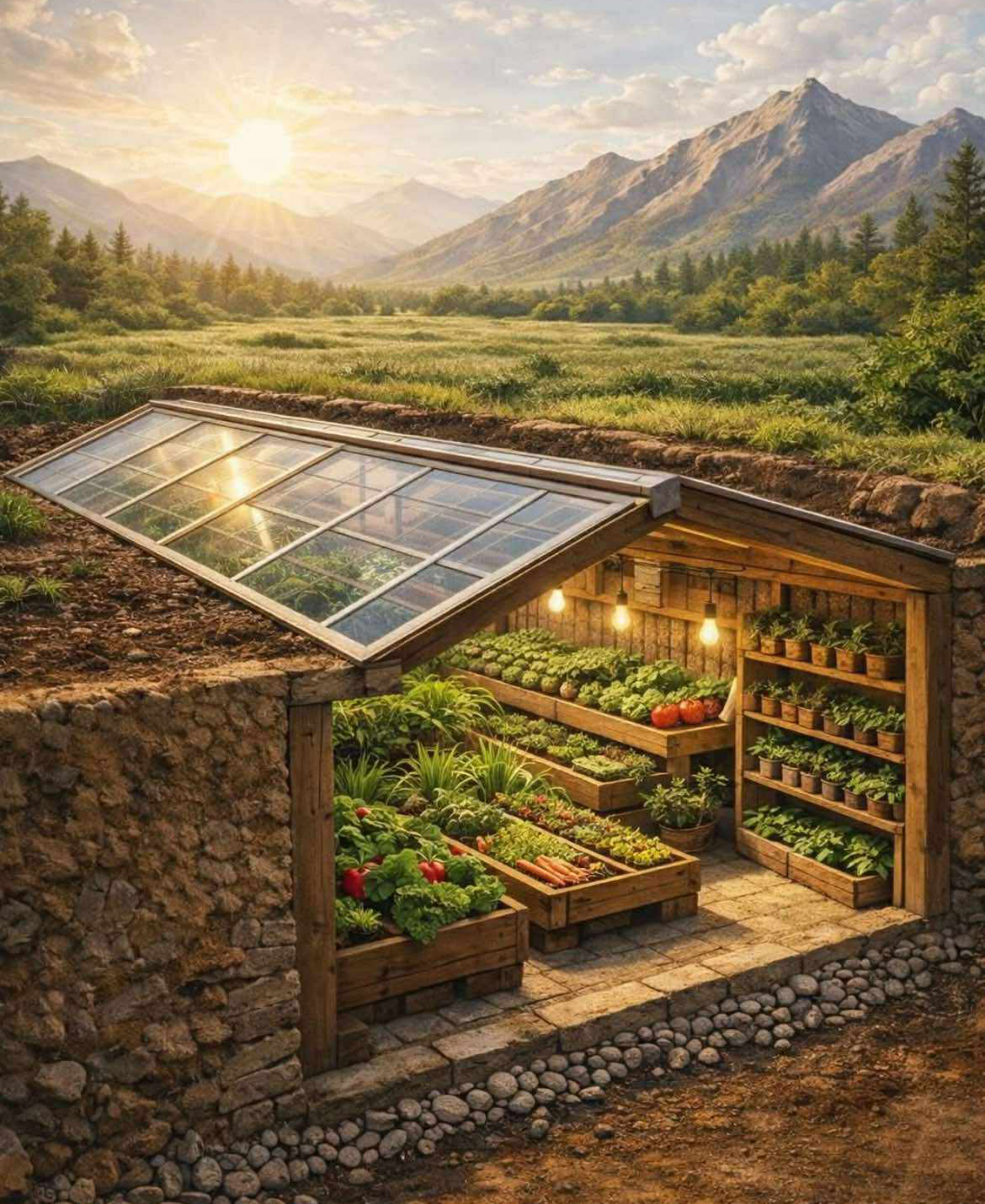
Best Crops for a Walipini
Leafy greens (lettuce, spinach, kale)
Herbs (basil, parsley, cilantro)
Tomatoes
Peppers
Cucumbers
Green onions
Strawberries
Microgreens
Root crops also perform well in cooler conditions.
Common Mistakes to Avoid
Building in flood‑prone areas
Poor ventilation
Weak wall reinforcement
Incorrect roof angle
No drainage system
Using untreated wood underground
Maintenance Tips
Monitor humidity
Clean roof regularly for maximum light
Rotate crops
Check structural supports yearly
Add compost seasonally
Cost Considerations
A simple walipini can be built for very little if you use local materials and manual labor. More advanced versions with polycarbonate roofing and concrete walls cost more but last decades.
Compared to traditional heated greenhouses, long‑term savings are significant due to minimal energy usage.
Is a Walipini Worth It?
For anyone serious about food independence, sustainability, and low‑cost year‑round gardening, the answer is yes. An underground greenhouse offers unmatched efficiency, durability, and growing potential using simple natural principles.
It is not just a structure—it is a long‑term investment in resilience, self‑sufficiency, and healthy food production.
underground greenhouse winter growing
Building a walipini requires planning and physical work, but the rewards last for decades. With stable temperatures, reduced energy needs, and reliable harvests, an underground greenhouse is one of the most powerful tools for modern sustainable gardening.
Whether you live in a cold climate or simply want better control over your growing conditions, a walipini can transform how you produce food.
Disclaimer: Always check local building regulations and soil conditions before digging large underground structures. Proper engineering and drainage are essential for safety and long‑term durability.Inspired by this? Share the article with your friends!
