
7. Feed for Flowers: Winter Fertilizer Dos and Don’ts
During winter, orchids need less fertilizer since their growth slows down. Use a balanced orchid fertilizer, such as a 20-20-20 mix, diluted to half strength every 4-6 weeks. Avoid over-fertilizing, as this can lead to root burn and hinder blooming. Pay attention to the specific needs of your orchid variety, as some may have different nutrient requirements during dormancy.
8. Repot at the Right Time—And Avoid January Mistakes
Repotting orchids during their dormant phase, typically in early spring, is ideal. However, if your orchid’s roots are severely compacted or decaying, it may be necessary to repot even in January. Use an orchid-specific potting mix and ensure the pot has good drainage. Avoid repotting if your orchid is actively blooming, as this can stress the plant and lead to bud drop.
9. Protect Roots and Leaves From Drafts, Radiators, and Dry Air
Orchids are sensitive to environmental changes, so it’s important to keep them away from drafts and direct heat sources. Cold drafts from windows or doors can cause the plant to drop buds or flowers, while hot, dry air from radiators can dehydrate the plant. Position your orchid in a stable environment with consistent temperatures and humidity, and use a room thermometer to monitor conditions.
10. Try Viral Ice Cube and Bark Hacks—Safely
The ice cube watering method, where a few ice cubes are placed on the orchid’s potting medium, is a popular hack for providing a slow release of water. While this can be effective, it’s essential to ensure the ice doesn’t directly contact the roots or leaves to prevent damage. Similarly, adding bark to the potting medium can improve drainage and air circulation, but make sure it’s the appropriate size for your orchid species to avoid compacting.
11. Spot Early Stress Signs Before Buds Drop
Preventing bud drop starts with recognizing early signs of stress in your orchid. Look for signs such as yellowing leaves, limp or shriveled roots, and wilting flower buds. These can indicate issues like overwatering, insufficient light, or low humidity. Addressing these problems early can prevent further stress and ensure your orchid continues to bloom.
12. Create a Mini Orchid Corner That Flowers on Repeat
Designating a specific area in your home for orchids can help maintain consistent conditions. Choose a location with optimal light and humidity, and consider using shelving to accommodate multiple plants. This setup not only creates an attractive display but also makes it easier to manage the care requirements for multiple orchids, increasing the likelihood of repeat blooms.
13. Plan Post-January Care So Blooms Keep Coming
As winter transitions to spring, gradually increase watering and fertilizing to support new growth. Monitor the light exposure as the sun’s intensity increases, and adjust your orchid’s positioning as needed to prevent sunburn. Continued care and attention to your orchid’s changing needs will ensure that it remains healthy and continues to bloom through the year.
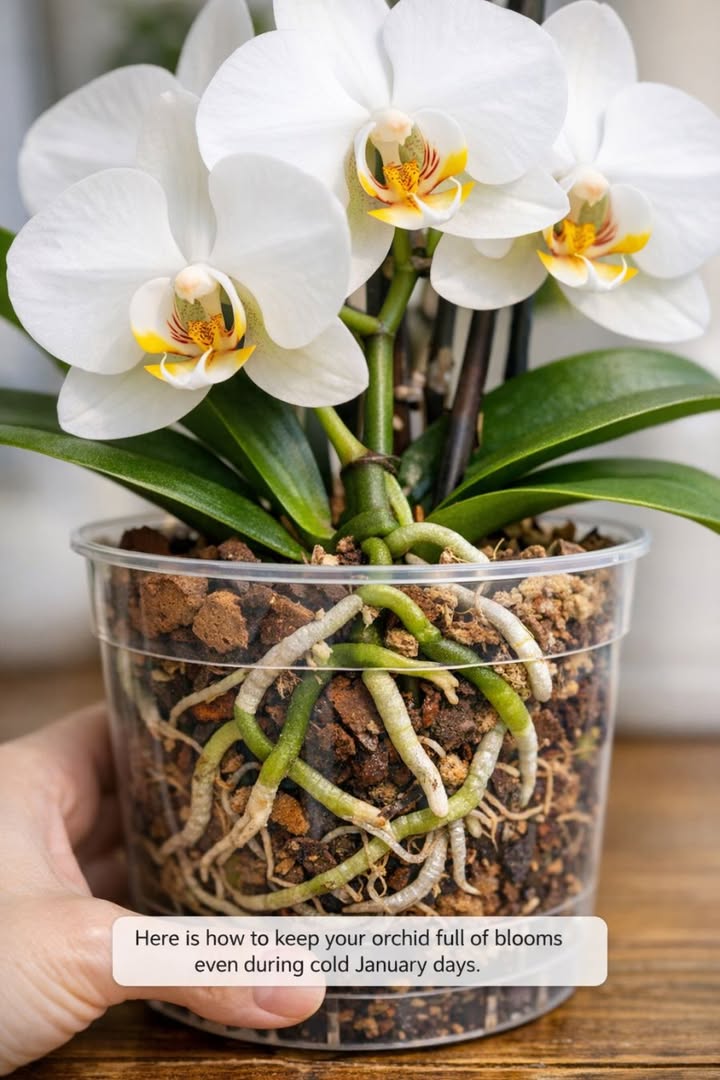
Here is how to keep your orchid full of blooms even during cold January days
Pages: 1 2
